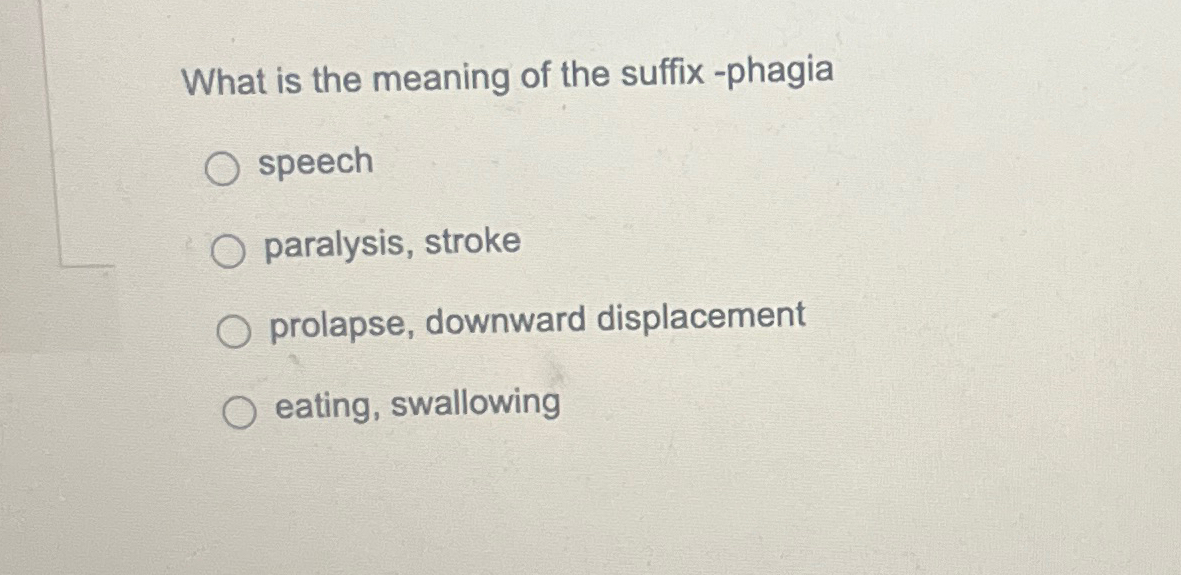
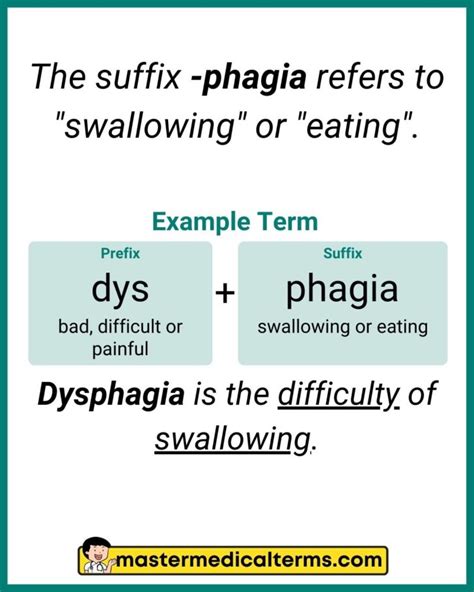
Phagia, a term rooted in medical terminology, refers to the act of eating or swallowing. It is a concept that intersects with various fields of medicine, including gastroenterology, otolaryngology, and speech-language pathology. The process of phagia involves the coordination of multiple physiological systems, ensuring that food is properly chewed, formed into a bolus, and then safely passed through the esophagus into the stomach for digestion. Any disruption in this complex process can lead to disorders of phagia, commonly known as dysphagia.
Understanding Dysphagia
Dysphagia, or difficulty swallowing, can arise from a variety of causes, including neurological disorders, structural abnormalities, and certain systemic diseases. It is a condition that affects individuals of all ages, though its prevalence increases with age. The symptoms of dysphagia can range from mild difficulties with swallowing certain textures of food to severe impairment, where even liquids cannot be safely swallowed. The diagnosis of dysphagia involves a comprehensive assessment, including clinical evaluation, imaging studies, and sometimes, specialized tests like manometry or endoscopy to evaluate the function and anatomy of the esophagus.
Classification and Types of Dysphagia
Dysphagia can be classified based on the level of the swallowing process that is affected. Oropharyngeal dysphagia involves difficulties with the initiation of swallowing, where food may not be properly formed into a bolus or may not be safely propelled into the pharynx. Esophageal dysphagia, on the other hand, involves problems with the transport of food through the esophagus into the stomach, which can be due to motility disorders or mechanical obstructions. Understanding the type of dysphagia is crucial for developing an appropriate treatment plan, which may include dietary modifications, swallowing therapy, or in some cases, surgical intervention.
| Type of Dysphagia | Description |
|---|---|
| Oropharyngeal Dysphagia | Difficulty initiating swallow, forming bolus, or safely propelling food into the pharynx. |
| Esophageal Dysphagia | Difficulty transporting food through the esophagus due to motility issues or obstructions. |

Treatment and Management of Dysphagia
The management of dysphagia is highly individualized and depends on the underlying cause, severity, and the patient’s overall health status. For some, modifications in diet and eating habits may suffice, such as eating softer foods or taking smaller, more frequent meals. Others may benefit from swallowing therapy, which includes exercises and techniques to improve the coordination and efficiency of the swallowing mechanism. In cases where dysphagia is severe or due to a structural issue, medical or surgical interventions may be necessary to restore the normal pathway for food.
Role of Technology in Dysphagia Management
Advancements in technology have also played a significant role in the diagnosis and treatment of dysphagia. High-resolution manometry and impedance monitoring can provide detailed information about esophageal function, helping to pinpoint the exact nature of swallowing disorders. Additionally, swallowing exercises can be tailored and monitored using biofeedback devices, enhancing the efficacy of therapy. The integration of technology not only improves diagnostic accuracy but also offers patients more personalized and effective treatment options.
Key Points
- Dysphagia, or difficulty swallowing, is a condition that can result from various causes, including neurological, structural, and systemic diseases.
- The diagnosis of dysphagia involves a comprehensive assessment, including clinical evaluation and specialized tests.
- Treatment strategies for dysphagia are highly individualized and may include dietary modifications, swallowing therapy, or medical/surgical interventions.
- Technology plays a crucial role in the diagnosis and management of dysphagia, offering more precise diagnostic tools and personalized treatment options.
- A multidisciplinary approach to dysphagia, considering the complex interplay of factors contributing to swallowing disorders, is essential for effective management.
In conclusion, phagia and its disorders represent a complex and multifaceted area of medical concern. Understanding the nuances of normal and disordered swallowing processes is crucial for healthcare professionals to provide timely and effective interventions. As research and technology continue to evolve, the management of dysphagia is likely to become even more sophisticated, offering improved outcomes for those affected by this condition.
What are the common symptoms of dysphagia?
+Common symptoms of dysphagia include difficulty swallowing, coughing or choking while eating, food getting stuck in the throat, and weight loss due to inadequate nutrition.
How is dysphagia diagnosed?
+Dysphagia is diagnosed through a combination of clinical evaluation, imaging studies (such as X-rays or endoscopy), and specialized tests like manometry or swallowing studies.
Can dysphagia be treated?
+Yes, dysphagia can be treated. The treatment depends on the cause and severity of the condition and may include dietary changes, swallowing therapy, or medical/surgical interventions.