The English language is renowned for its complexity, particularly when it comes to verb tenses. Among these, the past tense verbs are fundamental to expressing actions, events, or states that occurred at a specific time in the past. Understanding and correctly using past tense verbs is crucial for effective communication, as they provide the backbone for recounting experiences, narrating stories, and discussing historical events. This article delves into the world of past tense verbs, explaining their formation, usage, and significance in everyday language.
Formation of Past Tense Verbs

Past tense verbs in English are formed in several ways, depending on the type of verb. Regular verbs typically add -ed to the base form of the verb to create the past tense, such as walk becoming walked. However, irregular verbs do not follow this pattern and instead change their form entirely, such as go becoming went. Understanding these patterns is essential for constructing grammatically correct sentences that convey past actions accurately.
Regular Verbs
Regular verbs, as mentioned, form their past tense by adding -ed to the base form. This rule applies to most verbs in English, making it a straightforward process to learn and use. For example, the verb “listen” becomes “listened” in the past tense. This consistency is beneficial for language learners, as it provides a predictable pattern to follow.
Irregular Verbs
Irregular verbs, on the other hand, pose a challenge due to their unpredictable nature. Each irregular verb has its unique past tense form, which must be memorized. For instance, the verb “take” becomes “took,” and “go” becomes “went.” Mastering irregular verbs is key to fluency in English, as they are commonly used in everyday conversation and writing.
| Verb Type | Base Form | Past Tense Form |
|---|---|---|
| Regular | walk | walked |
| Irregular | go | went |
| Regular | listen | listened |
| Irregular | take | took |

Usage of Past Tense Verbs
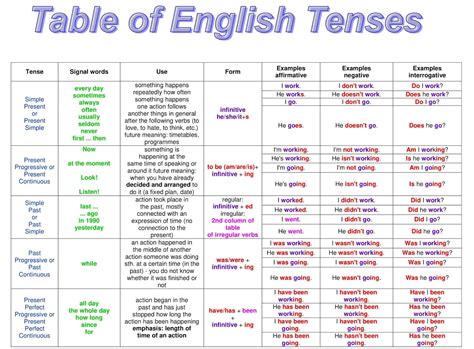
Past tense verbs are used to describe actions that started and finished in the past. They can be used in various contexts, from simple statements about past events to complex narratives that involve multiple past actions. The correct use of past tense verbs is essential for maintaining clarity and coherence in communication.
Simple Past
The simple past tense is used for completed actions in the past. It is often used with time expressions such as yesterday, last week, or three years ago. For example, “I walked to school yesterday” indicates that the action of walking to school began and ended in the past.
Past Continuous
The past continuous tense is used to describe actions that were in progress at a specific time in the past. It is formed using was/were + the -ing form of the verb. For instance, “I was studying at 8 pm last night” shows that the action of studying was ongoing at 8 pm.
Key Points
- Regular verbs form their past tense by adding -ed to the base form.
- Irregular verbs have unique past tense forms that must be memorized.
- Past tense verbs are used to describe completed actions in the past.
- The simple past tense is used for completed actions, while the past continuous tense describes ongoing actions at a specific past time.
- Mastering past tense verbs is essential for effective communication in English.
Significance of Past Tense Verbs
Past tense verbs play a vital role in English grammar, enabling speakers and writers to express a wide range of past actions and events. They are fundamental in storytelling, historical accounts, and even in everyday conversations about past experiences. The ability to use past tense verbs correctly enhances one’s ability to communicate effectively and understand complex narratives.
In Storytelling
In narratives, past tense verbs are used to create vivid descriptions of past events, engaging the reader or listener. The correct use of these verbs helps in building suspense, conveying emotions, and painting a picture of what happened.
In Historical Accounts
Historical accounts rely heavily on past tense verbs to describe events that have shaped the world. Accurate use of these verbs is crucial for preserving the integrity of historical narratives and ensuring that the past is represented truthfully.
What is the primary function of past tense verbs in English?
+The primary function of past tense verbs is to describe actions, events, or states that occurred at a specific time in the past.
How are regular verbs formed in the past tense?
+Regular verbs are formed in the past tense by adding -ed to the base form of the verb.
Why are irregular verbs challenging for language learners?
+Irregular verbs are challenging because they do not follow a predictable pattern and each has a unique past tense form that must be memorized.
In conclusion, past tense verbs are a fundamental aspect of the English language, providing the means to express past actions, events, and states. Understanding their formation, whether through the addition of -ed for regular verbs or the memorization of unique forms for irregular verbs, is crucial for effective communication. By mastering past tense verbs, individuals can improve their storytelling, enhance their historical accounts, and engage more effectively in conversations about past experiences. As with any aspect of language, practice and repetition are key to becoming proficient in the use of past tense verbs, ensuring that communication is clear, coherent, and engaging.