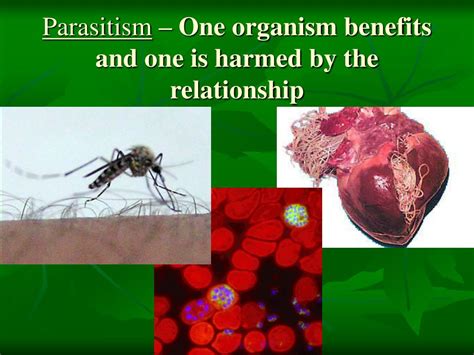
Parasitism, a relationship where one organism, the parasite, benefits at the expense of another organism, the host, is a widespread and ancient phenomenon in the natural world. While it may seem counterintuitive, parasitism plays a crucial role in shaping the evolution, ecology, and diversity of ecosystems. In this article, we will delve into the world of parasitism, exploring its benefits, mechanisms, and implications for our understanding of the natural world.
Key Points
- Parasitism is a complex and multifaceted relationship that benefits one organism, the parasite, at the expense of another, the host.
- Parasites have evolved a range of strategies to manipulate their hosts, from altering their behavior to modifying their physiology.
- Parasitism can have significant impacts on ecosystem structure and function, influencing population dynamics, community composition, and nutrient cycling.
- Understanding parasitism is essential for developing effective strategies for managing and controlling parasite populations, with implications for human health, agriculture, and conservation.
- Parasitism has also played a key role in shaping the evolution of hosts, driving the development of defense mechanisms and influencing the diversification of species.
Types of Parasitism
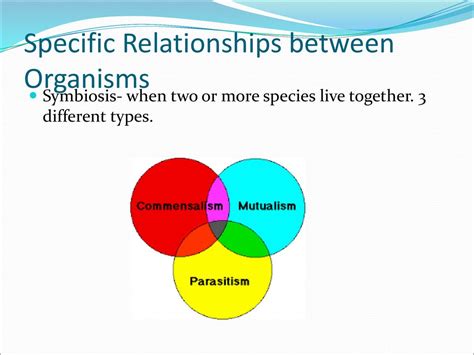
Parasitism can take many forms, from the familiar examples of tapeworms and fleas to the more obscure relationships between plants and fungi. There are several types of parasitism, including ectoparasitism, where the parasite lives on the surface of the host, and endoparasitism, where the parasite lives inside the host. Each type of parasitism has its own unique characteristics and implications for the host-parasite relationship.
Examples of Parasitism
One of the most well-known examples of parasitism is the relationship between the tapeworm and its host, typically a mammal or bird. The tapeworm attaches itself to the intestinal wall of the host, where it feeds on nutrients and grows. Another example is the parasitic wasp, which lays its eggs inside the bodies of other insects, where the larvae feed on the host’s tissues. These examples illustrate the diversity of parasitic relationships and the range of strategies that parasites have evolved to exploit their hosts.
| Type of Parasitism | Example | Host |
|---|---|---|
| Ectoparasitism | Fleas | Mammals and birds |
| Endoparasitism | Tapeworms | Mammals and birds |
| Parasitoidism | Parasitic wasps | Other insects |

Benefits of Parasitism

While it may seem counterintuitive, parasitism can have several benefits for the parasite, including increased access to resources, protection from predators, and enhanced reproduction. For example, some parasites can manipulate their hosts’ behavior, causing them to become more susceptible to predation or altering their feeding behavior to increase the parasite’s access to nutrients.
Evolutionary Implications
Parasitism has also played a key role in shaping the evolution of hosts, driving the development of defense mechanisms and influencing the diversification of species. The ongoing arms race between parasites and their hosts has led to the evolution of complex defense strategies, including the development of immune systems and the production of chemical defenses. Understanding the evolutionary implications of parasitism is essential for developing effective strategies for managing and controlling parasite populations.
Furthermore, parasitism can have significant impacts on ecosystem structure and function, influencing population dynamics, community composition, and nutrient cycling. For example, some parasites can alter the behavior of their hosts, causing them to become more active or aggressive, which can have cascading effects on the ecosystem. Other parasites can modify the physiology of their hosts, altering their nutrient uptake or allocation, which can have significant impacts on ecosystem nutrient cycling.
What is the difference between a parasite and a symbiont?
+A parasite is an organism that benefits at the expense of another organism, the host, whereas a symbiont is an organism that lives in close association with another organism, often providing benefits to both parties. While some symbionts can be parasitic, not all parasites are symbionts.
Can parasites be beneficial to their hosts?
+While it may seem counterintuitive, some parasites can have beneficial effects on their hosts, such as providing protection from other parasites or modifying the host's behavior to increase its fitness. However, these benefits are often context-dependent and can vary depending on the specific parasite-host relationship.
How do parasites manipulate their hosts' behavior?
+Parasites have evolved a range of strategies to manipulate their hosts' behavior, including altering their neurochemistry, modifying their physiology, and exploiting their behavioral traits. For example, some parasites can release chemicals that alter the host's mood or appetite, while others can modify the host's brain structure or function to increase their susceptibility to predation.
In conclusion, parasitism is a complex and multifaceted relationship that benefits one organism, the parasite, at the expense of another, the host. By examining the mechanisms and implications of parasitism, we can gain insights into the fundamental principles of ecology and evolution, and develop effective strategies for managing and controlling parasite populations. Whether we view parasites as pests or as fascinating organisms that have evolved to exploit their hosts, it is clear that they play a vital role in shaping the natural world.