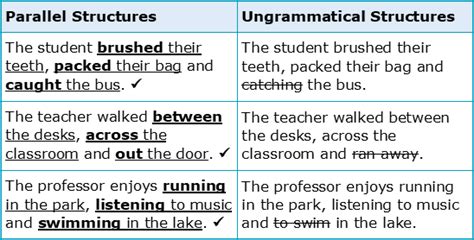
Effective writing and communication rely heavily on the strategic use of parallel structure, a fundamental principle of rhetoric that enhances clarity, balance, and aesthetic appeal in sentences and passages. Parallel structure, or parallelism, involves the repetition of similar grammatical structures, such as noun phrases, verb phrases, or clauses, to express similar ideas or list items. This technique is not only aesthetically pleasing but also facilitates easier comprehension by creating a sense of rhythm and symmetry. In this article, we will explore five ways to implement parallel structure in your writing, ensuring your messages are conveyed with precision, elegance, and impact.
Understanding Parallel Structure
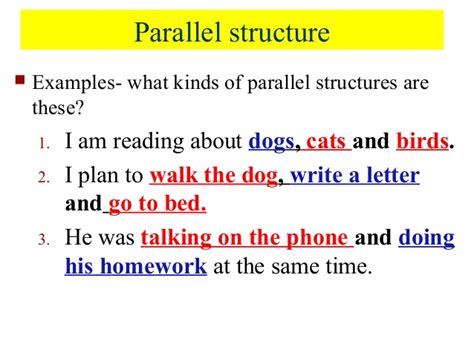
Before diving into the ways to parallel structure, it’s essential to grasp the concept. Parallel structure is about consistency in the way ideas are presented. It applies to various elements of sentence construction, including phrases and clauses. For instance, if you’re listing activities, using parallel structure means ensuring each activity is described using the same grammatical form. This consistency aids in readability and emphasizes the equal importance of the listed items.
Benefits of Parallel Structure
The benefits of incorporating parallel structure into your writing are multifaceted. Firstly, it enhances the clarity of your writing by making your intentions and the relationships between ideas more apparent. Secondly, parallel structure contributes to the overall rhythm of your text, making it more engaging and easier to follow. Lastly, using parallel structure demonstrates a command of linguistic techniques, which can elevate the perceived professionalism and sophistication of your writing.
Key Points
- Parallel structure improves the clarity and readability of written content.
- It enhances the aesthetic appeal of writing by creating a rhythm and symmetry.
- Parallel structure demonstrates linguistic competence and sophistication.
- It applies to various grammatical elements, including phrases, clauses, and sentences.
- Effective use of parallel structure can significantly impact the engagement and persuasiveness of written communication.
5 Ways to Implement Parallel Structure
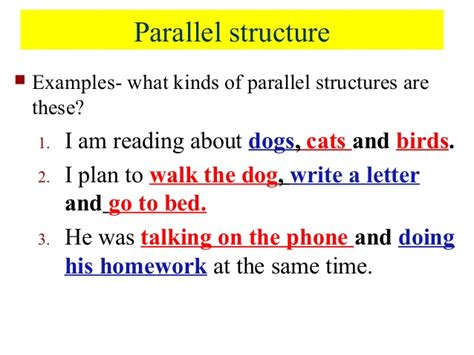
Implementing parallel structure in your writing involves careful consideration of how you construct your sentences and list items. Here are five key strategies to help you effectively use parallel structure:
1. Listing Items with Consistency
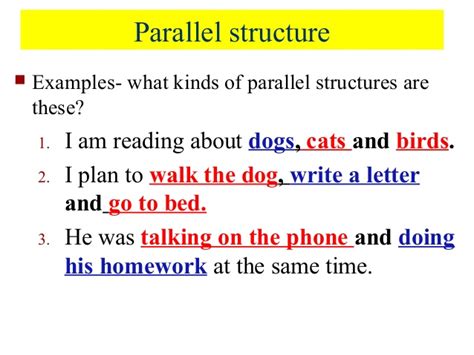
When listing items, ensure that each item in the list follows the same grammatical structure. For example, “I love reading books, writing stories, and learning languages.” In this sentence, “reading,” “writing,” and “learning” are all gerunds, maintaining parallel structure.
2. Comparing with Parallel Structure
Comparisons are another area where parallel structure is crucial. When comparing two things, use the same grammatical structure for both. For instance, “Writing is more challenging than editing” maintains parallel structure by comparing two gerunds (or verb forms). However, for clarity and effect, you might say, “I find writing novels more challenging than I find editing them,” which also maintains parallelism but in a more complex sentence structure.
3. Using Correlative Conjunctions
Correlative conjunctions like “not only…but also,” “either…or,” and “both…and” require parallel structure to function effectively. For example, “I not only appreciate her writing style but also admire her dedication to her craft.” Here, “appreciate” and “admire” are both verbs, ensuring parallel structure.
4. Constructing Balanced Sentences
Parallel structure can be used to create balanced sentences that are both aesthetically pleasing and easy to understand. For instance, “By day, she is a diligent worker; by night, she is a passionate artist.” This sentence uses parallel structure to contrast two aspects of someone’s life, creating a balanced and rhythmic effect.
5. Enhancing Clarity in Complex Sentences
In complex sentences, parallel structure helps to maintain clarity by ensuring that similar ideas are presented in a similar manner. Consider the sentence, “The new policy aims to increase efficiency, reduce costs, and improve customer satisfaction.” Here, “increase,” “reduce,” and “improve” are all verbs that start each clause, maintaining parallel structure and making the sentence easy to follow.
| Parallel Structure Technique | Example |
|---|---|
| Listing Items | I love reading, writing, and designing. |
| Comparisons | She prefers writing to editing. |
| Correlative Conjunctions | I not only write but also edit. |
| Balanced Sentences | She works by day and creates by night. |
| Complex Sentences | The policy aims to reduce, reuse, and recycle. |
Conclusion and Future Directions
In conclusion, parallel structure is a versatile and powerful tool in the writer’s arsenal, offering a way to balance, clarify, and beautify written communication. By understanding and applying the principles of parallel structure, writers can significantly enhance the effectiveness of their writing, whether in academic, professional, or creative contexts. As writing continues to evolve with technological advancements and changing reader preferences, the fundamental importance of parallel structure in crafting compelling, clear, and sophisticated writing will endure.
What is parallel structure in writing?
+Parallel structure refers to the use of similar grammatical structures to express similar ideas or list items, enhancing clarity, balance, and aesthetic appeal in writing.
Why is parallel structure important in writing?
+Parallel structure is important because it improves readability, creates a rhythm and symmetry that engages the reader, and demonstrates linguistic competence, thereby elevating the perceived professionalism and sophistication of the writing.
How can I apply parallel structure in my writing?
+To apply parallel structure, ensure consistency in the grammatical structure of items in lists, comparisons, and when using correlative conjunctions. Also, aim to create balanced sentences and use parallel structure to clarify complex sentences.