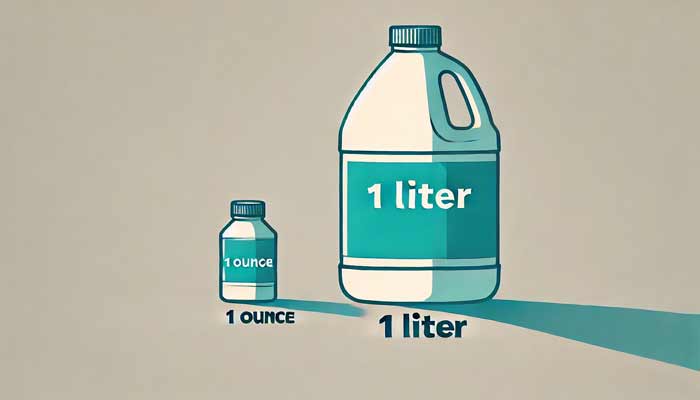
The term "ounce" is widely used in various contexts, including cooking, science, and everyday applications. However, the abbreviation "oz" can sometimes lead to confusion, as it may refer to different units of measurement. In this article, we will explore the different ways ounces are used and provide a comprehensive guide on how to convert between various units of measurement.
Key Points
- Understanding the different types of ounces, including fluid ounces and avoirdupois ounces
- Converting between fluid ounces and milliliters
- Converting between avoirdupois ounces and grams
- Understanding the importance of precise measurement in cooking and science
- Using online conversion tools and resources for accurate conversions
Fluid Ounces vs. Avoirdupois Ounces
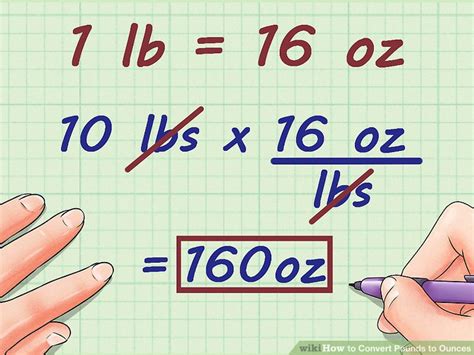
In the United States, the term “ounce” can refer to either a unit of weight (avoirdupois ounce) or a unit of volume (fluid ounce). A fluid ounce is a unit of volume, equivalent to 1⁄8 of a cup or 29.6 milliliters. On the other hand, an avoirdupois ounce is a unit of weight, equivalent to 28.35 grams. It is essential to understand the difference between these two units to avoid confusion in recipes and scientific applications.
Converting Fluid Ounces to Milliliters
To convert fluid ounces to milliliters, we can use the following conversion factor: 1 fluid ounce = 29.6 milliliters. For example, if a recipe calls for 8 fluid ounces of liquid, we can convert this to milliliters by multiplying 8 by 29.6, which gives us 236.8 milliliters.
| Fluid Ounces | Milliliters |
|---|---|
| 1 fluid ounce | 29.6 milliliters |
| 8 fluid ounces | 236.8 milliliters |
| 16 fluid ounces | 473.2 milliliters |
Converting Avoirdupois Ounces to Grams
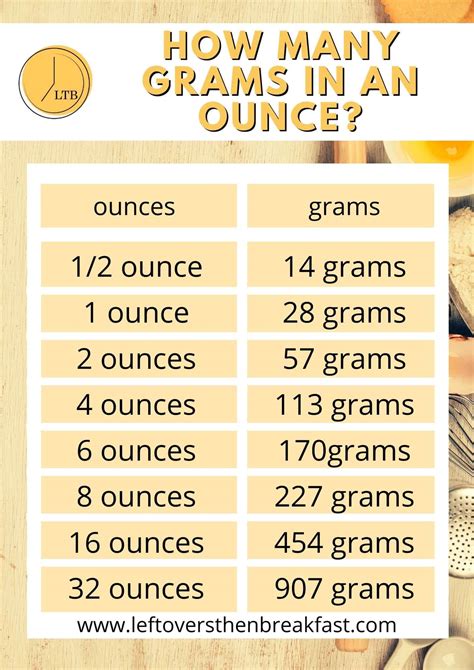
To convert avoirdupois ounces to grams, we can use the following conversion factor: 1 avoirdupois ounce = 28.35 grams. For example, if a recipe calls for 12 avoirdupois ounces of ingredients, we can convert this to grams by multiplying 12 by 28.35, which gives us 340.2 grams.
| Avoirdupois Ounces | Grams |
|---|---|
| 1 avoirdupois ounce | 28.35 grams |
| 12 avoirdupois ounces | 340.2 grams |
| 16 avoirdupois ounces | 453.6 grams |
Practical Applications and Real-World Examples
In cooking, precise measurement is essential to achieve the desired flavor and texture. For example, when making a cake, using the correct amount of ingredients is crucial to ensure that the cake turns out moist and flavorful. In science, accurate measurement is critical to ensure the reliability of experimental results. By using the correct units of measurement and converting between them accurately, we can ensure that our results are precise and reliable.
Common Conversion Mistakes
One common mistake when converting between units of measurement is to confuse fluid ounces with avoirdupois ounces. This can lead to incorrect results and affect the overall quality of the final product. Another mistake is to use the wrong conversion factor, which can also lead to inaccurate results. By understanding the correct conversion factors and using them accurately, we can avoid these mistakes and ensure that our results are precise and reliable.
What is the difference between a fluid ounce and an avoirdupois ounce?
+A fluid ounce is a unit of volume, equivalent to 1/8 of a cup or 29.6 milliliters, while an avoirdupois ounce is a unit of weight, equivalent to 28.35 grams.
How do I convert fluid ounces to milliliters?
+To convert fluid ounces to milliliters, we can use the following conversion factor: 1 fluid ounce = 29.6 milliliters.
What is the importance of precise measurement in cooking and science?
+Precise measurement is essential in cooking and science to ensure that the final product meets the desired standards and to avoid errors that can affect the overall quality and reliability of the results.
In conclusion, understanding the different ways ounces are used and converting between various units of measurement is crucial in cooking, science, and everyday applications. By using the correct units of measurement and converting between them accurately, we can ensure that our results are precise and reliable. Whether we are working with fluid ounces, avoirdupois ounces, or other units of measurement, it is essential to use the correct conversion factors and to avoid common conversion mistakes. With practice and attention to detail, we can become proficient in converting between different units of measurement and achieve accurate results in our recipes and scientific applications.