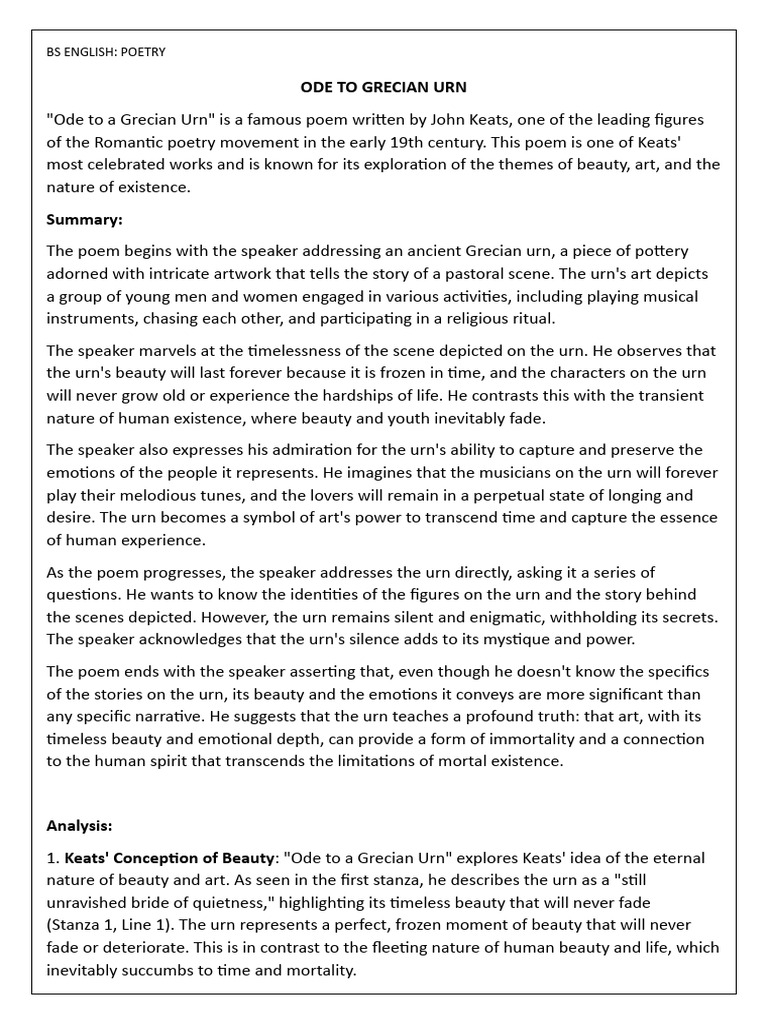
The timeless beauty of ancient Greek art has been a subject of fascination for centuries, and one of the most iconic examples of this is the Grecian urn. In John Keats' famous ode, "Ode on a Grecian Urn," the poet explores the themes of beauty, truth, and the passage of time, all inspired by the intricate designs and frozen moments depicted on the urn. To delve into the depths of this poem and the cultural context in which it was written, it's essential to understand the historical and artistic significance of Grecian urns.
The Historical Context of Grecian Urns
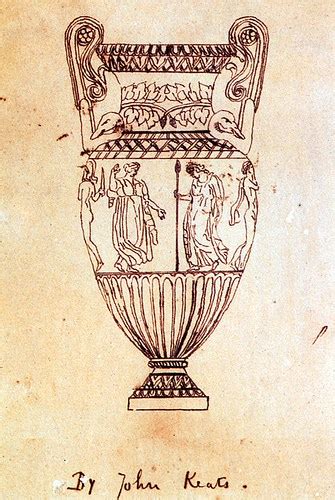
Grecian urns, with their stunning depictions of mythological scenes, everyday life, and ritual ceremonies, were not merely decorative objects but also vessels that told stories of the culture and beliefs of ancient Greece. The art of crafting these urns was a testament to the technical skill and aesthetic sensibility of the Greek people. The scenes depicted on these urns were often frozen in time, capturing moments of joy, sorrow, and celebration, which served as a window into the past for future generations. Keats, in his ode, captures the essence of these frozen moments and reflects on the universal themes they evoke.
The Poetic Inspiration
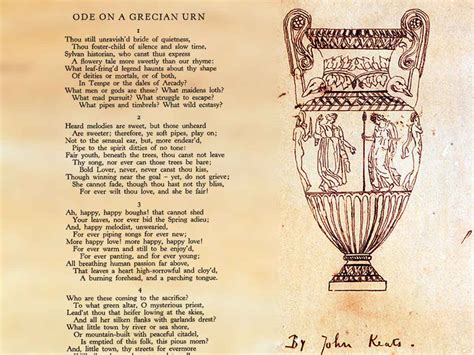
Keats’ “Ode on a Grecian Urn” is a masterful exploration of the relationship between the observer, the artwork, and the passage of time. The poem begins with the lines, “Thou still unravish’d bride of quietness! / Thou foster-child of silence and slow time,” setting the tone for a meditation on the timeless quality of art. The urn, as an object of beauty, is frozen in time, yet it speaks volumes about the human experience, transcending the boundaries of era and culture. This concept resonates deeply with the principles of beauty and truth that Keats and his contemporaries valued highly in art.
| Key Themes | Description |
|---|---|
| Beauty | The timeless and universal quality of beauty as depicted on the Grecian urn. |
| Truth | The representation of life, death, and the human condition through the scenes on the urn. |
| Passage of Time | The contrast between the static nature of the urn and the dynamic flow of human life and experience. |
Interpreting the Ode
The ode is structured into five stanzas, each exploring different aspects of the urn and the stories it tells. From the depiction of a sacrificial procession to the scenes of love and joy, each image is a portal to a world that is both familiar and distant. Keats’ use of sensual language and vivid imagery brings the urn to life, engaging the reader in a sensory and intellectual exploration of the artwork. This engagement with the artwork is a testament to the power of art to transcend time and touch the human heart.
Legacy and Influence
The influence of “Ode on a Grecian Urn” can be seen in many aspects of literature and art that followed. It has inspired countless interpretations, parodies, and homages, each reflecting the poem’s enduring relevance and beauty. The poem’s exploration of the relationship between the observer and the observed, the timeless and the temporal, continues to resonate with artists, writers, and thinkers. This resonance is a tribute to the enduring power of art to inspire, to provoke, and to connect us across cultures and centuries.
Key Points
- The Grecian urn, as depicted in Keats' ode, is a symbol of timeless beauty and truth.
- The poem explores the universal themes of beauty, truth, and the passage of time.
- Keats' use of language and imagery brings the urn and its stories to life, engaging the reader in a profound exploration of art and human existence.
- The ode's influence can be seen in many aspects of literature and art, reflecting its enduring relevance and beauty.
- The poem invites the reader to contemplate the nature of reality, art, and human existence, underscoring the complexities and depths of human experience.
In conclusion, "Ode on a Grecian Urn" is not just a poem about an ancient artifact; it is a meditation on the human condition, a reflection on the nature of beauty and truth, and an exploration of the timeless and the temporal. Through its rich imagery, profound insights, and beautiful language, the ode continues to inspire and provoke, offering a glimpse into the enduring power of art to connect us across cultures and centuries.
What is the central theme of “Ode on a Grecian Urn”?
+The central theme of the poem is the exploration of beauty, truth, and the passage of time, as inspired by the scenes depicted on a Grecian urn.
How does Keats use imagery in the poem?
+Keats uses vivid and sensual language to describe the scenes on the urn, bringing the artwork to life and engaging the reader in a sensory and intellectual exploration.
What is the significance of the Grecian urn in the poem?
+The Grecian urn serves as a symbol of timeless beauty and truth, and as a window into the past, allowing the reader to contemplate the human experience and the nature of reality.