Medical assistants play a vital role in the healthcare industry, providing essential support to physicians, nurses, and other medical professionals. As the demand for skilled medical assistants continues to grow, it's essential to understand the education requirements for this profession. In this article, we'll delve into the world of medical assistant education, exploring the various pathways, certifications, and skills required to succeed in this field.
Key Points
- Postsecondary education programs in medical assisting are available at vocational schools, community colleges, and universities
- Certification is not mandatory but highly recommended, with the Certified Medical Assistant (CMA) and Registered Medical Assistant (RMA) being the most recognized credentials
- Medical assistants must possess a strong foundation in anatomy, physiology, and medical terminology, as well as clinical and administrative skills
- Hands-on training and externships are crucial components of medical assistant education, providing students with practical experience in real-world settings
- Ongoing education and professional development are essential for medical assistants to stay current with industry advancements and best practices
Medical Assistant Education Pathways
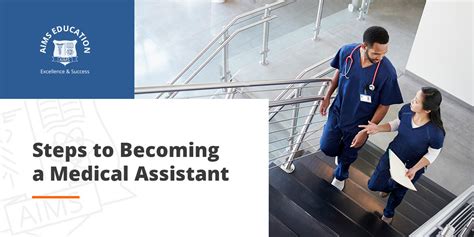
There are several education pathways for aspiring medical assistants, including postsecondary programs, diplomas, and certificates. These programs are typically offered at vocational schools, community colleges, and universities, and can last from a few months to two years. Some programs may also include specialized training in areas like phlebotomy, electrocardiography, or medical coding.
A high school diploma or equivalent is usually required for admission to these programs. Coursework typically includes both classroom instruction and hands-on training, covering topics such as:
- Anatomy and physiology
- Medical terminology
- Pharmacology
- Clinical procedures
- Medical office management
- Patient communication and relations
Certification and Licensure
Certification is not mandatory for medical assistants, but it’s highly recommended to enhance job prospects and demonstrate expertise. The most recognized certifications are the Certified Medical Assistant (CMA) and the Registered Medical Assistant (RMA). These credentials are offered by professional organizations such as the American Association of Medical Assistants (AAMA) and the American Medical Technologists (AMT).
To become certified, medical assistants must meet specific requirements, such as completing an accredited education program, passing a certification exam, and maintaining ongoing education and professional development. Certification exams typically assess knowledge and skills in areas like:
- Clinical procedures
- Medical office management
- Patient assessment and communication
- Medical terminology and pharmacology
Clinical and Administrative Skills

Medical assistants must possess a strong foundation in both clinical and administrative skills. Clinical skills include taking vital signs, preparing patients for exams, and assisting with procedures. Administrative skills involve managing patient records, scheduling appointments, and handling billing and insurance claims.
In addition to these technical skills, medical assistants must also possess excellent communication and interpersonal skills, as they interact with patients, families, and healthcare professionals on a daily basis. Empathy, compassion, and cultural competence are essential for providing high-quality patient care and building trust with diverse patient populations.
| Skills | Description |
|---|---|
| Clinical skills | Taking vital signs, preparing patients for exams, assisting with procedures |
| Administrative skills | Managing patient records, scheduling appointments, handling billing and insurance claims |
| Communication skills | Interacting with patients, families, and healthcare professionals, providing clear and concise information |
| Interpersonal skills | Building trust, demonstrating empathy and compassion, working effectively with diverse patient populations |
Ongoing Education and Professional Development
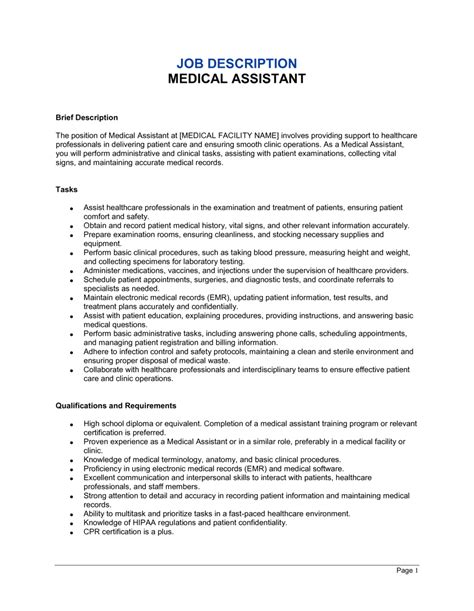
Ongoing education and professional development are crucial for medical assistants to stay current with industry advancements and best practices. This can involve attending workshops, conferences, and online courses, as well as participating in professional organizations and networking with peers.
Medical assistants must also stay up-to-date with changing regulations, laws, and guidelines that impact healthcare practice. This includes understanding HIPAA regulations, OSHA guidelines, and other relevant standards that ensure patient safety and confidentiality.
What is the average salary for a medical assistant in the United States?
+The average salary for a medical assistant in the United States is around $34,800 per year, according to the Bureau of Labor Statistics.
Do medical assistants need to be certified to work in a medical office?
+Certification is not mandatory, but it's highly recommended to enhance job prospects and demonstrate expertise.
What are the most common work settings for medical assistants?
+Medical assistants can work in a variety of settings, including physician offices, hospitals, clinics, and nursing homes.
In conclusion, medical assistant education requirements involve a combination of postsecondary education, certification, and hands-on training. As the healthcare industry continues to evolve, medical assistants must stay current with industry advancements and best practices, demonstrating a commitment to lifelong learning and professional development. By understanding the education requirements and skills necessary for this profession, aspiring medical assistants can embark on a rewarding career path that makes a meaningful difference in the lives of patients and healthcare professionals alike.