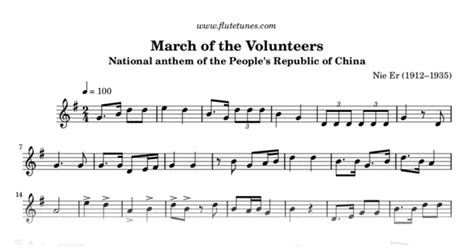
The "March of the Volunteers" is a song that has been an integral part of Chinese culture and history, particularly in the context of the country's national anthem. Written in 1935 by Tian Han, with music composed by Nie Er, the song was initially created to be the theme song for the film "Fengyun Ernü" (Children of Troubled Times), which was released in the same year. However, it soon gained popularity and became a symbol of Chinese resistance against Japanese invasion during the Second Sino-Japanese War.
Historical Context and Significance
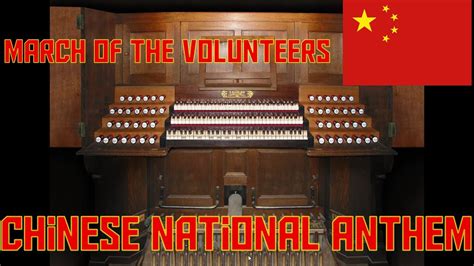
The “March of the Volunteers” was born out of a tumultuous period in Chinese history. The song’s lyrics reflect the sentiment of the time, calling upon the people to rise up against foreign invasion and to fight for their country’s freedom and dignity. The song’s message resonated deeply with the Chinese populace, who were facing immense challenges and hardships under the threat of Japanese occupation. The “March of the Volunteers” became an anthem for the Chinese people, inspiring them to unite and resist the invaders.
Adoption as the National Anthem
In 1949, after the establishment of the People’s Republic of China, the “March of the Volunteers” was officially adopted as the country’s national anthem. This decision was made due to the song’s historical significance, its widespread popularity, and its thematic relevance to the newly founded nation. The song has since been played on numerous national occasions, including government ceremonies, international sporting events, and other significant gatherings.
| Year | Event | Significance |
|---|---|---|
| 1935 | Composition and first performance | Initial release as a theme song for "Fengyun Ernü" |
| 1935-1945 | Second Sino-Japanese War | Became a symbol of Chinese resistance against Japanese invasion |
| 1949 | Adoption as the national anthem of the People's Republic of China | Official recognition of the song's historical and cultural significance |
Key Points
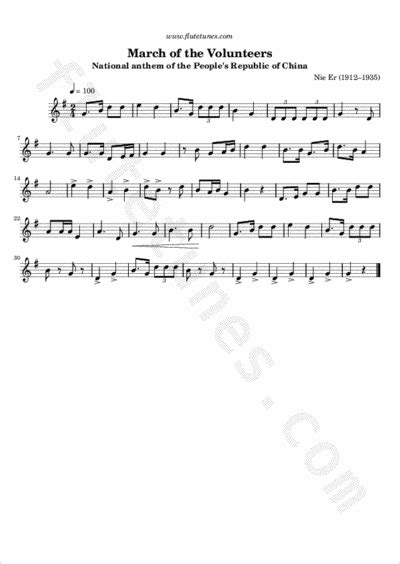
- The "March of the Volunteers" was written by Tian Han and composed by Nie Er in 1935.
- The song was initially the theme song for the film "Fengyun Ernü" but soon became a symbol of resistance against Japanese invasion.
- It was officially adopted as the national anthem of the People's Republic of China in 1949.
- The song's lyrics call for national unity and the defense of the country against foreign aggression.
- Its historical and cultural significance makes it an integral part of Chinese identity and national pride.
The "March of the Volunteers" has undergone minor changes over the years, with the most notable being the adjustment of its lyrics in 1978 to remove references to the Communist Party, and then a reversion to the original lyrics in 1982, reflecting the complex political landscape of China during those periods. Despite these changes, the song's core message and its significance to the Chinese people have remained unchanged.
Cultural Impact and Legacy
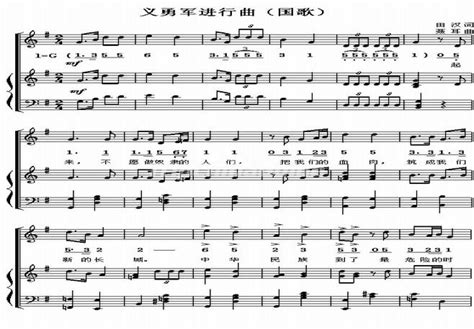
Beyond its role as a national anthem, the “March of the Volunteers” has had a profound impact on Chinese culture. It has inspired countless adaptations, including orchestral arrangements, choral performances, and even modern fusions with other musical genres. The song’s melody and lyrics have become deeply ingrained in the Chinese psyche, evoking feelings of patriotism, unity, and a shared history among its people.
International Recognition
Internationally, the “March of the Volunteers” is recognized as a symbol of China and its rich cultural heritage. It is played at international events where China is represented, such as the Olympic Games, diplomatic ceremonies, and cultural festivals. This widespread recognition underscores the song’s importance not only within China but also on the global stage.
In conclusion, the "March of the Volunteers" is more than just a national anthem; it is a symbol of Chinese resilience, unity, and the struggle for freedom and dignity. Its history, cultural significance, and enduring popularity make it an integral part of China's identity, both domestically and internationally.
What is the historical context of the “March of the Volunteers”?
+The “March of the Volunteers” was written in 1935, during the Second Sino-Japanese War, as a call to action for the Chinese people to resist Japanese invasion.
Why was the “March of the Volunteers” adopted as the national anthem of China?
+It was adopted due to its historical significance, popularity, and thematic relevance to the newly founded People’s Republic of China in 1949.
What changes has the “March of the Volunteers” undergone since its composition?
+The song’s lyrics were adjusted in 1978 and then reverted to the original version in 1982, reflecting the political climate of the time.