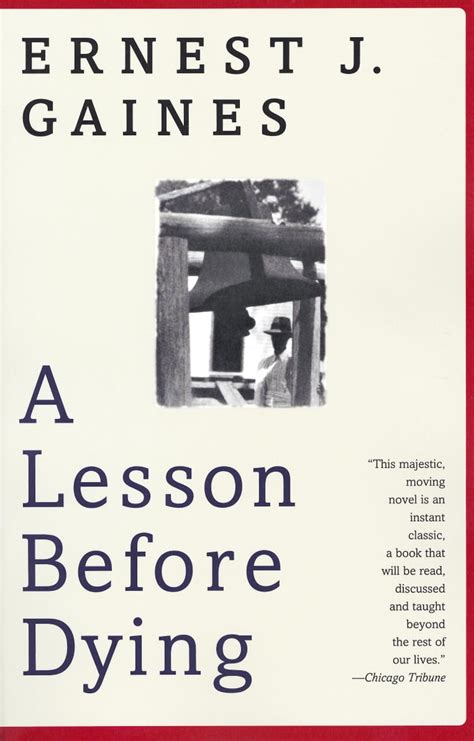
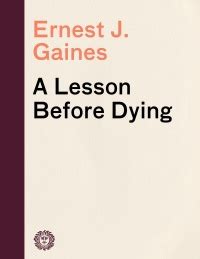
Set in the 1940s, "A Lesson Before Dying" by Ernest J. Gaines is a thought-provoking novel that explores the themes of racism, injustice, and the struggle for human dignity in a small Louisiana community. The story revolves around the lives of two African American men, Jefferson and Grant Wiggins, and their journey towards self-discovery and redemption. Through the lens of historical context and literary analysis, this article delves into the complexities of the novel, examining the ways in which Gaines masterfully weaves together the threads of narrative, character development, and social commentary to create a powerful and enduring work of literature.
Key Points
- The novel explores the intersection of racism, injustice, and personal identity in 1940s Louisiana.
- The character of Jefferson serves as a catalyst for Grant Wiggins' journey towards self-discovery and redemption.
- Gaines' use of narrative structure and character development creates a sense of intimacy and immediacy, drawing the reader into the world of the novel.
- The novel offers a powerful commentary on the social and economic conditions of African Americans in the rural South during the 1940s.
- Through the characters of Jefferson and Grant, Gaines explores the tension between individual agency and societal expectation.
The Historical Context of Racial Injustice
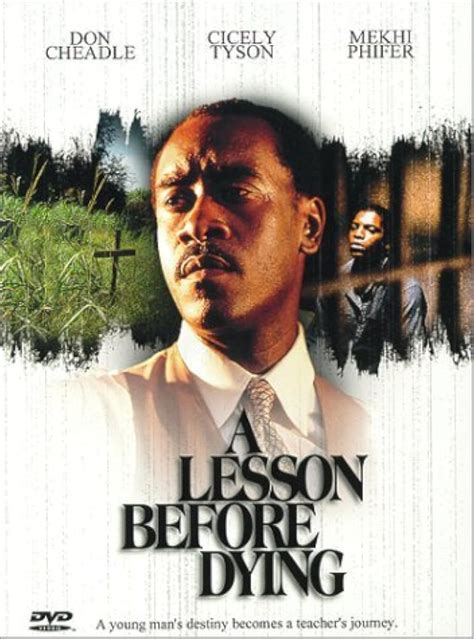
The novel is set against the backdrop of a deeply racist and segregated society, where African Americans were subjected to systemic injustices and brutality. The story of Jefferson, a young black man wrongly accused of murder and sentenced to death, serves as a powerful indictment of the racist attitudes and practices that pervaded the American South during this period. Through Jefferson’s narrative, Gaines sheds light on the dehumanizing effects of racism, highlighting the ways in which African Americans were denied their basic human rights and dignity.
The Intersection of Identity and Narrative
At the heart of the novel is the complex and deeply nuanced character of Grant Wiggins, a young African American teacher who returns to his hometown to teach at a local plantation school. Grant’s journey towards self-discovery and redemption is intricately tied to his relationship with Jefferson, whom he visits in prison and attempts to educate and prepare for his impending execution. Through their interactions, Gaines explores the tension between individual agency and societal expectation, highlighting the ways in which African Americans were forced to navigate a treacherous landscape of racial oppression and social constraint.
| Theme | Example |
|---|---|
| Racism and Injustice | Jefferson's wrongful conviction and sentencing |
| Identity and Self-Discovery | Grant Wiggins' journey towards self-awareness and redemption |
| Social Commentary | Gaines' portrayal of the social and economic conditions of African Americans in 1940s Louisiana |
Narrative Structure and Character Development
Gaines’ use of narrative structure and character development is a key element of the novel’s success, creating a sense of intimacy and immediacy that draws the reader into the world of the story. The novel’s non-linear narrative, which jumps back and forth in time, serves to underscore the complexities of Grant’s character, highlighting his struggles with identity, purpose, and belonging. Through the characters of Grant and Jefferson, Gaines creates a rich and nuanced portrait of life in rural Louisiana, one that is marked by both beauty and brutality.
The Power of Education and Empowerment
One of the novel’s most powerful themes is the importance of education and empowerment in the face of oppression. Through Grant’s efforts to educate Jefferson, Gaines highlights the ways in which knowledge and self-awareness can serve as a powerful tool for resistance and liberation. The novel suggests that education is not simply a means of acquiring knowledge, but rather a way of claiming one’s humanity and asserting one’s dignity in the face of systemic injustice.
The novel's exploration of the intersection of education and empowerment is closely tied to its portrayal of the social and economic conditions of African Americans in 1940s Louisiana. The novel sheds light on the ways in which African Americans were denied access to quality education, healthcare, and economic opportunities, highlighting the systemic barriers that prevented them from achieving their full potential. Through the characters of Grant and Jefferson, Gaines creates a powerful commentary on the ways in which racism and oppression can be overcome through education, empowerment, and collective action.
What is the significance of the novel's title, "A Lesson Before Dying"?
+The title refers to the lesson that Grant Wiggins teaches Jefferson before his execution, but it also serves as a metaphor for the lessons that the novel teaches its readers about the importance of human dignity, empathy, and compassion.
How does the novel portray the social and economic conditions of African Americans in 1940s Louisiana?
+The novel portrays the social and economic conditions of African Americans in 1940s Louisiana as deeply oppressive and unjust, highlighting the ways in which they were denied access to quality education, healthcare, and economic opportunities.
What is the significance of the character of Grant Wiggins in the novel?
+Grant Wiggins is a complex and nuanced character who serves as a catalyst for Jefferson's journey towards self-discovery and redemption. Through Grant's character, Gaines explores the tension between individual agency and societal expectation, highlighting the ways in which African Americans were forced to navigate a treacherous landscape of racial oppression and social constraint.
In conclusion, "A Lesson Before Dying" is a powerful and thought-provoking novel that explores the complexities of racism, injustice, and personal identity in a small Louisiana community. Through its nuanced characterization, rich narrative structure, and powerful social commentary, the novel creates a sense of intimacy and immediacy that draws the reader into the world of the story. As a work of literature, "A Lesson Before Dying" offers a profound meditation on the human condition, one that is marked by both beauty and brutality. Through its exploration of the intersection of identity and narrative, the novel sheds light on the ways in which storytelling can be used as a tool for social justice and personal empowerment, highlighting the importance of education, empathy, and compassion in the face of oppression.
Meta description suggestion: “Explore the complexities of racism, injustice, and personal identity in Ernest J. Gaines’ powerful novel, ‘A Lesson Before Dying’. Discover how the story of Jefferson and Grant Wiggins sheds light on the human condition and the importance of education, empathy, and compassion.” (147 characters)