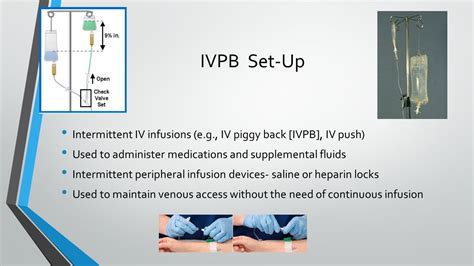
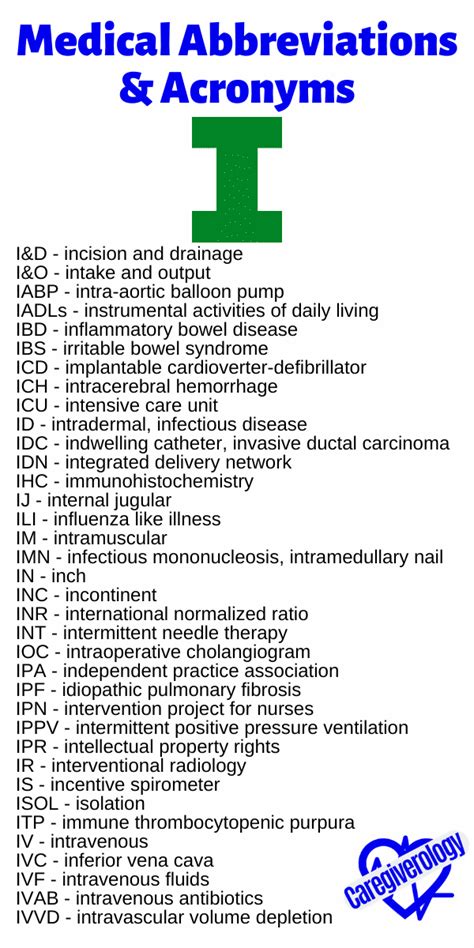
The medical field is replete with abbreviations, each serving a specific purpose in streamlined communication among healthcare professionals. One such abbreviation is IVPB, which stands for Intravenous Piggyback. To understand the significance and application of IVPB, it's essential to delve into its components and the context in which it's used.
Intravenous Piggyback (IVPB) Overview
Intravenous therapy is a method of administering fluids, medications, or nutrients directly into the bloodstream through veins. It’s a common practice in hospitals and healthcare facilities for treating dehydration, administering medications, and providing essential nutrients to patients who cannot consume them orally. The term “piggyback” in IVPB refers to a secondary infusion that is connected to the primary IV line, allowing for the simultaneous administration of two different substances without the need for multiple IV sites.
Components and Functionality of IVPB
The IVPB setup typically consists of a primary IV line that delivers a basic solution, such as saline or dextrose, which serves as the carrier fluid. A secondary line, known as the “piggyback,” is then connected to the primary line at a designated port. This secondary line contains the medication or additional fluid to be administered. The piggyback solution is usually administered over a shorter period than the primary infusion, hence the name, as it “piggybacks” on the existing IV line.
| Component | Description |
|---|---|
| Primary IV Line | Carries the basic solution (e.g., saline, dextrose) |
| Secondary Line (Piggyback) | Contains the medication or additional fluid to be administered |
| Connection Port | Where the secondary line is attached to the primary IV line |
Clinical Applications and Benefits
The IVPB method has a wide range of clinical applications, including the administration of antibiotics, pain management medications, and electrolytes. One of the significant benefits of IVPB is its ability to deliver medications in a controlled manner, allowing for precise dosing and potentially reducing side effects. Additionally, the use of IVPB can help in managing patient care more effectively, especially in situations where multiple infusions are required simultaneously.
Risks and Complications
While IVPB is a valuable tool in medical treatment, it is not without risks. Potential complications include infection at the IV site, thrombophlebitis (inflammation of the vein), and the risk of incompatibility between the primary and secondary solutions, which can lead to precipitation or other adverse reactions. Therefore, it’s crucial that healthcare professionals carefully assess the compatibility of any medications to be administered via IVPB and monitor patients closely for any signs of complications.
Key Points
- IVPB stands for Intravenous Piggyback, a method of administering a secondary infusion alongside a primary IV line.
- It's used for the simultaneous administration of medications or fluids without requiring multiple IV sites.
- The setup consists of a primary IV line and a secondary line (piggyback) connected at a designated port.
- IVPB minimizes the need for multiple needle insertions, reducing discomfort and infection risk.
- It facilitates controlled medication delivery, potentially reducing side effects and improving patient outcomes.
In conclusion, the IVPB medical abbreviation represents a versatile and efficient method for administering medications and fluids in a clinical setting. Its benefits, including reduced patient discomfort and improved management of multiple infusions, make it a valuable tool in healthcare. However, it's essential for healthcare professionals to be aware of the potential risks and take appropriate measures to ensure safe and effective use of IVPB.
What does IVPB stand for in medical terminology?
+IVPB stands for Intravenous Piggyback, referring to the administration of a secondary infusion alongside a primary IV line.
What are the benefits of using IVPB in patient care?
+The benefits include minimizing the number of needle insertions, reducing discomfort and the risk of infection, and facilitating the efficient administration of multiple medications or fluids.
What are the potential risks associated with IVPB?
+Potential risks include infection at the IV site, thrombophlebitis, and the risk of incompatibility between the primary and secondary solutions.