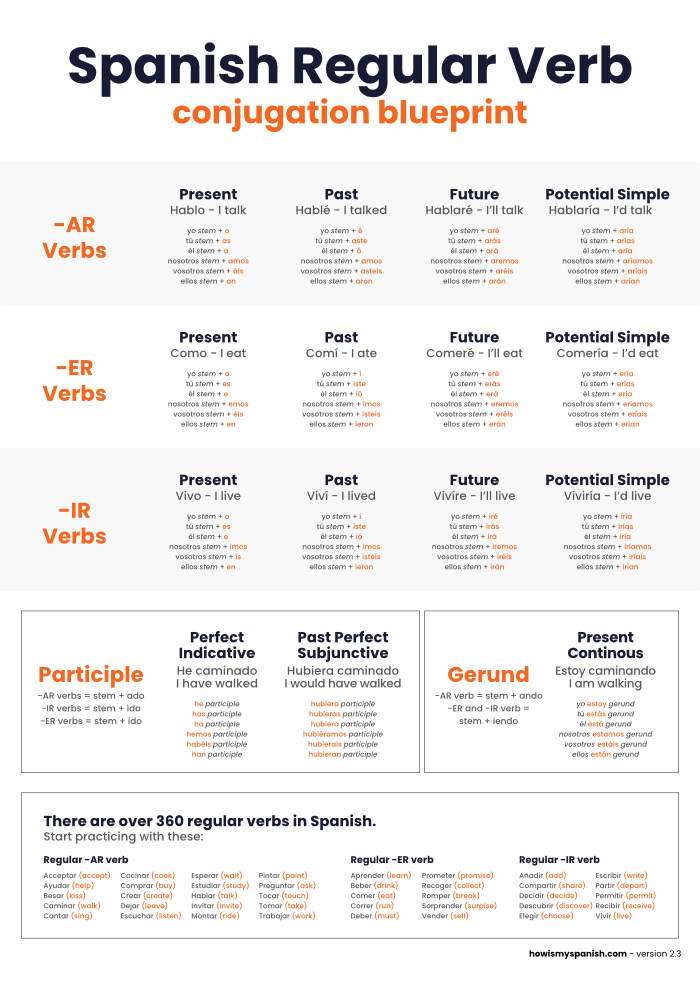
The Spanish language is renowned for its complex grammar rules, and one of the most critical aspects of mastering Spanish is understanding the conjugation of verbs. The verb "ir" (to go) is a fundamental verb in Spanish, and its conjugation can be challenging for non-native speakers. In this comprehensive guide, we will delve into the world of "ir" conjugation, exploring the various tenses, moods, and uses of this essential verb.
Introduction to Ir Conjugation
Before we dive into the conjugation chart, it’s essential to understand the basics of “ir” and its role in Spanish grammar. “Ir” is a verb of movement, and it’s used to describe the act of going or moving from one place to another. The verb “ir” is also used in various idiomatic expressions and is a crucial part of many Spanish sentences. To master “ir” conjugation, it’s vital to understand the different tenses, moods, and verb forms.
Key Points
- The verb "ir" is a fundamental verb in Spanish, used to describe movement or going from one place to another.
- Understanding "ir" conjugation is crucial for mastering Spanish grammar.
- The conjugation of "ir" varies across different tenses, moods, and verb forms.
- "Ir" is used in various idiomatic expressions and is a vital part of many Spanish sentences.
- Mastering "ir" conjugation requires practice and a deep understanding of Spanish grammar rules.
Present Tense Conjugation
The present tense conjugation of “ir” is used to describe actions that are happening now or are true in general. The present tense conjugation of “ir” is as follows:
| Subject | Verb Form |
|---|---|
| Yo | voy |
| Tú | vas |
| Él/ella/usted | va |
| Nosotros/as | vamos |
| Vosotros/as | vais |
| Ellos/as | van |
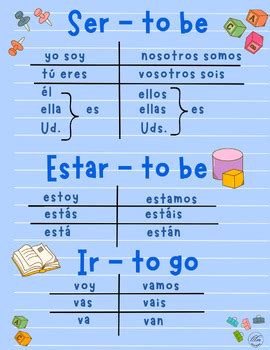
For example, "Yo voy al parque" (I am going to the park), "Tú vas al cine" (You are going to the movies), or "Él va al trabajo" (He is going to work).
Preterite Tense Conjugation
The preterite tense conjugation of “ir” is used to describe actions that happened in the past and are completed. The preterite tense conjugation of “ir” is as follows:
| Subject | Verb Form |
|---|---|
| Yo | fui |
| Tú | fuiste |
| Él/ella/usted | fue |
| Nosotros/as | fuimos |
| Vosotros/as | fuisteis |
| Ellos/as | fueron |
For example, "Yo fui al parque" (I went to the park), "Tú fuiste al cine" (You went to the movies), or "Él fue al trabajo" (He went to work).
Imperfect Tense Conjugation
The imperfect tense conjugation of “ir” is used to describe actions that were happening in the past but are not completed. The imperfect tense conjugation of “ir” is as follows:
| Subject | Verb Form |
|---|---|
| Yo | iba |
| Tú | ibas |
| Él/ella/usted | iba |
| Nosotros/as | íbamos |
| Vosotros/as | ibais |
| Ellos/as | iban |
For example, "Yo iba al parque todos los días" (I used to go to the park every day), "Tú ibas al cine con tus amigos" (You used to go to the movies with your friends), or "Él iba al trabajo en coche" (He used to go to work by car).
Advanced Ir Conjugation Concepts
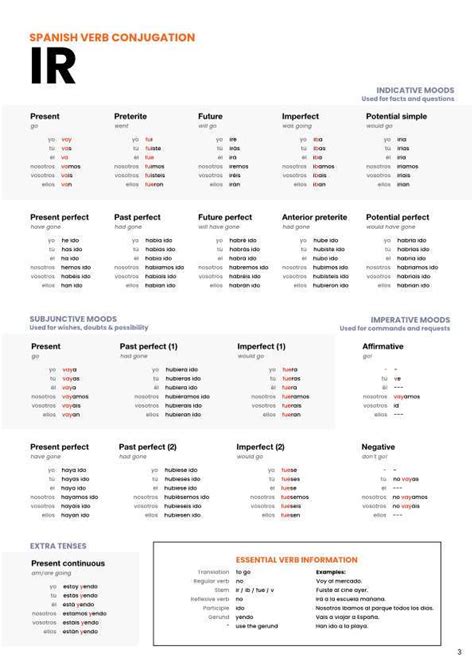
Once you have mastered the basic conjugation of “ir”, it’s time to move on to more advanced concepts. One of the most critical aspects of “ir” conjugation is the use of the verb in different tenses and moods. For example, the subjunctive mood is used to express doubt, uncertainty, or possibility, while the conditional mood is used to express hypothetical or uncertain situations.
Subjunctive Mood Conjugation
The subjunctive mood conjugation of “ir” is used to express doubt, uncertainty, or possibility. The subjunctive mood conjugation of “ir” is as follows:
| Subject | Verb Form |
|---|---|
| Yo | vaya |
| Tú | vayas |
| Él/ella/usted | vaya |
| Nosotros/as | vayamos |
| Vosotros/as | vayáis |
| Ellos/as | vayan |
For example, "Es importante que yo vaya al parque" (It's important that I go to the park), "Es importante que tú vayas al cine" (It's important that you go to the movies), or "Es importante que él vaya al trabajo" (It's important that he goes to work).
Conditional Mood Conjugation
The conditional mood conjugation of “ir” is used to express hypothetical or uncertain situations. The conditional mood conjugation of “ir” is as follows:
| Subject | Verb Form |
|---|---|
| Yo | iría |
| Tú | irías |
| Él/ella/usted | iría |
| Nosotros/as | iríamos |
| Vosotros/as | iríais |
| Ellos/as | irían |
For example, "Yo iría al parque si tuviera tiempo" (I would go to the park if I had time), "Tú irías al cine si te gustaran las películas" (You would go to the movies if you liked movies), or "Él iría al trabajo si no estuviera enfermo" (He would go to work if he weren't sick).
What is the difference between the preterite and imperfect tense conjugation of "ir"?
+The preterite tense conjugation of "ir" is used to describe actions that happened in the past and are completed, while the imperfect tense conjugation is used to describe actions that were happening in the past but are not completed.
How do I use the subjunctive mood conjugation of "ir"?
+The subjunctive mood conjugation of "ir" is used to express doubt, uncertainty, or possibility. It is often used in clauses that begin with "que" (that) and is used to express a desire, hope, or possibility.
What is the difference between the conditional and future tense conjugation of "ir"?
+The conditional tense conjugation of "ir" is used to express hypothetical or uncertain situations, while the future tense conjugation is used to describe actions that will happen in the future.
In conclusion, mastering the conjugation of “ir” is a fundamental aspect of learning Spanish. By understanding the different tenses, moods, and verb forms, you can improve your Spanish language skills and communicate more effectively. Remember to practice regularly and use the verb “ir” in context to reinforce your learning.