

The terms "innie" and "outie" are often used to describe the physical appearance of the vagina, particularly in reference to the position of the labia majora and the overall shape of the vulva. However, it's essential to understand that these terms are not medical or anatomical classifications, but rather colloquialisms used in popular culture. The vagina, a muscular and tubular part of the female genital tract, comes in a wide range of shapes, sizes, and configurations, and there is no one "normal" or "standard" appearance.
Understanding Vaginal Anatomy

The vagina is a complex and highly individualized part of the human body. It is surrounded by the vulva, which includes the labia majora and labia minora, the clitoris, and the opening of the vagina itself. The labia majora are the outer lips of the vulva, and they can vary significantly in size, shape, and color from one person to another. Some people have larger labia majora that may protrude more, while others have smaller labia that may appear more recessed.
Variations in Vaginal Appearance
There is a wide range of normal when it comes to vaginal appearance. Some people may have what is colloquially referred to as an “innie” vagina, where the labia majora are smaller and the vaginal opening is more recessed. Others may have an “outie” vagina, where the labia majora are larger and more prominent. However, these terms do not capture the full diversity of vaginal anatomy and should not be used to imply that one type is more normal or desirable than another.
| Characteristic | Description |
|---|---|
| Labia Majora Size | Can vary from small and slender to large and fleshy |
| Vaginal Opening Position | Can be more recessed or more prominent, depending on individual anatomy |
| Clitoral Size and Position | Can vary significantly from one person to another |

Importance of Self-Acceptance and Education
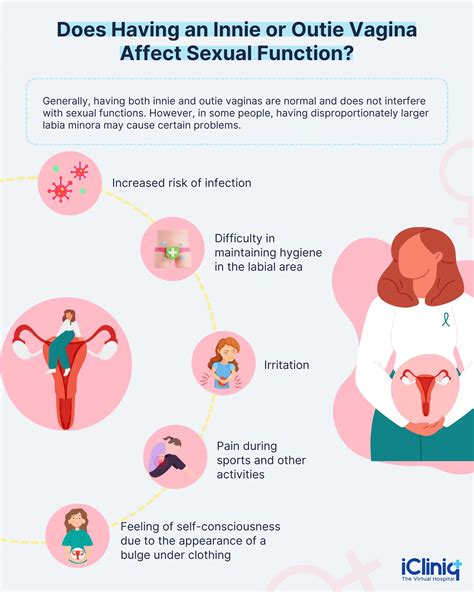
Education and self-acceptance are key in promoting a healthy and positive relationship with one’s body. Understanding that vaginal anatomy varies widely and that all configurations are normal can help alleviate unnecessary anxiety or shame. It’s also important to recognize that societal and media portrayals of the female body often do not reflect the diversity of real bodies, and these portrayals should not be taken as standards of beauty or normalcy.
Promoting Positive Body Image
Promoting positive body image involves recognizing and appreciating the diversity of human bodies, including the diversity of vaginal anatomy. This can involve educating oneself and others about the range of normal vaginal appearances, challenging unrealistic beauty standards, and fostering an environment of acceptance and respect for all body types.
Key Points
- Vaginal anatomy is highly variable and unique to each individual.
- The terms "innie" and "outie" are colloquialisms and not medical terms.
- There is no one "normal" or "standard" appearance for the vagina.
- Education and self-acceptance are crucial for a positive body image.
- Societal portrayals of the female body often do not reflect real diversity and should not be considered standards.
As we move forward in our understanding and appreciation of human anatomy, it's essential to prioritize respect, acceptance, and education. By doing so, we can work towards a more inclusive and supportive environment for everyone, regardless of their physical characteristics. This involves not just acknowledging the diversity of vaginal anatomy but also celebrating it as a natural part of human variation.
What is considered a normal vaginal appearance?
+Normal vaginal appearance varies widely among individuals. There is no one standard size, shape, or configuration of the vagina or vulva that defines normalcy.
Can vaginal appearance change over time?
+How can I promote a positive body image regarding my vaginal health?
+Promoting a positive body image involves education, self-acceptance, and challenging unrealistic beauty standards. It's also important to consult with healthcare providers who can offer advice and reassurance based on medical expertise.
In conclusion, the diversity of vaginal anatomy is a natural and beautiful aspect of human variation. By embracing this diversity and promoting education, acceptance, and positive body image, we can foster a more supportive and inclusive environment for everyone.


