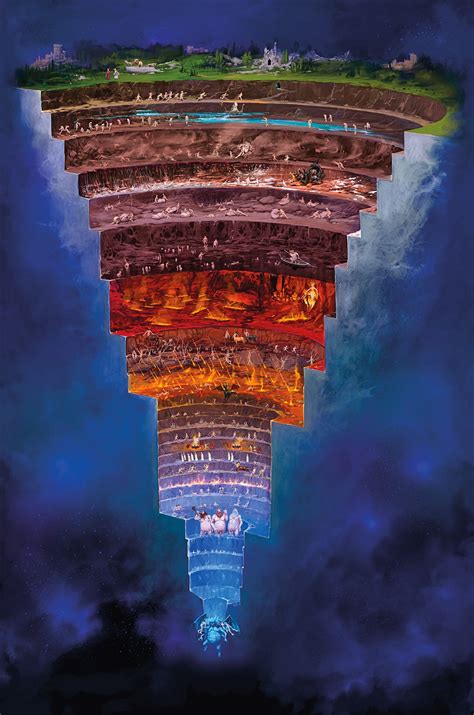
The Divine Comedy, an epic poem written by Dante Alighieri in the 14th century, is a masterpiece of Italian literature that has captivated readers for centuries. The poem is divided into three cantiche: Inferno, Purgatorio, and Paradiso. The Inferno, which translates to "Hell" in English, is the first part of the poem and describes the journey of the protagonist, Dante, as he navigates through the nine circles of Hell. In this article, we will delve into the nine circles of Hell, exploring the various levels of suffering and the sins that lead to each circle.
The concept of the nine circles of Hell is rooted in Dante's understanding of sin and punishment. According to Dante, sin is a corruption of the human will, and the punishment for sin is tailored to the nature of the sin itself. The nine circles of Hell are arranged in a hierarchical structure, with the least severe punishments at the top and the most severe at the bottom. As we journey through the circles, we will encounter various sinners, each suffering a unique punishment that reflects the nature of their sin.
Key Points
- The nine circles of Hell are arranged in a hierarchical structure, with the least severe punishments at the top and the most severe at the bottom.
- Each circle is reserved for a specific type of sinner, with punishments tailored to the nature of the sin.
- The journey through the nine circles is a metaphor for the soul's journey towards spiritual purification.
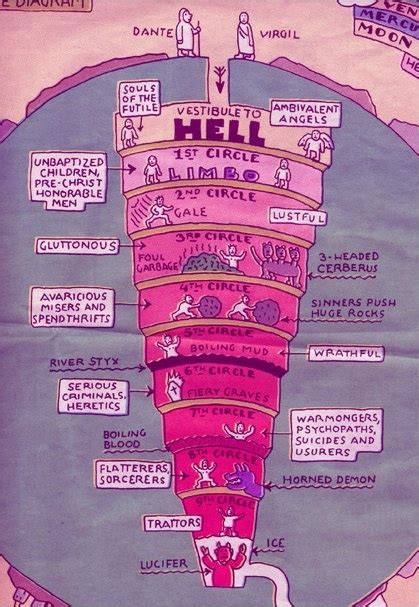
- The nine circles are: Limbo, Lust, Gluttony, Hoarding and Spending, Anger, Heresy, Violence, Fraud, and Treachery.
- Each circle is characterized by a unique landscape and punishment, reflecting the nature of the sin.
First Circle: Limbo
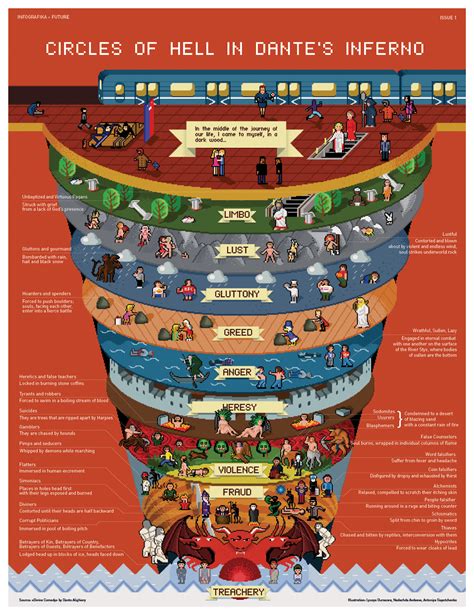
The first circle of Hell is Limbo, a place where the unbaptized and those who lived virtuous lives but did not know Christ reside. The punishment in Limbo is relatively mild, with the inhabitants living in a state of neutrality, neither experiencing pleasure nor pain. The landscape of Limbo is a beautiful, tranquil place, with rolling hills and a sense of serenity. However, the inhabitants of Limbo are unable to experience the joy of Heaven, and are instead relegated to a state of existential limbo.
Second Circle: Lust
The second circle of Hell is reserved for those who succumbed to lust. The punishment in this circle is to be blown about by strong winds, unable to rest or find peace. The landscape of the second circle is a desolate, barren place, with the sinners being tossed about like leaves on a windy day. The sinners in this circle are unable to escape the winds, and are forced to endure the constant turmoil.
| Circle | Punishment |
|---|---|
| Limbo | Existential neutrality |
| Lust | Blown about by strong winds |
| Gluttony | Forced to lie in a foul slush |
| Hoarding and Spending | Forced to push heavy weights against each other |
| Anger | Forced to sail in a river of boiling blood |
| Heresy | Trapped in flaming tombs |
| Violence | Immersed in a river of boiling blood and fire |
| Fraud | Forced to suffer from various diseases and pains |
| Treachery | Trapped in a frozen lake, unable to move or escape |
Third Circle: Gluttony

The third circle of Hell is reserved for those who succumbed to gluttony. The punishment in this circle is to be forced to lie in a foul slush that represents the waste and excess of the sinners’ lives. The landscape of the third circle is a putrid, foul-smelling place, with the sinners being forced to endure the stench and filth of their own making.
Fourth Circle: Hoarding and Spending
The fourth circle of Hell is reserved for those who hoarded or spent excessively. The punishment in this circle is to be forced to push heavy weights against each other, representing the futility and frustration of the sinners’ actions. The landscape of the fourth circle is a barren, rocky place, with the sinners being forced to endure the Sisyphean task of pushing the weights.
Fifth Circle: Anger
The fifth circle of Hell is reserved for those who succumbed to anger. The punishment in this circle is to be forced to sail in a river of boiling blood, representing the fiery passion and aggression of the sinners. The landscape of the fifth circle is a desolate, violent place, with the sinners being forced to endure the constant turmoil and aggression.
Sixth Circle: Heresy
The sixth circle of Hell is reserved for those who committed heresy. The punishment in this circle is to be trapped in flaming tombs, representing the sinners’ rejection of God’s truth. The landscape of the sixth circle is a fiery, apocalyptic place, with the sinners being forced to endure the flames and heat of their own making.
Seventh Circle: Violence
The seventh circle of Hell is reserved for those who committed violence against others. The punishment in this circle is to be immersed in a river of boiling blood and fire, representing the brutal and violent nature of the sinners’ actions. The landscape of the seventh circle is a brutal, violent place, with the sinners being forced to endure the constant pain and suffering.
Eighth Circle: Fraud
The eighth circle of Hell is reserved for those who committed fraud. The punishment in this circle is to be forced to suffer from various diseases and pains, representing the deceit and trickery of the sinners. The landscape of the eighth circle is a diseased, corrupted place, with the sinners being forced to endure the constant suffering and pain.
Ninth Circle: Treachery
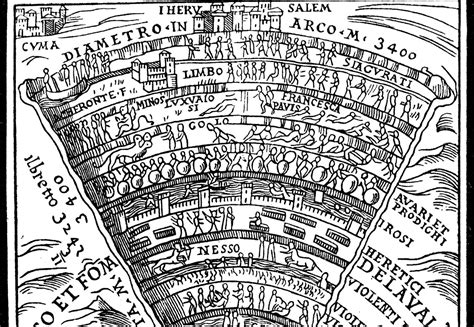
The ninth and final circle of Hell is reserved for those who committed treachery. The punishment in this circle is to be trapped in a frozen lake, unable to move or escape, representing the cold and calculating nature of the sinners’ actions. The landscape of the ninth circle is a frozen, desolate place, with the sinners being forced to endure the constant cold and darkness.
In conclusion, the nine circles of Hell in Dante's Inferno provide a unique and thought-provoking perspective on sin and punishment. By exploring the various levels of suffering and the sins that lead to each circle, we gain a deeper understanding of the human condition and the nature of sin. The journey through the nine circles is a metaphor for the soul's journey towards spiritual purification, and serves as a warning to those who would succumb to similar sins.
What is the first circle of Hell in Dante’s Inferno?
+The first circle of Hell is Limbo, a place where the unbaptized and those who lived virtuous lives but did not know Christ reside.
What is the punishment in the second circle of Hell?
+The punishment in the second circle is to be blown about by strong winds, unable to rest or find peace.
What is the ninth circle of Hell reserved for?
+The ninth circle of Hell is reserved for those who committed treachery, and the punishment is to be trapped in a frozen lake, unable to move or escape.