When asked to "tell me about yourself," it can be challenging to know where to start. This question is often used as an icebreaker in interviews, networking events, or social gatherings, and it can be a great opportunity to make a positive impression. However, it can also be a source of anxiety for many people. In this article, we will explore five different ways to approach this question, providing you with a range of strategies to help you feel more confident and prepared.
Understanding the Context
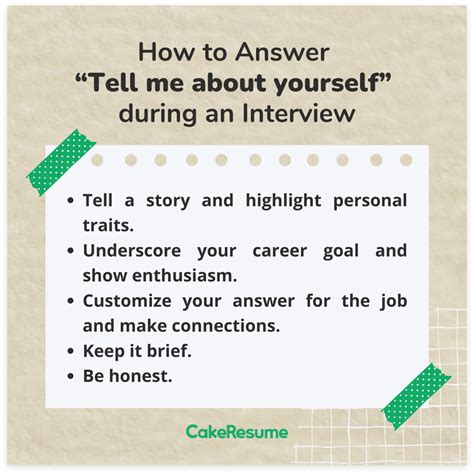
Before we dive into the different ways to answer this question, it’s essential to understand the context in which it is being asked. The purpose of “tell me about yourself” is not to provide a detailed biography, but rather to give the other person a sense of who you are, what you do, and what you’re interested in. It’s a chance to showcase your personality, skills, and experiences in a concise and engaging way. Whether you’re in a professional setting or a social gathering, the goal is to be authentic, clear, and relevant to the conversation.
Approach 1: The Professional Summary
This approach is ideal for job interviews or professional networking events. It involves providing a brief summary of your education, work experience, and relevant skills. For example, you could say: “I’m a marketing professional with 5 years of experience in digital marketing. I’ve worked with several clients to develop and implement successful social media campaigns, and I’m passionate about staying up-to-date with the latest industry trends.” This approach is straightforward and to the point, and it gives the other person a clear understanding of your professional background and expertise.
Approach 2: The Personal Story
This approach is more suitable for social gatherings or casual conversations. It involves sharing a personal story or anecdote that reveals something about your personality, interests, or values. For example, you could say: “I’m a big fan of hiking and outdoor activities. Last year, I completed a solo hike through the Appalachian Trail, which was an incredible challenge and a huge accomplishment for me. I love meeting new people and hearing their stories, and I’m always looking for new adventures and experiences.” This approach is more conversational and can help to build rapport and establish a connection with the other person.
Approach 3: The Hobby-Based Introduction
This approach is ideal for social gatherings or community events. It involves talking about your hobbies or interests and how they relate to your life and personality. For example, you could say: “I’m a passionate musician and I’ve been playing the guitar for over 10 years. I love playing in local bands and attending music festivals. Music is a big part of my life, and it helps me to relax and express myself creatively.” This approach is a great way to show your personality and interests, and it can be a good conversation starter.
Approach 4: The Goal-Oriented Introduction
This approach is suitable for professional settings or when you’re looking to achieve a specific goal. It involves talking about your goals, aspirations, and what you’re working towards. For example, you could say: “I’m a recent graduate in computer science, and I’m looking to start my career in software development. I’m excited to learn and grow with a company, and I’m passionate about using technology to make a positive impact on society.” This approach is clear and direct, and it shows that you’re focused and motivated.
Approach 5: The Authentic Introduction
This approach is ideal for any situation where you want to be yourself and build a genuine connection with the other person. It involves being honest, authentic, and vulnerable, and sharing something that reveals your true personality and character. For example, you could say: “I’m a bit of an introvert, and I sometimes struggle to put myself out there and meet new people. But I’m working on it, and I’m excited to meet new people and learn from their experiences.” This approach is refreshing and can help to build trust and rapport with the other person.
| Approach | Description |
|---|---|
| Professional Summary | Provide a brief summary of your education, work experience, and relevant skills |
| Personal Story | Share a personal story or anecdote that reveals something about your personality, interests, or values |
| Hobby-Based Introduction | Talk about your hobbies or interests and how they relate to your life and personality |
| Goal-Oriented Introduction | Talk about your goals, aspirations, and what you're working towards |
| Authentic Introduction | Be honest, authentic, and vulnerable, and share something that reveals your true personality and character |
Key Points
- Understand the context and purpose of the question
- Be authentic, clear, and relevant to the conversation
- Use one of the five approaches to structure your response
- Practice and prepare to feel more confident and prepared
- Remember to show your personality, share your interests, and talk about your goals and aspirations
In conclusion, answering "tell me about yourself" is an opportunity to showcase your personality, skills, and experiences in a concise and engaging way. By understanding the context, being authentic, and using one of the five approaches, you can feel more confident and prepared to answer this question in any situation. Remember to practice and prepare, and don't be afraid to show your personality and share your interests.
What is the purpose of “tell me about yourself”?
+The purpose of “tell me about yourself” is to give the other person a sense of who you are, what you do, and what you’re interested in. It’s a chance to showcase your personality, skills, and experiences in a concise and engaging way.
How can I prepare to answer “tell me about yourself”?
+You can prepare to answer “tell me about yourself” by practicing and preparing a response that is authentic, clear, and relevant to the conversation. Consider using one of the five approaches outlined in this article, and remember to show your personality, share your interests, and talk about your goals and aspirations.
What are some common mistakes to avoid when answering “tell me about yourself”?
+Some common mistakes to avoid when answering “tell me about yourself” include being too vague or generic, talking too much or too little, and failing to be authentic and genuine. Remember to be clear, concise, and relevant to the conversation, and to show your personality and share your interests.