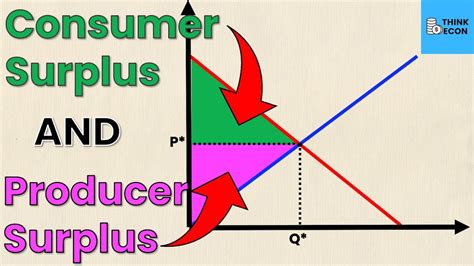
The concept of consumer surplus has been a cornerstone of microeconomics, representing the difference between what consumers are willing to pay for a product or service and the actual price they pay. Understanding and measuring consumer surplus is crucial for businesses and policymakers to gauge the welfare effects of market transactions and make informed decisions. Here, we delve into five methods to find consumer surplus, exploring both theoretical frameworks and practical applications.
Introduction to Consumer Surplus
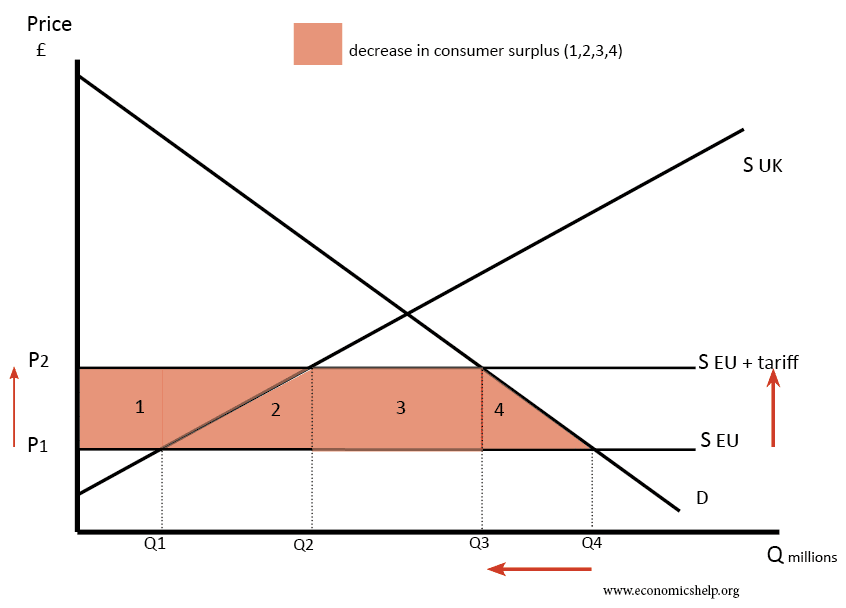
Consumer surplus is essentially the excess value that consumers receive from purchasing goods or services at prices lower than their maximum willingness to pay. It’s a key concept in understanding market efficiency and consumer behavior. The total consumer surplus in a market can be graphically represented by the area under the demand curve and above the market price. Finding consumer surplus involves understanding the demand curve’s shape and position, which can vary significantly across different markets and consumer groups.
Key Points
- Consumer surplus is the difference between the maximum price a consumer is willing to pay and the actual price paid.
- Understanding consumer surplus is crucial for assessing market efficiency and consumer welfare.
- Demand curves are essential for calculating consumer surplus, as they represent the relationship between the price of a good and the quantity demanded.
- Various methods, including the use of demand equations, graphical analysis, survey research, econometric models, and experimental economics, can be employed to estimate consumer surplus.
- Each method has its strengths and limitations, and the choice of method depends on the availability of data, the complexity of the market, and the specific objectives of the analysis.
1. Demand Equation Method

One of the most straightforward ways to calculate consumer surplus is by using the demand equation. If the demand curve is linear, it can be represented by the equation Q = a - bP, where Q is the quantity demanded, P is the price, and a and b are constants. The consumer surplus (CS) can then be calculated using the formula CS = (1⁄2) * b * (a/b - P)^2. This method requires knowledge of the demand curve’s parameters, which can be estimated through regression analysis using historical data on prices and quantities sold.
Example Calculation
For instance, if the demand equation for a particular good is Q = 100 - 2P, and the market price is 20, the quantity demanded would be Q = 100 - 2*20 = 60 units. Using the formula for consumer surplus, with a = 100 and b = 2, we get CS = (1/2) * 2 * (100/2 - 20)^2 = (1/2) * 2 * (50 - 20)^2 = (1/2) * 2 * 30^2 = 900. This means the total consumer surplus in this market is 900.
2. Graphical Analysis
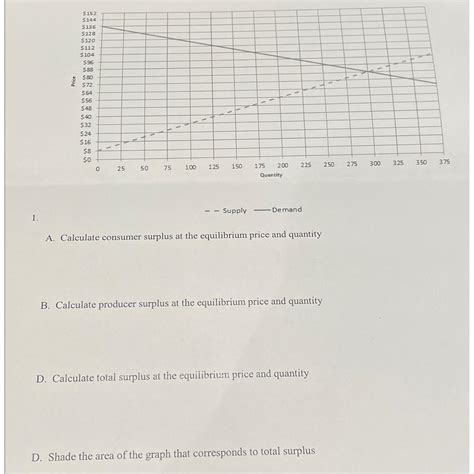
Graphical analysis is another intuitive method for estimating consumer surplus. By plotting the demand curve on a graph and identifying the market price and quantity, one can visually estimate the area under the demand curve and above the market price, which represents the consumer surplus. This method is particularly useful for illustrative purposes and for markets where the demand curve can be approximated or is known.
Advantages and Limitations
The graphical method is advantageous for its simplicity and the ease with which it communicates complex economic concepts. However, its accuracy depends on the precision of the demand curve’s representation, and it may not be as precise as other methods, especially for complex or non-linear demand curves.
3. Survey Research
Survey research involves directly asking consumers about their willingness to pay for a product or service. By collecting data on the maximum price consumers are willing to pay and comparing it with the actual market price, researchers can estimate the consumer surplus. This method provides valuable insights into consumer preferences and can be particularly useful for new or niche products where market data may be limited.
Challenges and Opportunities
While survey research offers a direct approach to understanding consumer willingness to pay, it faces challenges such as biased responses, hypothetical bias (where respondents may overstate their willingness to pay in a hypothetical scenario), and the difficulty in translating survey data into actual market outcomes. Despite these challenges, advancements in survey methodologies and the integration of survey data with other estimation methods can enhance the accuracy and usefulness of survey research in estimating consumer surplus.
4. Econometric Models
Econometric models provide a sophisticated approach to estimating consumer surplus by analyzing the relationship between prices, quantities, and other factors that influence demand. These models can account for various complexities in consumer behavior and market interactions, offering a more nuanced understanding of consumer surplus. Techniques such as hedonic pricing and discrete choice models are commonly used for this purpose.
Example of Hedonic Pricing
Hedonic pricing models estimate the implicit prices of attributes that make up a product. For instance, in the housing market, attributes such as the number of bedrooms, square footage, and location can be analyzed to understand how they contribute to the overall price of a house. By understanding the marginal willingness to pay for these attributes, policymakers and businesses can better assess the consumer surplus associated with different housing types and locations.
5. Experimental Economics
Experimental economics involves designing controlled experiments to study economic behavior. In the context of consumer surplus, experiments can be designed to elicit consumers’ willingness to pay through mechanisms such as auctions or posted prices. Experimental economics provides a unique opportunity to isolate the effects of different variables on consumer behavior and willingness to pay, offering insights that can be difficult to obtain through observational data alone.
Advantages of Experimental Methods
The experimental approach allows for the manipulation of variables in a controlled setting, which can help in identifying causal relationships between prices, product attributes, and consumer willingness to pay. However, experiments may face challenges in terms of external validity (the extent to which the findings can be generalized to real-world settings) and the potential for subjects to behave differently in an experimental setting compared to real-life situations.
| Method | Description | Advantages | Limitations |
|---|---|---|---|
| Demand Equation | Uses the demand curve equation to calculate consumer surplus. | Straightforward, uses historical data. | Requires accurate demand curve parameters. |
| Graphical Analysis | Visually estimates consumer surplus from the demand curve. | Intuitive, easy to communicate. | Accuracy depends on demand curve precision. |
| Survey Research | Asks consumers about their willingness to pay. | Direct approach, valuable for new products. | Challenges with biased responses and hypothetical bias. |
| Econometric Models | Analyzes demand and other factors to estimate consumer surplus. | Accounts for complexities, nuanced understanding. | Requires sophisticated data and analytical skills. |
| Experimental Economics | Uses controlled experiments to study willingness to pay. | Isolates effects of variables, causal insights. | Challenges with external validity and subject behavior. |

In conclusion, estimating consumer surplus is a multifaceted task that can be approached through various methods, each with its unique advantages and challenges. By understanding these methods and their applications, businesses and policymakers can better assess the welfare effects of market transactions and make more informed decisions. As markets continue to evolve, the development of new methodologies and the refinement of existing ones will remain crucial for accurately estimating consumer surplus and understanding consumer behavior.
What is consumer surplus, and why is it important?
+Consumer surplus is the difference between the maximum price a consumer is willing to pay for a product and the actual price they pay. It's a measure of consumer welfare and is important for understanding market efficiency and the impact of pricing strategies on consumers.
How can consumer surplus be estimated?
+Consumer surplus can be estimated through various methods, including the use of demand equations, graphical analysis, survey research, econometric models, and experimental economics. The choice of method depends on the availability of data, the complexity of the market, and the specific objectives of the analysis.
What are the limitations of estimating consumer surplus?
+The estimation of consumer surplus faces several limitations, including the difficulty in obtaining accurate data on consumer willingness to pay, the challenge of modeling complex consumer behavior, and the potential biases in survey responses and experimental designs. Additionally, the results may not always be generalizable to other contexts or populations.
Meta Description: Discover the five primary methods for estimating consumer surplus, including demand equation, graphical analysis, survey research, econometric models, and experimental economics, and understand their applications and limitations in assessing consumer welfare.