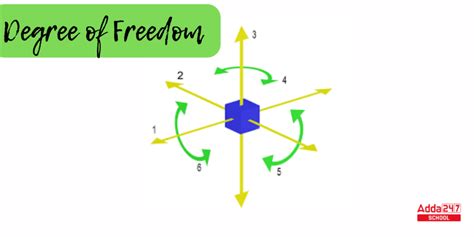
Determining degrees of freedom is a crucial concept in statistics, particularly when dealing with hypothesis testing and confidence intervals. The degrees of freedom, often denoted as df, are a measure of the amount of independent information used to estimate a parameter. In essence, it quantifies the number of values in the final calculation of a statistic that are free to vary. Understanding degrees of freedom is essential for selecting the appropriate statistical test and interpreting the results correctly.
Key Points
- Determining degrees of freedom is critical in statistical analysis for hypothesis testing and confidence intervals.
- The concept of degrees of freedom varies across different statistical tests, such as t-tests, ANOVA, and chi-square tests.
- Calculating degrees of freedom involves understanding the specific formula for each statistical test, which often depends on the sample size and the number of parameters being estimated.
- Correctly identifying degrees of freedom ensures the use of the appropriate critical value or p-value from statistical tables or software, thereby affecting the conclusions drawn from the data.
- Common mistakes in calculating degrees of freedom can lead to incorrect conclusions about the significance of the results.
Understanding Degrees of Freedom in Statistical Tests
Different statistical tests have different ways of calculating degrees of freedom. For instance, in a t-test, which is used to compare the means of two groups, the degrees of freedom are typically calculated as the sum of the sample sizes minus 2 (n1 + n2 - 2) for an independent samples t-test. In contrast, for a paired t-test, where the same subjects are measured twice, the degrees of freedom are n - 1, where n is the number of pairs.
Calculating Degrees of Freedom for ANOVA
In the context of Analysis of Variance (ANOVA), degrees of freedom are calculated differently depending on the type of ANOVA. For a one-way ANOVA, the degrees of freedom between groups (df between) is k - 1, where k is the number of groups, and the degrees of freedom within groups (df within) is N - k, where N is the total number of observations across all groups. The total degrees of freedom (df total) in ANOVA is N - 1.
| Statistical Test | Formula for Degrees of Freedom |
|---|---|
| Independent Samples T-Test | n1 + n2 - 2 |
| Paired T-Test | n - 1 |
| One-Way ANOVA (Between Groups) | k - 1 |
| One-Way ANOVA (Within Groups) | N - k |
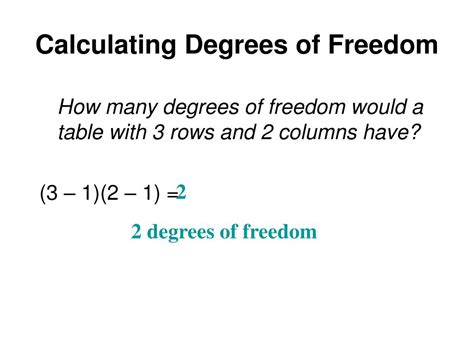
| Chi-Square Test | (r - 1) * (c - 1) |

Implications of Incorrect Degrees of Freedom
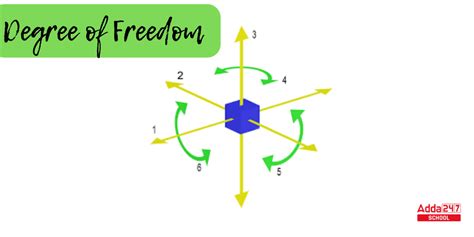
Incorrectly calculating degrees of freedom can have significant implications for the interpretation of statistical results. If the degrees of freedom are miscalculated, the critical value or p-value obtained from statistical tables or software may be incorrect, leading to incorrect conclusions about the significance of the results. This highlights the importance of carefully considering the specific statistical test being used and ensuring that the degrees of freedom are calculated correctly.
Practical Applications and Considerations
In practical terms, determining degrees of freedom is essential for researchers and analysts to ensure the validity and reliability of their findings. By understanding how degrees of freedom are calculated for different statistical tests, professionals can apply statistical methods more effectively, leading to more accurate conclusions and better decision-making. Moreover, the concept of degrees of freedom underscores the importance of sample size and experimental design in statistical analysis.
Why is calculating degrees of freedom important in statistics?
+Calculating degrees of freedom is crucial because it affects the critical value or p-value used in hypothesis testing, which in turn affects the conclusions drawn from the data. Incorrect degrees of freedom can lead to incorrect conclusions about the significance of the results.
How do I calculate degrees of freedom for a t-test?
+For an independent samples t-test, the degrees of freedom are calculated as n1 + n2 - 2, where n1 and n2 are the sample sizes of the two groups. For a paired t-test, the degrees of freedom are n - 1, where n is the number of pairs.
What is the difference in calculating degrees of freedom for ANOVA versus a chi-square test?
+For ANOVA, the degrees of freedom between groups is k - 1, where k is the number of groups, and within groups is N - k, where N is the total number of observations. For a chi-square test, the degrees of freedom are (r - 1) * (c - 1), where r is the number of rows and c is the number of columns in the contingency table.
In conclusion, determining degrees of freedom is a fundamental aspect of statistical analysis that requires careful consideration of the specific statistical test being used. By understanding how to calculate degrees of freedom accurately, researchers and analysts can ensure the validity and reliability of their findings, leading to more informed decision-making.