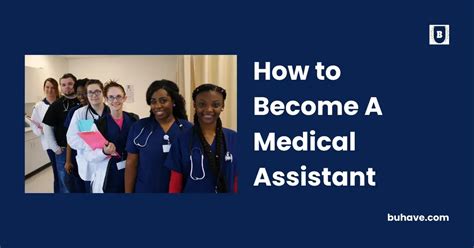
As the healthcare industry continues to evolve and expand, the demand for skilled medical professionals has never been higher. Among the various roles that are in high demand, medical assistants play a vital part in ensuring the smooth operation of healthcare facilities. If you're considering a career in this field, understanding the steps to become a medical assistant is crucial. This profession not only offers a rewarding experience but also provides a stable and challenging career path. In this article, we'll delve into the details of how to embark on this journey, including the educational requirements, training, certification, and the skills necessary to succeed as a medical assistant.
Introduction to the Role of a Medical Assistant
Medical assistants are healthcare professionals who support the work of physicians, nurses, and other healthcare personnel. Their duties can vary depending on the healthcare setting, but they typically include both administrative and clinical tasks. On the administrative side, medical assistants may be responsible for scheduling appointments, maintaining patient records, handling correspondence, and managing the front desk. Clinically, they may take vital signs, prepare patients for exams, assist with procedures, and perform basic laboratory tests. The role requires a unique blend of administrative, technical, and interpersonal skills.
Key Points
- Understanding the role and responsibilities of a medical assistant
- Meeting the educational and training requirements
- Obtaining certification to enhance job prospects
- Developing the necessary skills for success in the field
- Exploring career advancement opportunities
Educational Requirements and Training
To become a medical assistant, you typically need to complete a postsecondary education program. These programs are usually offered at vocational schools, community colleges, and universities and can lead to a certificate, diploma, or associate’s degree. The program you choose should be accredited by an accrediting agency recognized by the U.S. Department of Education or the Council for Higher Education Accreditation (CHEA). Accreditation ensures that the program meets certain standards and can provide you with the necessary knowledge and skills to pass the certification exam.
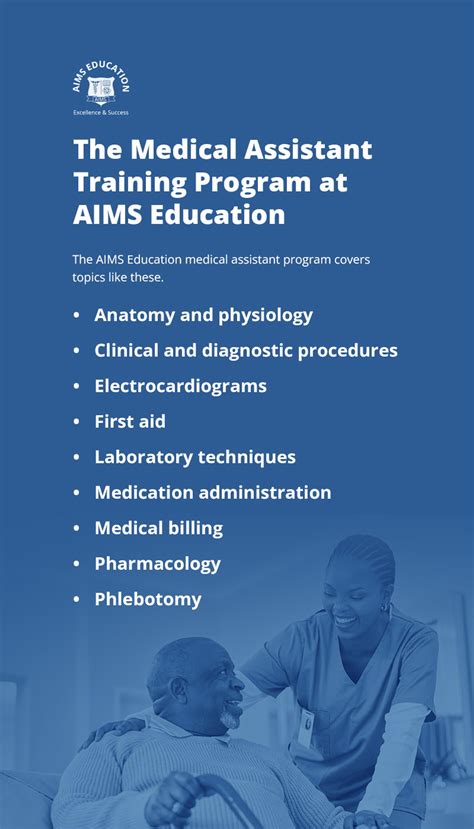
A medical assistant program includes both classroom and clinical instruction. In the classroom, you'll learn about anatomy, physiology, and medical terminology, as well as administrative tasks like record-keeping and billing. The clinical part of the program provides hands-on experience in a healthcare setting, where you can practice taking vital signs, preparing patients for exams, and assisting healthcare professionals with procedures.
| Program Component | Description |
|---|---|
| Classroom Instruction | Anatomy, physiology, medical terminology, administrative tasks |
| Clinical Training | Hands-on experience in a healthcare setting |

Certification and Licensure

Although certification is not always required, it is highly recommended for medical assistants. The Certified Medical Assistant (CMA) credential, offered by the American Association of Medical Assistants (AAMA), and the Registered Medical Assistant (RMA) credential, offered by the American Medical Technologists (AMT), are two of the most recognized certifications in the field. To become certified, you must graduate from an accredited program and pass a certification exam. Certification demonstrates your expertise and commitment to the profession, making you more competitive in the job market.
Skills and Qualities for Success
To succeed as a medical assistant, you need a combination of administrative, technical, and interpersonal skills. Strong communication skills are essential for interacting with patients, healthcare providers, and other staff members. You should also be detail-oriented, organized, and able to maintain patient confidentiality. In a fast-paced healthcare environment, the ability to multitask and remain calm under pressure is invaluable. Additionally, basic computer skills and knowledge of electronic health records (EHRs) are becoming increasingly important in the field.
Career Advancement and Specialization
With experience and additional education, medical assistants can pursue various career advancement opportunities. Some may choose to specialize in a particular area of healthcare, such as pediatrics, gerontology, or ophthalmology. Others may move into leadership roles, such as a medical office manager, or pursue further education to become a nurse or another type of healthcare professional. The field of medical assisting is dynamic, offering many paths for professional growth and development.
Job Outlook and Salary
The job outlook for medical assistants is promising, with the Bureau of Labor Statistics (BLS) predicting employment growth much faster than the average for all occupations. This growth is attributed to the increasing demand for healthcare services due to an aging population and an emphasis on preventive care. The median annual salary for medical assistants varies by location, experience, and specific job duties, but overall, it offers a competitive compensation package for those entering the healthcare field.
| Factor | Description |
|---|---|
| Job Outlook | Employment growth much faster than average |
| Median Salary | Varies by location, experience, and job duties |
What are the primary duties of a medical assistant?
+The primary duties include administrative tasks like scheduling appointments and maintaining records, as well as clinical tasks such as taking vital signs and assisting with procedures.
Is certification required to work as a medical assistant?
+Certification is not always required but is highly recommended as it demonstrates expertise and can enhance job prospects.
What skills are necessary to succeed as a medical assistant?
+Necessary skills include strong communication, detail-oriented organization, ability to multitask, and basic computer skills, along with empathy and flexibility.
In conclusion, becoming a medical assistant requires a careful blend of education, training, and personal qualities. By understanding the role, pursuing the right education and certification, and developing the necessary skills, you can set yourself up for success in this rewarding and challenging field. As healthcare continues to evolve, the demand for skilled medical assistants will only continue to grow, making this a promising career path for those who are passionate about delivering high-quality patient care.