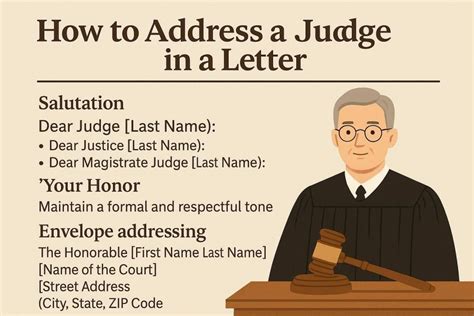
When addressing a judge in letter form, it is essential to maintain a professional tone and adhere to specific guidelines to ensure that your communication is respectful and effective. The proper way to address a judge in a letter depends on the judge's title and the level of court in which they preside. For instance, in the United States, judges in federal courts are typically addressed as "The Honorable," followed by their title, such as "Judge" or "Justice," and then their last name.
Basic Guidelines for Addressing a Judge
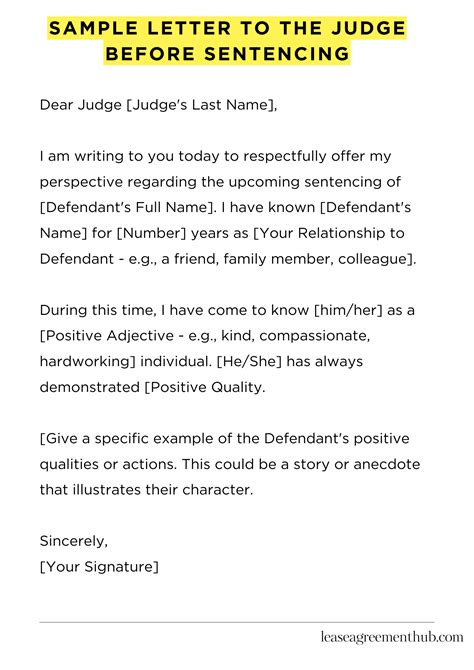
In general, when writing to a judge, the salutation should be formal and reflect the judge’s title and position. For example, if you are writing to a federal judge, the salutation might be “The Honorable Judge [Last Name]” or “The Honorable Justice [Last Name].” It is crucial to verify the judge’s title and name to ensure accuracy and respect. The body of the letter should clearly state the purpose of the communication, provide relevant details, and demonstrate a professional tone throughout.
Specific Titles and How to Address Them
Understanding the different titles that judges may hold and how to address them appropriately is vital. For example, a justice of the Supreme Court might be addressed as “The Honorable Justice [Last Name],” while a judge in a lower federal court could be addressed as “The Honorable Judge [Last Name].” In state courts, the titles and forms of address may vary, so it is essential to research the specific court’s customs and protocols.
| Title of Judge | Form of Address |
|---|---|
| Supreme Court Justice | The Honorable Justice [Last Name] |
| Federal Judge | The Honorable Judge [Last Name] |
| State Court Judge | The Honorable Judge [Last Name] or as specified by state court rules |
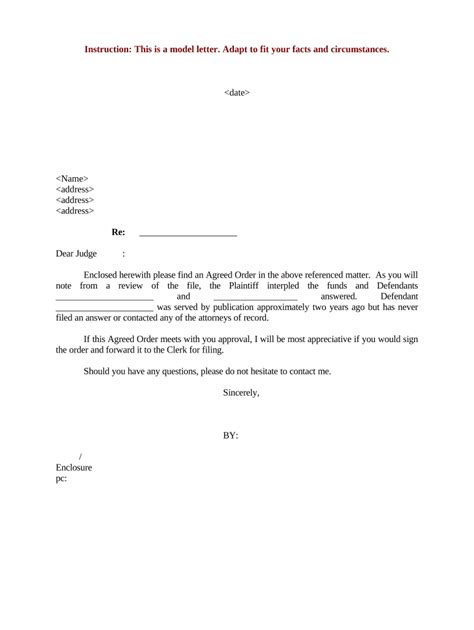
In addition to using the correct title and salutation, the content of the letter should be well-organized, clear, and concise. It should provide all necessary information and supporting documents as required by the court or the nature of the communication. The tone should remain professional and respectful throughout, avoiding any language that could be perceived as argumentative or disrespectful.
Practical Applications and Considerations
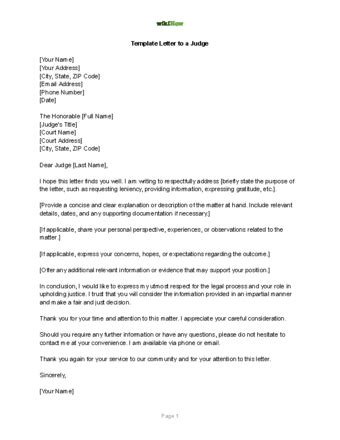
In practical terms, addressing a judge in a letter involves not just the technical aspects of titles and salutations but also an understanding of the legal context and the purpose of the communication. Whether you are a legal professional, a party to a case, or simply a concerned citizen, your ability to communicate effectively with the court can significantly impact the outcome of legal proceedings. Therefore, it is crucial to approach such communications with care, ensuring that your letters are not only respectful but also informative and relevant to the matter at hand.
Evolving Protocols and Technologies
As legal protocols and communication technologies evolve, the ways in which we address and interact with judges and the legal system are also changing. Electronic filings, for example, have become more prevalent, and understanding how to properly address a judge in these digital formats is essential. Despite these changes, the fundamental principles of respect, clarity, and professionalism remain constant, guiding how we communicate with judges and the legal community.
Key Points
- Addressing a judge in a letter requires a formal tone and adherence to specific guidelines.
- The proper form of address depends on the judge's title and the level of court.
- Verification of the judge's title and name is crucial for accuracy and respect.
- The content of the letter should be clear, concise, and well-organized.
- Understanding the legal context and purpose of the communication is vital for effective interaction.
In conclusion, addressing a judge in letter form is a matter of great importance, requiring attention to detail, respect for the legal process, and a clear understanding of the appropriate forms of address. By following established guidelines and maintaining a professional tone, individuals can ensure that their communications with judges are effective and respectful, contributing to the smooth operation of the legal system.
What is the proper way to address a federal judge in a letter?
+The proper way to address a federal judge in a letter is “The Honorable Judge [Last Name]” or “The Honorable Justice [Last Name]” for justices of the Supreme Court.
How do I determine the correct title for a judge in a state court?
+To determine the correct title for a judge in a state court, you should consult the state court’s rules or contact the court directly to inquire about the proper form of address.
What tone should I maintain when writing to a judge?
+When writing to a judge, it is essential to maintain a professional and respectful tone, avoiding any language that could be perceived as argumentative or disrespectful.