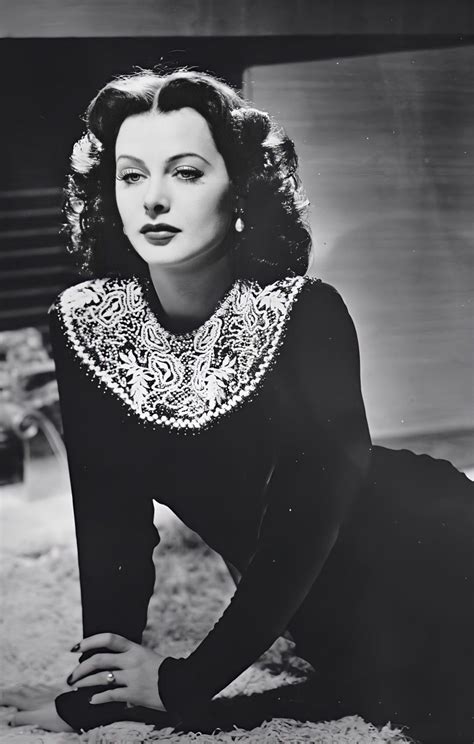
Hedy Lamarr, a name that evokes the glamour of old Hollywood, was more than just a beautiful face on the silver screen. Behind the stunning looks and charming on-screen presence, Lamarr was a genius inventor with a passion for innovation and problem-solving. Born on November 9, 1914, in Vienna, Austria, Hedwig Eva Maria Kiesler, later known as Hedy Lamarr, would go on to leave an indelible mark on both the film industry and the world of technology.
Lamarr's journey to becoming a legendary actress and inventor was not without its challenges. She began her acting career in Europe, eventually making her way to Hollywood, where she signed with MGM and became one of the most popular actresses of her time, starring in films like "Samson and Delilah" and "White Cargo." However, it was during World War II that Lamarr's inventive spirit truly came to the forefront. Concerned about the war effort and eager to contribute, Lamarr, along with composer George Antheil, developed a frequency-hopping system for torpedo guidance. This innovative technology, which used a sequence of random frequencies to encode messages, was designed to prevent enemy interception and decoding.
Key Points
- Hedy Lamarr was a renowned actress who also had a passion for inventing and problem-solving.
- She developed a frequency-hopping system for torpedo guidance during World War II, in collaboration with George Antheil.
- Lamarr's invention laid the groundwork for modern spread-spectrum communication technologies, including Wi-Fi, Bluetooth, and GPS.
- Despite her significant contributions to technology, Lamarr's work as an inventor was not widely recognized until later in her life.
- Lamarr's legacy extends beyond her inventions, inspiring future generations of women in STEM fields.
The Frequency-Hopping System: A Groundbreaking Invention

Lamarr and Antheil’s frequency-hopping system, patented in 1942, was a groundbreaking invention that used a sequence of random frequencies to encode messages. This technology, although not immediately adopted by the U.S. military during World War II, would later become the foundation for modern spread-spectrum communication technologies, including Wi-Fi, Bluetooth, and GPS. The principle behind frequency-hopping is to rapidly switch the carrier frequency among many different frequency channels, using a pseudorandom sequence known to both the transmitter and the receiver. This makes it extremely difficult for an unauthorized party to intercept and decode the message, as they would not know the sequence of frequencies being used.
Impact on Modern Technology
The impact of Lamarr’s invention on modern technology cannot be overstated. The development of spread-spectrum communication technologies has enabled the creation of wireless networks, allowing for the widespread use of mobile devices, internet connectivity, and global positioning systems. Without Lamarr’s pioneering work, these technologies might not have evolved in the same way, or might have been developed much later. It’s a testament to her innovative spirit and her contribution to the field of telecommunications that her invention continues to play a vital role in modern communication systems.
| Technology | Application |
|---|---|
| Wi-Fi | Wireless internet connectivity |
| Bluetooth | Wireless device connectivity |
| GPS | Global positioning and navigation |
| Cordless Phones | Wireless telephone communication |

Later Life and Recognition
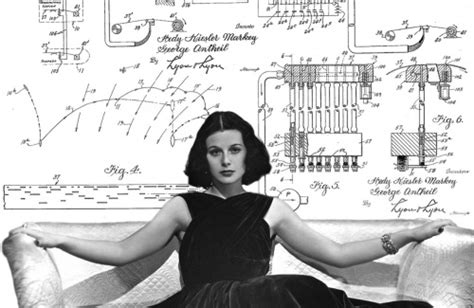
Despite her significant contributions to technology, Lamarr’s work as an inventor was not widely recognized until later in her life. In the 1990s, Lamarr’s frequency-hopping invention began to receive the recognition it deserved, with the Electronic Frontier Foundation awarding her a special award for her contributions to the field of telecommunications. Lamarr passed away on January 19, 2000, but her legacy continues to inspire and influence new generations of inventors, engineers, and actresses.
A Lasting Legacy
Hedy Lamarr’s story is one of passion, perseverance, and innovation. From her early days as a Hollywood actress to her later recognition as a pioneering inventor, Lamarr’s life was a testament to the power of creativity and determination. As we continue to push the boundaries of technology and innovation, Lamarr’s legacy serves as a reminder of the importance of acknowledging and celebrating the contributions of women in STEM fields, and the impact that their work can have on the world.
What was Hedy Lamarr’s most significant invention?
+Hedy Lamarr’s most significant invention was the frequency-hopping system for torpedo guidance, developed in collaboration with George Antheil during World War II. This invention laid the groundwork for modern spread-spectrum communication technologies.
What impact did Lamarr’s invention have on modern technology?
+Lamarr’s invention of the frequency-hopping system had a profound impact on modern technology, enabling the development of wireless networks, including Wi-Fi, Bluetooth, and GPS. These technologies have revolutionized the way we communicate and navigate the world.
Why was Lamarr’s work as an inventor not widely recognized until later in her life?
+Lamarr’s work as an inventor was not widely recognized until later in her life due to a combination of factors, including the societal norms of the time and the lack of recognition for women’s contributions to science and technology. It wasn’t until the 1990s that her invention began to receive the recognition it deserved.