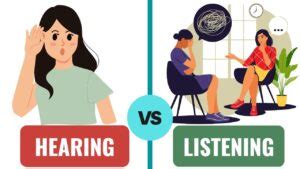
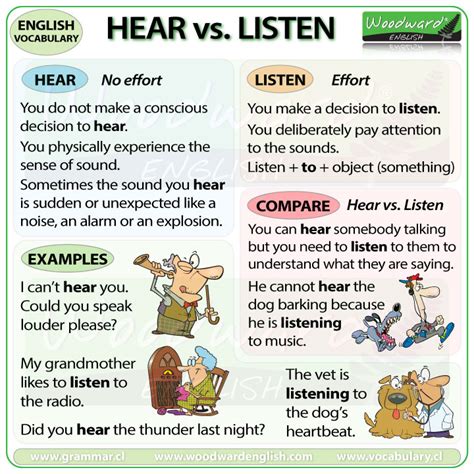
The terms "hearing" and "listening" are often used interchangeably, but they have distinct meanings. Hearing refers to the physical process of perceiving sound waves, whereas listening involves the cognitive and emotional process of interpreting and understanding those sounds. This difference is crucial in various aspects of life, including personal relationships, education, and professional communication. In this article, we will delve into the nuances of hearing vs listening, exploring the differences, importance, and implications of these two concepts.
Key Points
- The physical process of perceiving sound waves is referred to as hearing.
- Listening involves the cognitive and emotional process of interpreting and understanding sounds.
- Effective listening is essential for building strong relationships, achieving academic success, and excelling in professional environments.
- Active listening skills, such as maintaining eye contact and asking open-ended questions, can improve communication and reduce misunderstandings.
- Cultural and personal factors can influence an individual's listening style and ability to interpret sounds.
The Physical Process of Hearing
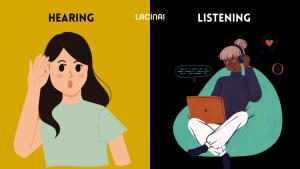
Hearing is a complex physiological process that involves the detection of sound waves by the ear and the transmission of these signals to the brain. The human ear consists of the outer ear, middle ear, and inner ear, each playing a crucial role in the hearing process. Sound waves enter the outer ear and travel through the ear canal, causing the eardrum to vibrate. These vibrations are then transmitted to the middle ear, where they are amplified by the ossicles (small bones). The amplified sound waves are then converted into electrical signals by the cochlea in the inner ear, which are transmitted to the brain for interpretation.
The Role of the Brain in Hearing
The brain plays a significant role in the hearing process, as it interprets the electrical signals transmitted from the ear. The brain processes these signals, allowing us to recognize and differentiate between various sounds, such as speech, music, and noise. However, the brain’s ability to process sound waves can be influenced by various factors, including attention, memory, and emotional state. For example, a person may be able to hear a conversation, but their brain may not be able to focus on the words being spoken due to distractions or lack of interest.
The Cognitive and Emotional Process of Listening
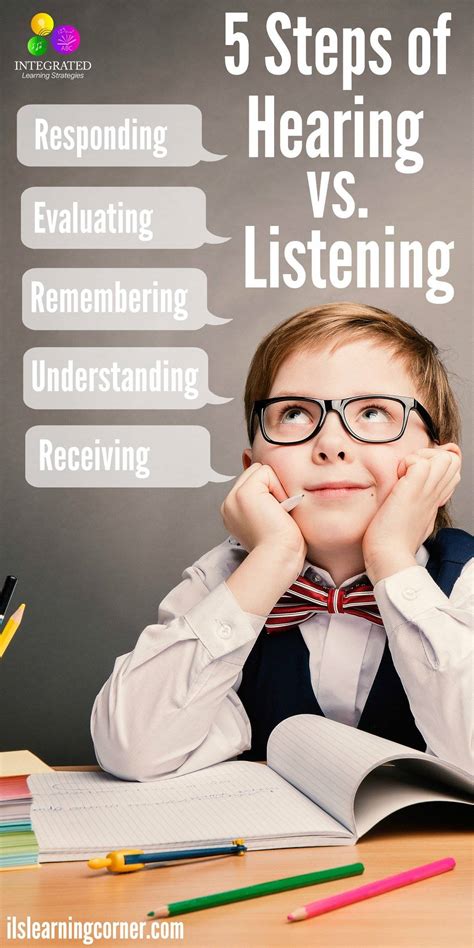
Listening, on the other hand, involves the cognitive and emotional process of interpreting and understanding sounds. It requires attention, concentration, and the ability to process and retain information. Effective listening is essential for building strong relationships, achieving academic success, and excelling in professional environments. When we listen, we not only hear the words being spoken, but also interpret the tone, pitch, and volume of the speaker’s voice, as well as their body language and facial expressions.
Active Listening Skills
Active listening skills, such as maintaining eye contact, asking open-ended questions, and paraphrasing, can improve communication and reduce misunderstandings. These skills demonstrate that we are engaged and interested in the conversation, which can help build trust and rapport with the speaker. Additionally, active listening can help us to better understand the speaker’s perspective, which can lead to more effective conflict resolution and improved relationships.
| Listening Skill | Description |
|---|---|
| Maintaining Eye Contact | Direct eye contact shows that we are engaged and interested in the conversation. |
| Asking Open-Ended Questions | Open-ended questions encourage the speaker to share more information and help to clarify their perspective. |
| Paraphrasing | Paraphrasing involves restating the speaker's words in our own words, which helps to ensure understanding and shows that we are actively listening. |
Cultural and Personal Factors Influencing Listening
Cultural and personal factors can significantly influence an individual’s listening style and ability to interpret sounds. For example, in some cultures, direct eye contact is considered aggressive or confrontational, while in others it is seen as a sign of respect and engagement. Additionally, personal factors such as personality traits, emotional state, and prior experiences can affect an individual’s ability to listen effectively. For instance, a person who is introverted or anxious may struggle to maintain eye contact or engage in conversations, while a person who is extroverted or confident may find it easier to listen and respond.
Implications of Hearing vs Listening
The distinction between hearing and listening has significant implications for various aspects of life. In personal relationships, effective listening can help to build trust, resolve conflicts, and strengthen bonds. In education, active listening can improve academic performance, increase engagement, and enhance the learning experience. In professional environments, effective listening can lead to better communication, increased productivity, and improved collaboration. By recognizing the difference between hearing and listening, we can develop strategies to improve our listening skills and become more effective communicators.
What is the main difference between hearing and listening?
+The main difference between hearing and listening is that hearing refers to the physical process of perceiving sound waves, while listening involves the cognitive and emotional process of interpreting and understanding those sounds.
Why is effective listening important in personal relationships?
+Effective listening is important in personal relationships because it helps to build trust, resolve conflicts, and strengthen bonds. When we listen actively, we demonstrate that we value and respect the other person's thoughts, feelings, and opinions.
How can I improve my listening skills?
+You can improve your listening skills by practicing active listening techniques, such as maintaining eye contact, asking open-ended questions, and paraphrasing. Additionally, try to minimize distractions, focus on the speaker, and avoid interrupting or judging.
Meta Description: Discover the difference between hearing and listening, and learn how to improve your listening skills to build stronger relationships, achieve academic success, and excel in professional environments. (147 characters)