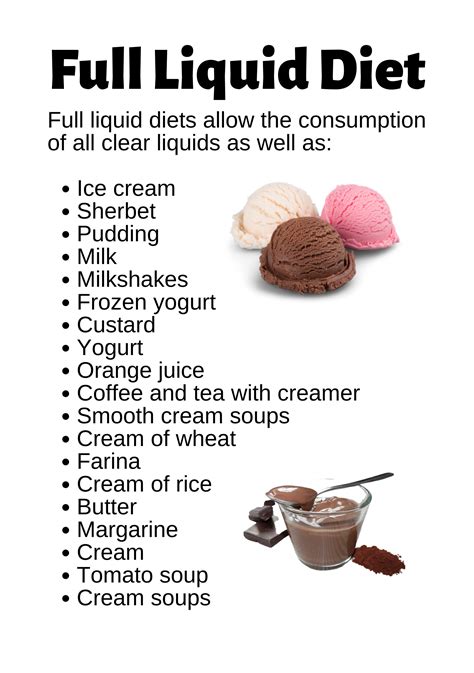
A full liquid diet is a type of diet that consists solely of liquids, including clear broths, soups, juices, and other beverages. This diet is often prescribed by healthcare professionals for patients who have difficulty swallowing or digesting solid foods, such as those with certain medical conditions or undergoing certain medical procedures. The primary goal of a full liquid diet is to provide the body with the necessary nutrients and fluids while minimizing the risk of choking or gastrointestinal complications.
Indications and Contraindications
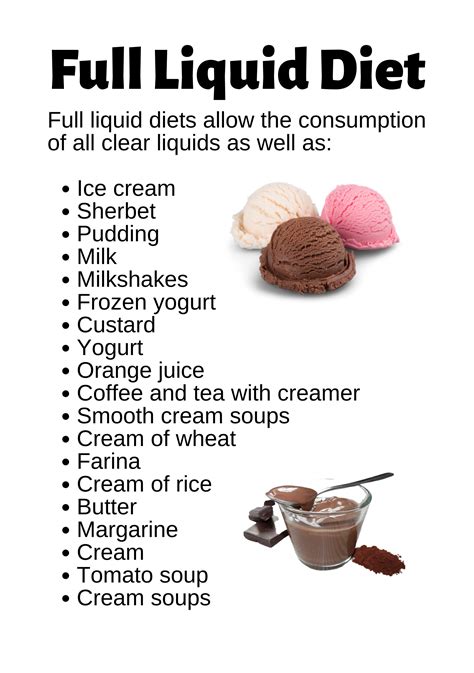
A full liquid diet is typically indicated for patients who have undergone surgery, have a history of dysphagia (swallowing disorders), or have certain medical conditions such as gastroesophageal reflux disease (GERD), esophagitis, or stomach ulcers. Additionally, patients with dental problems, such as mouth sores or gum disease, may also benefit from a full liquid diet. However, this diet is not suitable for everyone, particularly those with certain nutritional deficiencies or those who require a high-calorie diet. It is essential to consult with a healthcare professional before starting a full liquid diet to determine its suitability and to discuss any potential contraindications.
Key Points
- A full liquid diet consists solely of liquids, including clear broths, soups, juices, and other beverages.
- This diet is often prescribed for patients with difficulty swallowing or digesting solid foods.
- Common indications include post-surgery, dysphagia, GERD, esophagitis, and stomach ulcers.
- Contraindications include certain nutritional deficiencies and high-calorie requirements.
- Consultation with a healthcare professional is essential before starting a full liquid diet.
Nutritional Considerations
A full liquid diet can be nutritionally adequate if properly planned. It is essential to include a variety of liquids that provide all the necessary nutrients, including proteins, carbohydrates, fats, vitamins, and minerals. Clear broths, such as chicken or beef broth, can provide essential electrolytes and proteins. Soups, like vegetable or tomato soup, can offer additional vitamins and minerals. Fruit and vegetable juices can provide antioxidants and fiber, while dairy products, such as milk or yogurt, can offer calcium and protein. However, it is crucial to avoid caffeinated and carbonated beverages, as they can irritate the digestive system and exacerbate certain medical conditions.
| Nutrient | Recommended Daily Intake |
|---|---|
| Protein | 50-60 grams |
| Carbohydrates | 200-250 grams |
| Fat | 40-50 grams |
| Vitamin C | 60-90 milligrams |
| Calcium | 1,000-1,200 milligrams |

Implementing a Full Liquid Diet
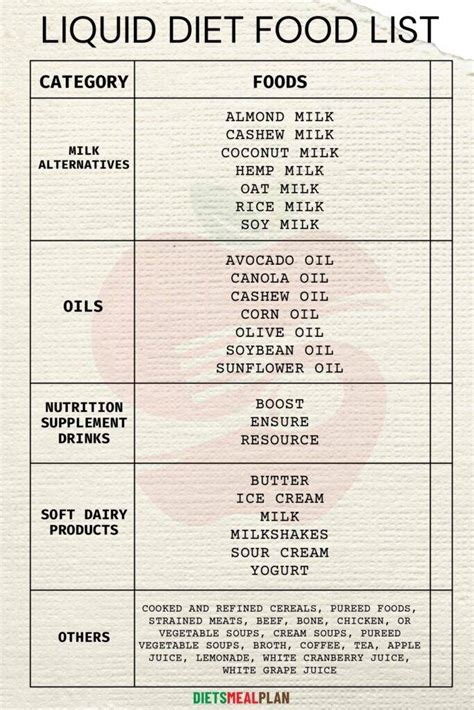
Implementing a full liquid diet requires careful planning and attention to detail. It is essential to choose a variety of liquids that provide all the necessary nutrients and to avoid those that can irritate the digestive system. Clear broths, soups, and juices can be consumed at room temperature or warmed up, depending on personal preference. Dairy products, such as milk or yogurt, can be added to soups or consumed separately. It is also essential to stay hydrated by drinking plenty of water throughout the day. A general guideline is to consume 8-10 glasses of liquid per day, with a balance of 50-60% of calories coming from carbohydrates, 15-20% from protein, and 20-25% from fat.
Common Challenges and Solutions
One of the common challenges of a full liquid diet is the lack of fiber, which can lead to constipation. To address this issue, it is essential to include liquids that are high in fiber, such as prune juice or psyllium husk. Another challenge is the potential for weight loss, particularly if the diet is not providing enough calories. To mitigate this risk, it is essential to consume high-calorie liquids, such as milkshakes or smoothies, and to monitor weight regularly. Additionally, it is crucial to consult with a healthcare professional if any adverse symptoms occur, such as nausea, vomiting, or abdominal pain.
What is the primary goal of a full liquid diet?
+The primary goal of a full liquid diet is to provide the body with the necessary nutrients and fluids while minimizing the risk of choking or gastrointestinal complications.
Who is a full liquid diet typically indicated for?
+A full liquid diet is typically indicated for patients who have undergone surgery, have a history of dysphagia, or have certain medical conditions such as GERD, esophagitis, or stomach ulcers.
How can I ensure that my full liquid diet is nutritionally adequate?
+To ensure that your full liquid diet is nutritionally adequate, it is essential to include a variety of liquids that provide all the necessary nutrients, including proteins, carbohydrates, fats, vitamins, and minerals. Consult with a registered dietitian or a healthcare professional to develop a personalized meal plan.
In conclusion, a full liquid diet can be a valuable tool for patients who have difficulty swallowing or digesting solid foods. By carefully planning and implementing a full liquid diet, individuals can ensure that they are receiving the necessary nutrients and fluids while minimizing the risk of complications. It is essential to consult with a healthcare professional before starting a full liquid diet and to monitor progress regularly to ensure that the diet is meeting the individual’s nutritional needs.