The fossil record is a vast and complex archive of the history of life on Earth, providing scientists with a wealth of information about the evolution and diversity of ancient organisms. From the simplest bacteria to the most complex multicellular creatures, the fossil record offers a unique window into the past, allowing us to reconstruct the processes that have shaped the evolution of life over billions of years. With its rich array of fossilized remains, the fossil record has become an essential tool for understanding the development of life on our planet, and its study has led to numerous groundbreaking discoveries that have transformed our understanding of the natural world.
One of the most significant aspects of the fossil record is its ability to provide a chronological framework for the evolution of life. By analyzing the layering of rock formations and the distribution of fossils within them, scientists can reconstruct the sequence of events that has led to the diversity of life we see today. This has allowed us to pinpoint the origins of major groups of organisms, such as the emergence of vertebrates, the evolution of flowering plants, and the radiation of mammals. Furthermore, the fossil record has also provided valuable insights into the mechanisms that have driven the evolution of life, including the role of climate change, geological upheaval, and the interactions between different species.
Key Points
- The fossil record provides a chronological framework for the evolution of life, allowing scientists to reconstruct the sequence of events that has led to the diversity of life on Earth.
- The fossil record contains a wide range of fossilized remains, including microfossils, macrofossils, and trace fossils, each providing unique insights into the evolution and diversity of ancient organisms.
- The study of the fossil record has led to numerous groundbreaking discoveries, including the discovery of dinosaur feathers, the origins of whales, and the evolution of the human brain.
- The fossil record is not limited to the preservation of body parts, but also includes the preservation of tracks, burrows, and other signs of biological activity, providing a more complete picture of ancient ecosystems.
- Despite its many advances, the fossil record is still an incomplete and imperfect archive, with many gaps and biases that must be taken into account when interpreting the data.
The Formation of Fossils
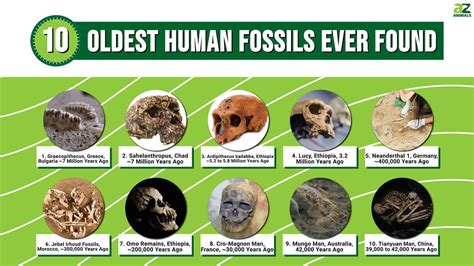
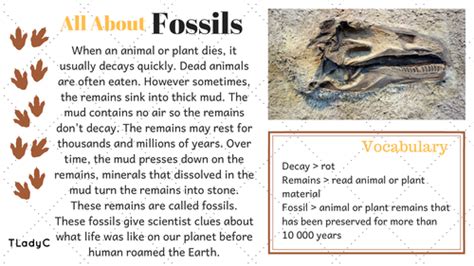
The process of fossilization is complex and involves a combination of geological and biological factors. When an organism dies, its body begins to decompose, and its remains are subject to a range of processes that can lead to fossilization. These include the action of scavengers, the effects of weathering and erosion, and the deposition of sediment. In some cases, the conditions are right for the preservation of the organism’s remains, and a fossil is formed. This can occur through a variety of mechanisms, including permineralization, replacement, and compression, each resulting in a different type of fossil.
Types of Fossils
There are several types of fossils, each providing unique insights into the evolution and diversity of ancient organisms. Microfossils, for example, are the fossilized remains of microscopic organisms, such as bacteria and plankton, and are often found in sedimentary rocks. Macrofossils, on the other hand, are the fossilized remains of larger organisms, such as plants and animals, and can provide more detailed information about the morphology and ecology of ancient species. Trace fossils, such as tracks and burrows, provide evidence of the activities of ancient organisms and can offer insights into their behavior and ecology.
| Type of Fossil | Description |
|---|---|
| Microfossil | Fossilized remains of microscopic organisms, such as bacteria and plankton. |
| Macrofossil | Fossilized remains of larger organisms, such as plants and animals. |
| Trace Fossil | Evidence of the activities of ancient organisms, such as tracks and burrows. |
The Significance of the Fossil Record
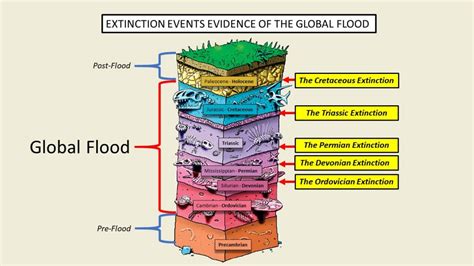
The fossil record is a powerful tool for understanding the evolution of life on Earth, and its study has led to numerous groundbreaking discoveries. From the discovery of dinosaur feathers to the origins of whales, the fossil record has provided a wealth of information about the evolution and diversity of ancient organisms. Furthermore, the study of the fossil record has also shed light on the mechanisms that have driven the evolution of life, including the role of climate change, geological upheaval, and the interactions between different species.
Implications for Evolutionary Theory
The fossil record has significant implications for our understanding of evolutionary theory. By analyzing the sequence of fossils in the rock record, scientists can reconstruct the pattern of evolution over time, and gain insights into the processes that have driven the development of life. This has led to a greater understanding of the mechanisms of evolution, including natural selection, genetic drift, and gene flow, and has provided a framework for understanding the diversity of life on Earth.
What is the fossil record, and why is it important?
+The fossil record is the collection of fossilized remains of ancient organisms, and it is important because it provides a chronological framework for the evolution of life on Earth. By analyzing the fossil record, scientists can reconstruct the sequence of events that has led to the diversity of life we see today.
How are fossils formed, and what types of fossils are there?
+Fossils are formed through a combination of geological and biological factors, including the action of scavengers, the effects of weathering and erosion, and the deposition of sediment. There are several types of fossils, including microfossils, macrofossils, and trace fossils, each providing unique insights into the evolution and diversity of ancient organisms.
What are some of the most significant discoveries made from the fossil record?
+Some of the most significant discoveries made from the fossil record include the discovery of dinosaur feathers, the origins of whales, and the evolution of the human brain. These discoveries have provided valuable insights into the evolution and diversity of ancient organisms, and have shed light on the mechanisms that have driven the development of life on Earth.
In conclusion, the fossil record is a powerful tool for understanding the evolution of life on Earth, and its study has led to numerous groundbreaking discoveries. From the formation of fossils to the implications for evolutionary theory, the fossil record provides a wealth of information about the evolution and diversity of ancient organisms. As scientists continue to analyze the fossil record, they are gaining a greater understanding of the mechanisms that have driven the development of life, and are shedding light on the processes that have shaped the diversity of life on our planet.