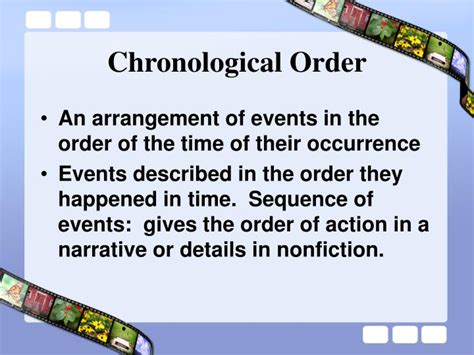
Chronological order, a fundamental concept in organization and storytelling, refers to the arrangement of events in the order they occurred in time. This method of sequencing is crucial in various fields, including history, literature, and even everyday communication. The effectiveness of chronological order lies in its ability to provide a clear, step-by-step progression of events, making it easier for the audience to understand and follow the narrative or argument. In this article, we will delve into 5 ways chronological order works, exploring its applications, benefits, and the reasoning behind its widespread adoption.
Key Points
- Enhances clarity and coherence in storytelling and historical accounts
- Facilitates learning and memory retention by creating a logical timeline
- Supports analytical and critical thinking by presenting events in context
- Aids in the identification of patterns and causal relationships between events
- Improves audience engagement through a structured and predictable narrative flow
Improving Clarity and Coherence
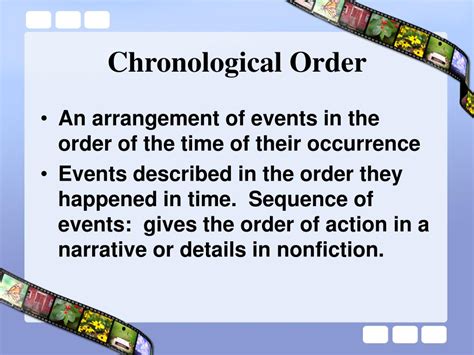
One of the primary ways chronological order works is by improving the clarity and coherence of a narrative. By arranging events in the order they happened, the audience can follow the story or argument without confusion. This linear progression helps to establish cause and effect relationships between events, making the narrative more believable and engaging. For instance, in historical texts, the use of chronological order allows readers to understand the progression of historical events, the motivations behind them, and their outcomes. This structured approach to storytelling not only enhances comprehension but also makes the content more memorable.
Facilitating Learning and Memory Retention
Chronological order also plays a significant role in facilitating learning and memory retention. When information is presented in a logical and sequential manner, it becomes easier for learners to absorb and recall. This is particularly evident in educational settings, where the teaching of historical events, scientific discoveries, and literary works often relies on a chronological framework. By understanding the timeline of events, students can better grasp the context, significance, and interconnections between different pieces of information, thereby improving their learning outcomes and retention of the material.
| Learning Outcome | Chronological Order Impact |
|---|---|
| Comprehension | Enhanced understanding of event sequences and causal relationships |
| Retention | Improved recall of information due to logical and structured presentation |
| Application | Better ability to apply knowledge in practical scenarios by understanding temporal contexts |
Supporting Analytical and Critical Thinking

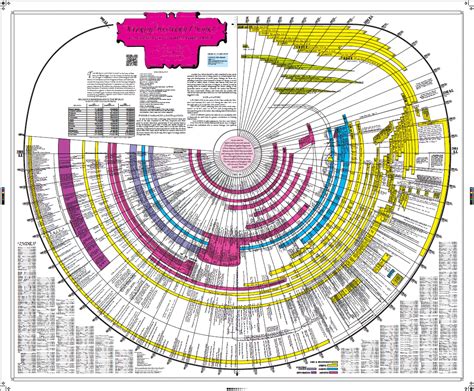
Another way chronological order works is by supporting analytical and critical thinking. By examining events in the order they occurred, individuals can analyze the progression of ideas, identify patterns, and understand how different factors influenced outcomes. This approach encourages a deeper level of engagement with the material, as it requires the consideration of context, motivations, and consequences. In fields like science and history, the chronological analysis of events and discoveries is essential for understanding the development of theories, the evolution of ideas, and the impact of historical events on contemporary society.
Aiding in Pattern Identification and Causal Analysis
The use of chronological order also aids in the identification of patterns and the analysis of causal relationships between events. When events are presented in a timeline, it becomes easier to spot recurring themes, trends, and cycles. This ability to identify patterns is crucial in various disciplines, from economics and sociology to literature and psychology. Moreover, by understanding the sequence of events, researchers and analysts can better determine cause and effect, distinguishing between correlation and causation. This nuanced understanding of relationships between events is essential for drawing accurate conclusions and making informed decisions.
Enhancing Audience Engagement
Lastly, chronological order works by enhancing audience engagement through a structured and predictable narrative flow. Humans have an inherent desire for stories and an instinctive ability to follow narratives. When events are presented in a logical and chronological sequence, the audience can anticipate the flow of the story, becoming more invested in the outcome. This engagement is not limited to fiction; in non-fiction works, such as biographies, historical accounts, and educational materials, a chronological approach can make the content more compelling and easier to follow, thereby increasing audience engagement and retention.
Why is chronological order important in storytelling?
+Chronological order is important in storytelling because it provides a clear and logical progression of events, making the narrative easier to follow and understand. It helps in establishing cause and effect relationships, enhances coherence, and improves audience engagement.
How does chronological order aid in learning and memory retention?
+Chronological order aids in learning and memory retention by presenting information in a logical and sequential manner. This structured approach facilitates comprehension, improves recall, and enhances the application of knowledge by providing a clear context and timeline of events.
What role does chronological order play in analytical and critical thinking?
+Chronological order plays a significant role in analytical and critical thinking by allowing individuals to analyze the progression of events, identify patterns, and understand causal relationships. It encourages a deeper engagement with the material, facilitating a more nuanced understanding of complex information and phenomena.
In conclusion, the application of chronological order is multifaceted, offering numerous benefits across various fields. From enhancing clarity and coherence in narratives to facilitating learning, supporting analytical thinking, aiding in pattern identification, and improving audience engagement, the strategic use of chronological order is a powerful tool. As a fundamental principle of organization and storytelling, it continues to play a vital role in how we communicate, learn, and understand the world around us.