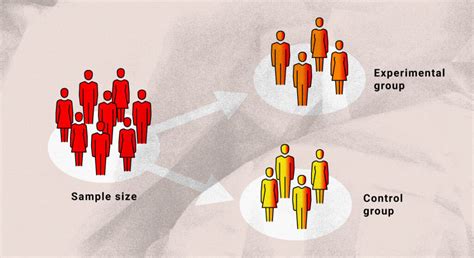
The concept of an experimental group is a cornerstone of research methodology, particularly in the fields of science, psychology, and medicine. It refers to a subset of participants or subjects in an experiment who are exposed to the independent variable, which is the factor that the researcher is manipulating or changing to observe its effect. The primary purpose of an experimental group is to serve as a test group, allowing researchers to assess the impact of the independent variable on the dependent variable, which is the outcome or response being measured.
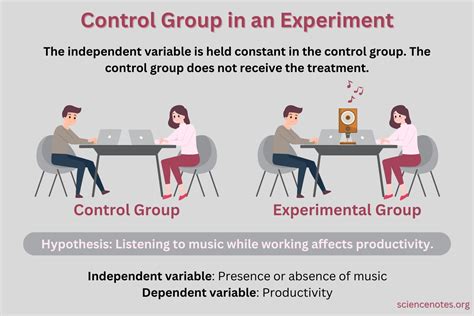
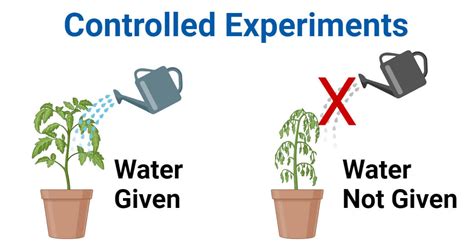
In the context of experimental design, the experimental group is contrasted with a control group, which does not receive the independent variable. This control group provides a baseline against which the effects of the independent variable can be compared. By comparing the outcomes between the experimental and control groups, researchers can determine whether any observed effects are due to the independent variable or other factors. This comparative analysis is crucial for establishing cause-and-effect relationships and for drawing conclusions about the effectiveness of interventions or treatments.
Key Points
- The experimental group is exposed to the independent variable in an experiment.
- The primary purpose of the experimental group is to assess the impact of the independent variable on the dependent variable.
- Comparison with a control group allows researchers to establish cause-and-effect relationships.
- Experimental groups are crucial in various fields, including science, psychology, and medicine, for testing hypotheses and evaluating interventions.
- Random assignment of participants to experimental and control groups helps minimize bias and ensures the internal validity of the experiment.
Design and Implementation of Experimental Groups

The design and implementation of experimental groups involve several key considerations to ensure the validity and reliability of the research findings. One critical aspect is the selection and assignment of participants to either the experimental or control group. Random assignment is a preferred method, as it helps to distribute both known and unknown variables evenly between the groups, thereby reducing bias and enhancing the internal validity of the experiment. Additionally, researchers must carefully define the independent variable and ensure that it is applied consistently across all members of the experimental group.
Another important consideration is the size of the experimental group. A sufficiently large sample size is necessary to detect statistically significant effects of the independent variable, should they exist. However, ethical considerations, resource constraints, and practical limitations often influence the achievable sample size. Researchers must balance these factors to maximize the potential for meaningful findings while ensuring the feasibility and ethical integrity of the study.
Types of Experimental Groups
Experimental groups can vary based on the research design and the objectives of the study. In some experiments, there may be multiple experimental groups, each exposed to a different level or version of the independent variable. This approach allows researchers to compare the effects of different interventions or to examine dose-response relationships. Furthermore, some studies may incorporate additional groups, such as a placebo group, which receives a sham treatment, or a wait-list control group, which does not receive the intervention until after the study period.
| Group Type | Description |
|---|---|
| Single Experimental Group | Exposed to one level of the independent variable. |
| Multiple Experimental Groups | Exposed to different levels or versions of the independent variable. |
| Placebo Group | Receives a sham treatment to control for placebo effects. |
| Wait-List Control Group | Does not receive the intervention until after the study period. |
Ethical Considerations and Challenges
Ethical considerations play a significant role in the formation and treatment of experimental groups. Researchers must ensure that participants are fully informed about the nature of the study, including any potential risks or benefits, and that they provide their consent before being assigned to a group. The principle of beneficence, which obliges researchers to promote the well-being of participants, and the principle of non-maleficence, which requires avoiding harm, are particularly relevant. Balancing these ethical considerations with the need for rigorous scientific methodology can present challenges, especially in studies involving vulnerable populations or controversial interventions.
Despite these challenges, experimental groups remain a cornerstone of research, offering a powerful tool for understanding cause-and-effect relationships and for evaluating the efficacy of treatments or interventions. By adhering to ethical standards, employing rigorous methodology, and carefully considering the design and implementation of experimental groups, researchers can contribute valuable knowledge to their fields, ultimately benefiting society and advancing our understanding of the world.
What is the primary purpose of an experimental group in research?
+The primary purpose of an experimental group is to assess the impact of the independent variable on the dependent variable, allowing researchers to establish cause-and-effect relationships.
How are participants typically assigned to experimental and control groups?
+Participants are typically assigned through random assignment to minimize bias and ensure the internal validity of the experiment.
What ethical considerations are important when forming and treating experimental groups?
+Researchers must ensure informed consent, avoid harm, and promote the well-being of participants, balancing these ethical considerations with the need for rigorous scientific methodology.