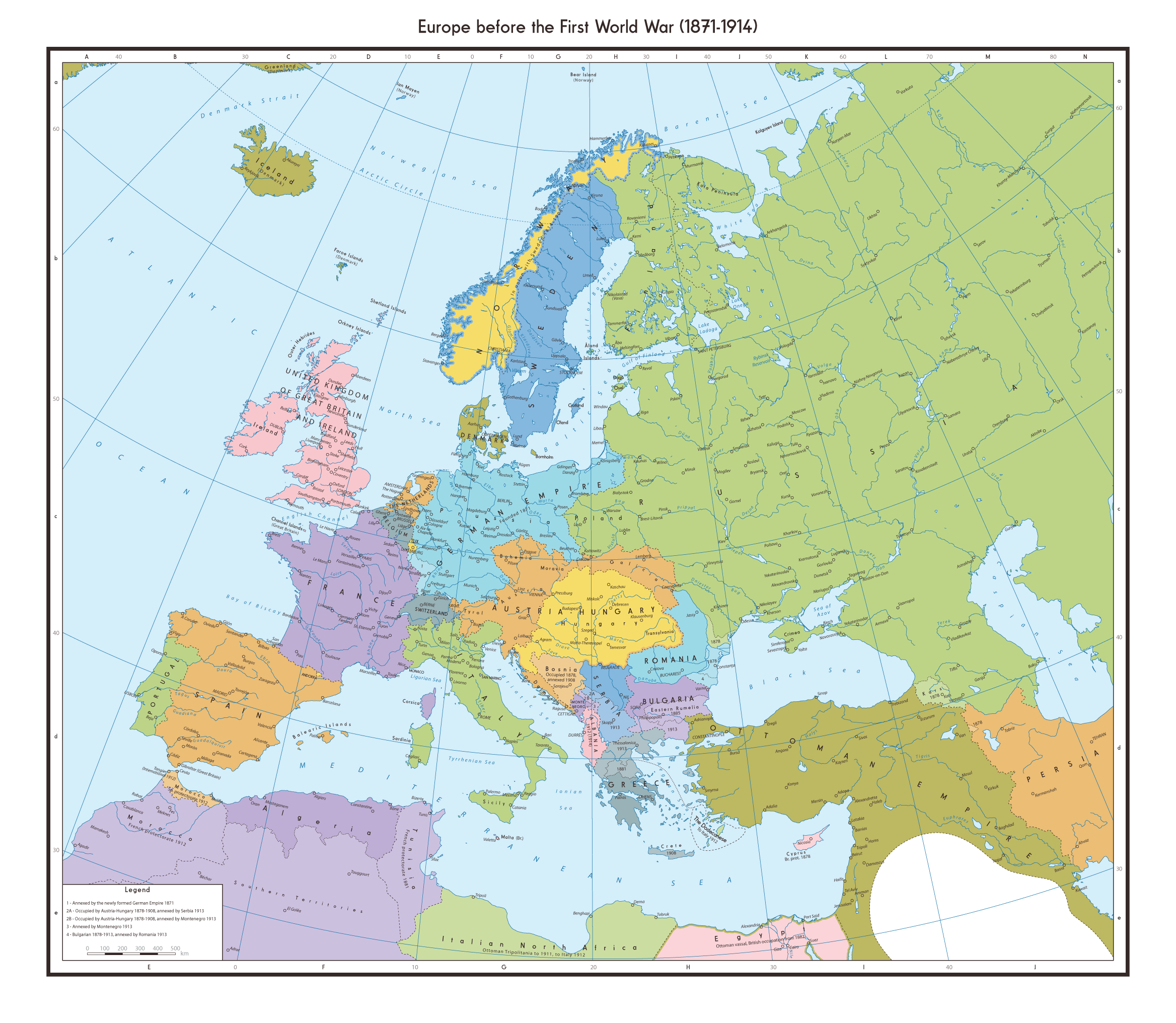
The European map before World War I was a complex tapestry of empires, kingdoms, and principalties, each with its own distinct history, culture, and territorial ambitions. As of 1914, the continent was divided into several major powers, including the German Empire, the Austro-Hungarian Empire, the Russian Empire, the French Third Republic, the United Kingdom of Great Britain and Ireland, and the Kingdom of Italy. These powers were often at odds with one another, and their competing interests and alliances would eventually contribute to the outbreak of one of the deadliest conflicts in human history.
Key Points
- The European map before WW1 was characterized by a system of alliances and rivalries between major powers.
- The complex system of alliances, including the Triple Entente and the Triple Alliance, played a significant role in the lead-up to the war.
- Nationalism, imperialism, and militarism were key factors that contributed to the tensions leading up to the war.
- The Balkans were a region of significant tension, with various ethnic groups seeking independence and self-determination.
- The assassination of Archduke Franz Ferdinand in 1914 was the spark that ignited the war, drawing in multiple countries and alliances.
Geopolitical Landscape
The early 20th century saw a significant shift in the balance of power in Europe, with the rise of new nations and the decline of old empires. The German Empire, under the leadership of Kaiser Wilhelm II, was a major power, with a strong military and a growing economy. The Austro-Hungarian Empire, which included present-day Austria, Hungary, and parts of the Czech Republic, Slovakia, and other countries, was a multinational state with a complex system of governance. The Russian Empire, which stretched from Eastern Europe to Siberia, was a vast and diverse territory, with a population of over 125 million people.
Alliances and Rivalries
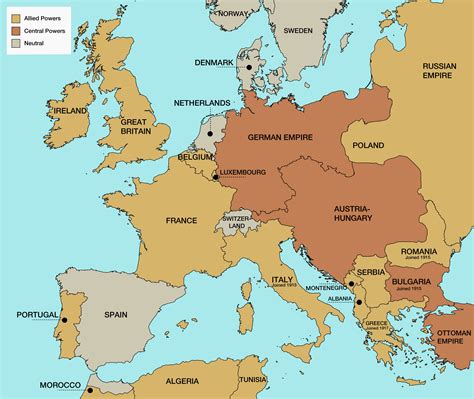
The complex system of alliances and rivalries between European powers was a major factor in the lead-up to World War I. The Triple Entente, which consisted of France, Russia, and Britain, was formed in response to the growing power of Germany and the Triple Alliance, which included Germany, Austria-Hungary, and Italy. These alliances created a system of entangling obligations, where one country’s involvement in a conflict could draw in other countries, leading to a larger and more devastating war.
| Country | Capital | Population (1914) |
|---|---|---|
| German Empire | Berlin | 67 million |
| Austro-Hungarian Empire | Vienna | 51 million |
| Russian Empire | St. Petersburg | 125 million |
| French Third Republic | Paris | 40 million |
| United Kingdom | London | 45 million |
| Kingdom of Italy | Rome | 35 million |
Nationalism, Imperialism, and Militarism
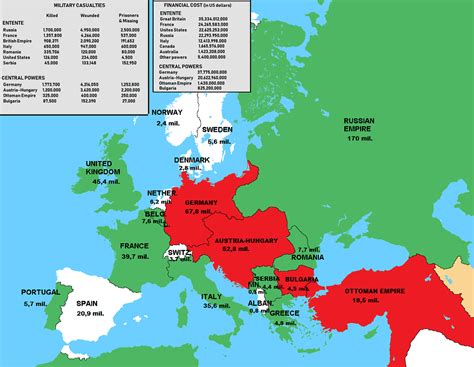
Nationalism, imperialism, and militarism were key factors that contributed to the tensions leading up to World War I. Nationalism, which emphasized the importance of national identity and self-determination, led to the rise of nationalist movements in various countries, including Germany, Italy, and the Balkans. Imperialism, which involved the extension of a country’s power and influence through colonization and economic dominance, led to competition between European powers for colonies and resources. Militarism, which emphasized the importance of military strength and preparation, contributed to an arms race between European powers, as each country sought to build up its military capabilities.
The Balkans
The Balkans, which included present-day Albania, Bosnia and Herzegovina, Bulgaria, Croatia, Kosovo, Macedonia, Montenegro, Romania, Serbia, and Slovenia, were a region of significant tension in the years leading up to World War I. Various ethnic groups, including the Serbs, Croats, and Bosniaks, sought independence and self-determination, while the Ottoman Empire, which had long controlled the region, was in decline. The complex system of alliances and rivalries between European powers, combined with the nationalist aspirations of the various ethnic groups, created a volatile situation that would eventually contribute to the outbreak of war.
What were the main causes of World War I?
+The main causes of World War I were the complex system of alliances and rivalries between European powers, nationalism, imperialism, and militarism. The assassination of Archduke Franz Ferdinand in 1914 was the spark that ignited the war.
What was the significance of the Balkans in the lead-up to World War I?
+The Balkans were a region of significant tension in the years leading up to World War I, with various ethnic groups seeking independence and self-determination. The complex system of alliances and rivalries between European powers, combined with the nationalist aspirations of the various ethnic groups, created a volatile situation that would eventually contribute to the outbreak of war.
What was the role of the Triple Entente and the Triple Alliance in the lead-up to World War I?
+The Triple Entente, which consisted of France, Russia, and Britain, and the Triple Alliance, which included Germany, Austria-Hungary, and Italy, were two opposing alliances that played a significant role in the lead-up to World War I. The complex system of alliances and rivalries between European powers created a situation in which a small conflict between two countries could quickly escalate into a larger war.
In conclusion, the European map before World War I was a complex and volatile landscape, with various powers and alliances competing for influence and territory. The complex system of alliances and rivalries, combined with nationalism, imperialism, and militarism, created a situation that would eventually lead to the outbreak of one of the deadliest conflicts in human history. Understanding the historical context and the motivations of each country is crucial to grasping the events that unfolded, and to appreciating the significance of this period in world history.