When it comes to Spanish, one of the most fundamental and often misunderstood aspects is the distinction between the verbs "ser" and "estar." Both verbs are translated to English as "to be," but they have significantly different uses and connotations in Spanish. Understanding the nuances of "ser" and "estar" is crucial for effective communication in Spanish, as using the wrong verb can change the meaning of a sentence entirely. In this article, we will delve into the complexities of these two verbs, exploring their usage, differences, and providing tips on how to correctly apply them in various contexts.
Introduction to Ser and Estar
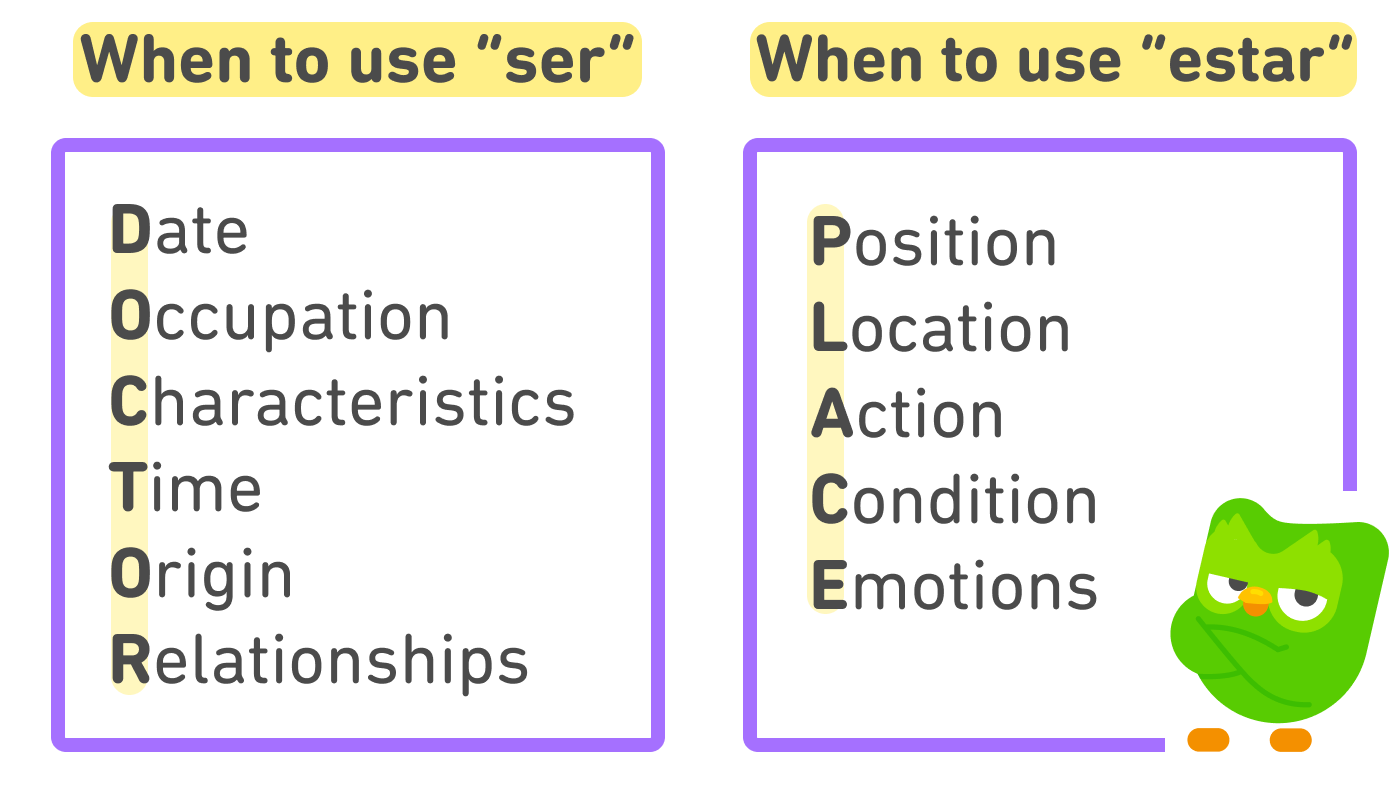
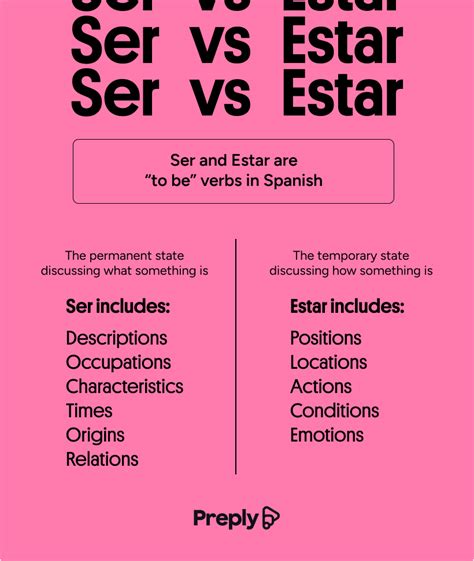
The verbs “ser” and “estar” are both used to describe states of being, but they differ in what they describe and how they are used. “Ser” is often used to describe permanent or inherent qualities of something or someone, such as physical characteristics, nationality, or occupation. On the other hand, “estar” is used to describe temporary or changing conditions, emotions, or locations. For example, “Soy estudiante” (I am a student) uses “ser” because being a student is a more permanent state, whereas “Estoy cansado” (I am tired) uses “estar” because being tired is a temporary condition.
Tips for Using Ser and Estar Correctly
Here are five tips to help you navigate the use of “ser” and “estar” in Spanish:
Use Ser for Permanent Characteristics: If you’re describing something that is permanent or unlikely to change, such as someone’s height, hair color, or place of birth, use “ser.” For instance, “Ella es alta” (She is tall) or “Él es de Madrid” (He is from Madrid).
Use Estar for Temporary Conditions: For conditions that are temporary or subject to change, such as emotions, physical states, or locations, use “estar.” Examples include “Estoy feliz” (I am happy) or “Ella está en la biblioteca” (She is in the library).
Consider the Context of Emotions: When talking about emotions, “estar” is typically used because emotions are temporary and can change. So, “Estoy triste” (I am sad) or “Ella está contenta” (She is happy).
Use Ser for Descriptions of Objects and Places: When describing objects or places in terms of their inherent qualities, use “ser.” For example, “El edificio es grande” (The building is big) or “La playa es hermosa” (The beach is beautiful).
Practice with Real-Life Scenarios: The best way to become comfortable with “ser” and “estar” is through practice. Try creating your own sentences using both verbs in different contexts. For instance, describing a day’s activities might involve both “ser” (to describe your job or role) and “estar” (to describe your location or emotional state).
| Verb | Description | Example |
|---|---|---|
| Ser | Permanent characteristics | Soy una persona amable |
| Estoy | Temporary conditions | Estoy cansado hoy |
Key Points
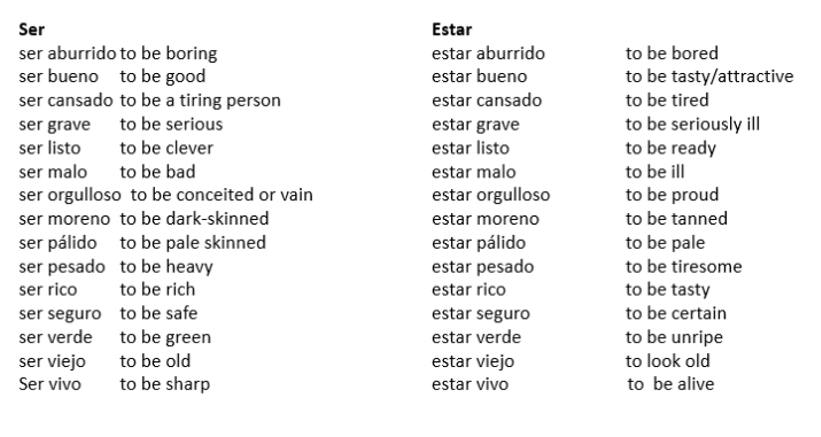
- Use "ser" for permanent or inherent qualities and "estar" for temporary or changing conditions.
- Emotions and physical states are typically described with "estar" because they are temporary.
- Descriptions of objects and places in terms of permanent qualities use "ser."
- Practice with real-life scenarios to become more comfortable with the distinction between "ser" and "estar."
- Understanding the nuances of "ser" and "estar" is crucial for effective communication in Spanish.
Advanced Applications of Ser and Estar
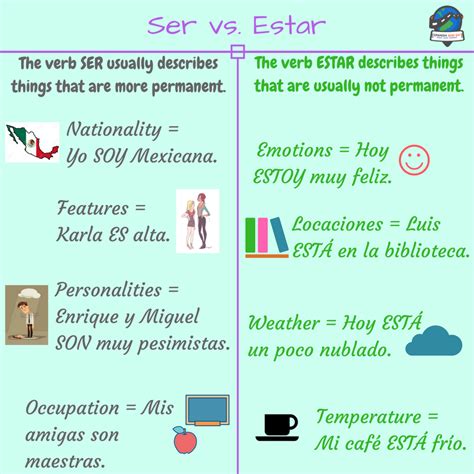
Once you have a solid grasp of the basic uses of “ser” and “estar,” you can explore more advanced applications. For instance, “ser” can be used to describe someone’s profession or role, as in “Soy médico” (I am a doctor), while “estar” can be used to describe someone’s location or current activity, such as “Estoy en el hospital” (I am at the hospital) or “Estoy trabajando” (I am working).
Common Mistakes and How to Avoid Them
A common mistake learners make is using “ser” and “estar” interchangeably without considering the context. To avoid this, always think about whether the attribute you are describing is permanent or temporary. Another mistake is not being consistent with the verb tense; make sure the verb agrees with the subject in number (singular or plural) and person (first, second, or third).
¿Cuándo se usa "ser" en lugar de "estar"?
+"Ser" se usa para describir características permanentes o inherentes, como la nacionalidad, la profesión, o las características físicas.
¿Cuál es la diferencia entre "soy" y "estoy"?
+"Soy" es la primera persona del singular del verbo "ser," usado para características permanentes, mientras que "estoy" es la primera persona del singular del verbo "estar," usado para condiciones temporales.
¿Cómo practico el uso correcto de "ser" y "estar"?
+La práctica con escenarios de la vida real y la creación de tus propias oraciones usando ambos verbos en diferentes contextos pueden ayudarte a dominar el uso correcto de "ser" y "estar".
Mastering the use of “ser” and “estar” takes time and practice, but with a clear understanding of their differences and applications, you can significantly improve your proficiency in Spanish. Remember, the key is to understand the context and the nature of the attribute being described, and to practice consistently to develop your skills.