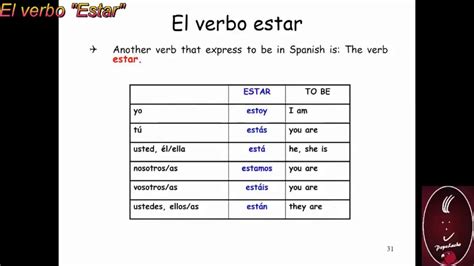
The Spanish language is known for its complex grammar and verb conjugations, and the estar past tense is no exception. As a fundamental verb in Spanish, estar is used to describe the location, condition, or state of being of a person or thing. In this article, we will delve into the world of estar past tense, exploring its conjugations, usage, and nuances.
Key Points
- The estar past tense is used to describe completed actions or states of being in the past.
- The verb estar has two main past tense conjugations: the preterite and the imperfect.
- The preterite tense is used to describe completed actions with a specific beginning and end, while the imperfect tense describes ongoing or repeated actions in the past.
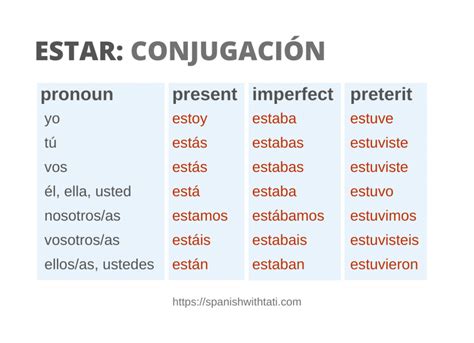
- The conjugation of estar in the preterite tense is: estuve, estuviste, estuvo, estuvimos, estuvisteis, and estuvieron.
- The conjugation of estar in the imperfect tense is: estaba, estabas, estaba, estábamos, estabais, and estaban.
Conjugations of Estar in the Past Tense
To understand the estar past tense, it’s essential to familiarize yourself with its conjugations. The verb estar has two main past tense conjugations: the preterite and the imperfect. The preterite tense is used to describe completed actions with a specific beginning and end, while the imperfect tense describes ongoing or repeated actions in the past.
Preterite Tense Conjugation
The preterite tense conjugation of estar is as follows:
| Subject | Conjugation |
|---|---|
| Yo | estuve |
| Tú | estuviste |
| Él/Ella/Usted | estuvo |
| Nosotros/Nosotras | estuvimos |
| Vosotros/Vosotras | estuvisteis |
| Ellos/Ellas/Ustedes | estuvieron |
For example, yo estuve en la biblioteca ayer (I was at the library yesterday) or ella estuvo enferma la semana pasada (she was sick last week).
Imperfect Tense Conjugation
The imperfect tense conjugation of estar is as follows:
| Subject | Conjugation |
|---|---|
| Yo | estaba |
| Tú | estabas |
| Él/Ella/Usted | estaba |
| Nosotros/Nosotras | estábamos |
| Vosotros/Vosotras | estabais |
| Ellos/Ellas/Ustedes | estaban |
For example, yo estaba estudiando para mi examen (I was studying for my exam) or ellos estaban jugando fútbol en el parque (they were playing soccer in the park).
Usage and Nuances of Estar in the Past Tense
The estar past tense has various usage and nuances that are essential to understand. One of the primary uses of the estar past tense is to describe a person’s location or state of being at a specific point in the past. For example, yo estuve en Madrid el año pasado (I was in Madrid last year) or ella estuvo en la playa la semana pasada (she was at the beach last week).
Another important use of the estar past tense is to describe a person's emotions or feelings in the past. For instance, yo estaba triste después de la pérdida de mi amigo (I was sad after the loss of my friend) or ellos estaban felices en su aniversario (they were happy on their anniversary).
In addition to its uses, the estar past tense also has several nuances that can affect its meaning. For example, the verb estar can be used with the verb ser to describe a person's permanent or inherent characteristics, while also describing their temporary or changing conditions. This can sometimes lead to confusion, but understanding the context and nuances of the estar past tense can help to clarify its meaning.
What is the main difference between the preterite and imperfect tense conjugations of estar?
+The main difference between the preterite and imperfect tense conjugations of estar is that the preterite tense is used to describe completed actions with a specific beginning and end, while the imperfect tense describes ongoing or repeated actions in the past.
How do I know when to use the estar past tense instead of the ser past tense?
+The estar past tense is used to describe a person's location, condition, or state of being at a specific point in the past, while the ser past tense is used to describe a person's permanent or inherent characteristics. Understanding the context and nuances of the sentence can help to determine which verb to use.
Can I use the estar past tense to describe a person's emotions or feelings in the past?
+Yes, the estar past tense can be used to describe a person's emotions or feelings in the past. For example, yo estaba triste después de la pérdida de mi amigo (I was sad after the loss of my friend) or ellos estaban felices en su aniversario (they were happy on their anniversary).
In conclusion, the estar past tense is a complex and nuanced verb conjugation that requires a deep understanding of its usage and context. By mastering the conjugations and nuances of the estar past tense, Spanish language learners can improve their ability to describe a person’s location, condition, or state of being in the past, and enhance their overall communication skills.