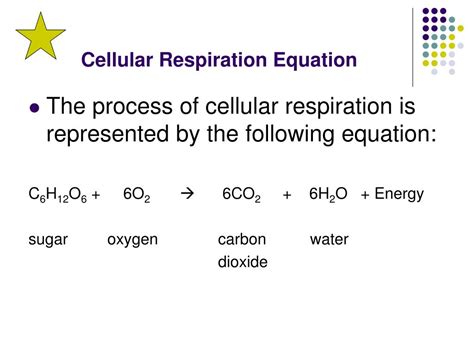
Cellular respiration is a fundamental process in biology that enables cells to generate energy from the food they consume. It is a complex, multi-step mechanism that involves the breakdown of glucose and other organic molecules to produce ATP (adenosine triphosphate), which is the primary energy currency of the cell. In this article, we will delve into the six ways cellular respiration works, exploring the different stages, reactants, and products involved in this vital process.
Key Points
- Cellular respiration is a multi-step process that generates energy from glucose and other organic molecules.
- The process involves three main stages: glycolysis, the citric acid cycle, and oxidative phosphorylation.
- ATP is produced through substrate-level phosphorylation and oxidative phosphorylation.
- The electron transport chain plays a crucial role in generating ATP during oxidative phosphorylation.
- Cellular respiration can occur in the presence or absence of oxygen, resulting in aerobic or anaerobic respiration.
- Efficient cellular respiration is essential for maintaining cellular homeostasis and supporting various cellular functions.
Glycolysis: The First Stage of Cellular Respiration
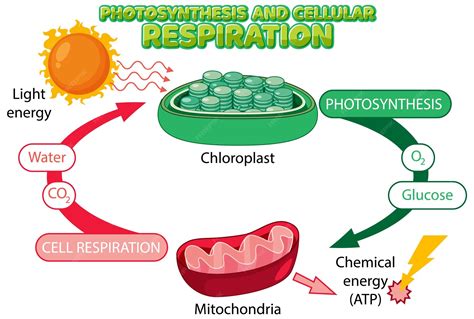
Glycolysis is the initial stage of cellular respiration, where glucose, a six-carbon sugar, is converted into pyruvate, a three-carbon molecule. This process occurs in the cytosol of the cell and does not require oxygen. During glycolysis, one glucose molecule is converted into two pyruvate molecules, generating a net gain of 2 ATP and 2 NADH molecules. The reactants and products of glycolysis are:
| Reactants | Products |
|---|---|
| 1 glucose molecule | 2 pyruvate molecules |
| 2 ATP molecules | 2 ATP molecules (net gain) |
| 2 NAD+ molecules | 2 NADH molecules |
Glycolysis is a critical step in cellular respiration, as it sets the stage for the subsequent stages and provides a significant portion of the ATP produced during cellular respiration.
The Citric Acid Cycle: The Second Stage of Cellular Respiration
The citric acid cycle, also known as the Krebs cycle or tricarboxylic acid (TCA) cycle, is the second stage of cellular respiration. This stage occurs in the mitochondria and requires oxygen. During the citric acid cycle, pyruvate is converted into acetyl-CoA, which then enters the citric acid cycle. The citric acid cycle produces 2 ATP, 6 NADH, and 2 FADH2 molecules as byproducts. The reactants and products of the citric acid cycle are:
| Reactants | Products |
|---|---|
| 1 pyruvate molecule | 2 ATP molecules |
| 1 acetyl-CoA molecule | 6 NADH molecules |
| 1 oxaloacetate molecule | 2 FADH2 molecules |
The citric acid cycle is a crucial stage in cellular respiration, as it generates a significant amount of ATP and NADH, which are used to produce ATP during oxidative phosphorylation.
Oxidative Phosphorylation: The Third Stage of Cellular Respiration
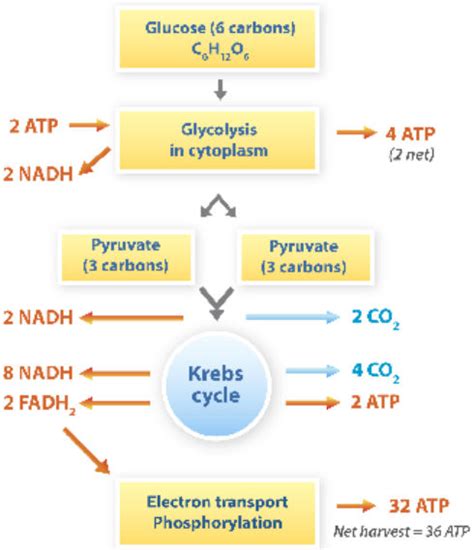
Oxidative phosphorylation is the final stage of cellular respiration, where the majority of ATP is produced. This stage occurs in the mitochondria and requires oxygen. During oxidative phosphorylation, the electrons from NADH and FADH2 are passed through a series of electron transport chains, generating a proton gradient across the mitochondrial membrane. The proton gradient is used to produce ATP through the process of chemiosmosis. The reactants and products of oxidative phosphorylation are:
| Reactants | Products |
|---|---|
| NADH and FADH2 molecules | ATP molecules (32-34) |
| Proton gradient | Water molecule |
Oxidative phosphorylation is the most efficient stage of cellular respiration, producing 32-34 ATP molecules per glucose molecule.
Anaerobic Respiration: An Alternative Pathway
Anaerobic respiration is an alternative pathway that occurs in the absence of oxygen. During anaerobic respiration, pyruvate is converted into lactate or ethanol, depending on the organism. Anaerobic respiration produces 2 ATP molecules per glucose molecule, which is significantly less than the 36-38 ATP molecules produced during aerobic respiration. The reactants and products of anaerobic respiration are:
| Reactants | Products |
|---|---|
| 1 glucose molecule | 2 lactate or ethanol molecules |
| 2 ATP molecules | 2 ATP molecules (net gain) |
Anaerobic respiration is essential for organisms that live in environments with low oxygen levels, such as muscle cells during intense exercise.
Efficiency and Regulation of Cellular Respiration
Cellular respiration is a highly efficient process, with an estimated 36-38 ATP molecules produced per glucose molecule. However, the efficiency of cellular respiration can be affected by various factors, such as the availability of oxygen, the concentration of reactants, and the presence of inhibitors. The regulation of cellular respiration is crucial for maintaining cellular homeostasis and supporting various cellular functions. The regulation of cellular respiration involves the coordinated action of multiple enzymes, hormones, and other molecules that modulate the activity of the different stages of cellular respiration.
What is the primary function of cellular respiration?
+The primary function of cellular respiration is to generate energy for the cell in the form of ATP.
What are the three main stages of cellular respiration?
+The three main stages of cellular respiration are glycolysis, the citric acid cycle, and oxidative phosphorylation.
What is the difference between aerobic and anaerobic respiration?
+Aerobic respiration occurs in the presence of oxygen and produces 36-38 ATP molecules per glucose molecule, while anaerobic respiration occurs in the absence of oxygen and produces 2 ATP molecules per glucose molecule.
In conclusion, cellular respiration is a complex, multi-step process that generates energy for the cell in the form of ATP. The six ways cellular respiration works involve the breakdown of glucose and other organic molecules through glycolysis, the citric acid cycle, and oxidative phosphorylation. Understanding the different stages, reactants, and products of cellular respiration is essential for appreciating the intricacies of this vital process and its importance in maintaining cellular homeostasis and supporting various cellular functions.