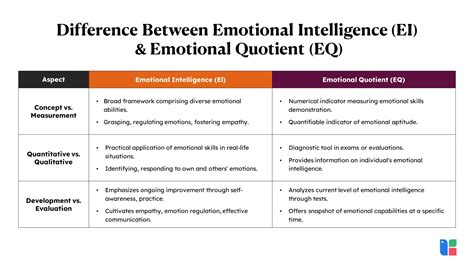
Emotional Quotient (EQ) refers to an individual's ability to recognize and understand emotions in themselves and others, and to use this awareness to guide thought and behavior. It involves being able to navigate complex social situations, build strong relationships, and make informed decisions that take into account both logical and emotional considerations. Emotional Quotient is often seen as a key component of emotional intelligence, which encompasses a range of skills including self-awareness, self-regulation, motivation, empathy, and social skills.
Understanding Emotional Quotient
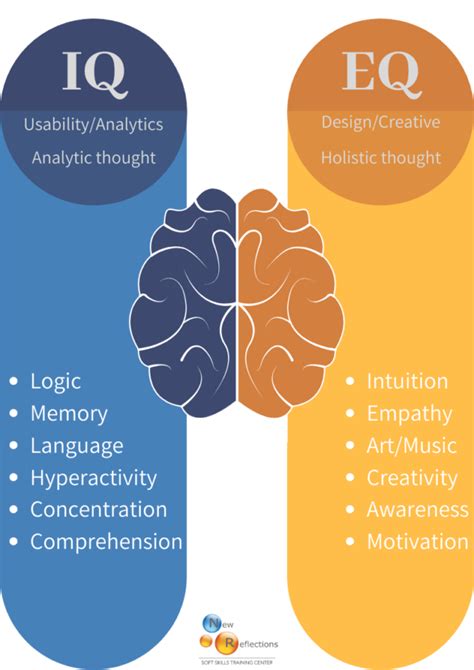
Emotional Quotient is distinct from Intelligence Quotient (IQ), which measures cognitive abilities such as reasoning, problem-solving, and memory. While IQ is important for academic and professional success, EQ is crucial for personal and social effectiveness. Individuals with high EQ tend to be better at managing their own emotions, which enables them to communicate more effectively, manage conflict, and build stronger, more meaningful relationships. This, in turn, can lead to greater success in both personal and professional spheres, as strong relationships and effective communication are foundational to achieving goals and overcoming challenges.
Components of Emotional Quotient
The components of Emotional Quotient include self-awareness, which is the ability to recognize and understand one’s own emotions and how they impact behavior. Self-regulation involves being able to control and redirect one’s own emotions, which is critical for maintaining well-being and achieving personal and professional goals. Motivation is another key component, encompassing the drive to achieve and the ability to be inspired by emotions to take action towards goals. Empathy, or the ability to understand and share the feelings of others, is also a critical aspect of EQ, as it enables effective communication, conflict resolution, and relationship building. Finally, social skills, which involve being able to effectively navigate complex social situations and build strong, lasting relationships, round out the components of Emotional Quotient.
| Component | Description |
|---|---|
| Self-Awareness | Recognizing and understanding one's own emotions |
| Self-Regulation | Controlling and redirecting one's own emotions |
| Motivation | Being driven by emotions to achieve goals |
| Empathy | Understanding and sharing the feelings of others |
| Social Skills | Navigating complex social situations and building strong relationships |
Key Points
- Emotional Quotient (EQ) refers to the ability to recognize and understand emotions in oneself and others.
- EQ encompasses self-awareness, self-regulation, motivation, empathy, and social skills.
- High EQ is linked to greater personal and professional success, as well as stronger, more meaningful relationships.
- Developing EQ requires a willingness to learn, grow, and adapt in response to changing emotional landscapes.
- Enhancing EQ can lead to improved communication, conflict resolution, and relationship building skills.
Developing Emotional Quotient
Developing a high Emotional Quotient involves a combination of self-reflection, social interaction, and intentional practice. Individuals can begin by cultivating self-awareness through activities such as meditation, journaling, or seeking feedback from trusted friends or mentors. Practicing self-regulation can involve learning techniques for managing stress and negative emotions, such as deep breathing, exercise, or mindfulness. Building motivation involves setting clear, achievable goals and finding ways to stay inspired and engaged, such as through positive self-talk, rewarding accomplishments, or finding a supportive community. Empathy can be developed by engaging in active listening, asking open-ended questions, and seeking to understand the perspectives and feelings of others. Finally, social skills can be honed through practice in low-stakes social situations, such as joining a club or group that aligns with one’s interests, or volunteering for a cause that sparks passion and purpose.
Benefits of High Emotional Quotient
Individuals with high Emotional Quotient tend to enjoy a range of benefits, including stronger, more meaningful relationships, greater personal and professional success, and improved overall well-being. High EQ is also linked to increased resilience, better communication skills, and a greater ability to navigate complex social situations. Furthermore, individuals with high EQ tend to be more effective leaders, as they are better able to understand and motivate their teams, manage conflict, and build trust. In personal relationships, high EQ enables individuals to communicate more effectively, resolve conflicts in a healthy and constructive manner, and build strong, lasting bonds with others.
What is the difference between Emotional Quotient and Intelligence Quotient?
+Emotional Quotient (EQ) measures an individual's ability to recognize and understand emotions in themselves and others, and to use this awareness to guide thought and behavior. Intelligence Quotient (IQ), on the other hand, measures cognitive abilities such as reasoning, problem-solving, and memory.
How can I develop my Emotional Quotient?
+Developing EQ involves a combination of self-reflection, social interaction, and intentional practice. This can include activities such as meditation, journaling, seeking feedback from others, practicing self-regulation techniques, and engaging in active listening and empathy-building exercises.
What are the benefits of having a high Emotional Quotient?
+Individuals with high EQ tend to enjoy stronger, more meaningful relationships, greater personal and professional success, and improved overall well-being. High EQ is also linked to increased resilience, better communication skills, and a greater ability to navigate complex social situations.
In conclusion, Emotional Quotient plays a vital role in personal and professional success, enabling individuals to build strong relationships, communicate effectively, and navigate complex social situations. By understanding the components of EQ and taking intentional steps to develop this critical skillset, individuals can unlock their full potential and achieve greater fulfillment and success in all areas of life.