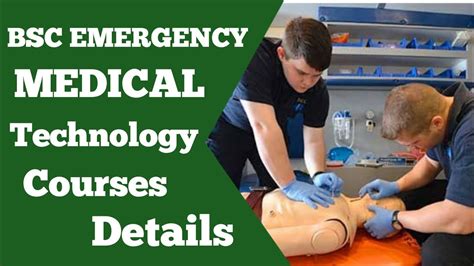
Emergency Medical Technology (EMT) courses are designed to equip students with the necessary skills and knowledge to provide emergency medical care in a variety of settings, including ambulances, hospitals, and emergency response situations. These courses are typically offered at the post-secondary level and can be completed in a few months to a year, depending on the institution and the level of certification being pursued. In the United States, for example, the National Registry of Emergency Medical Technicians (NREMT) is the primary organization responsible for certifying EMTs, and it offers four levels of certification: EMT-Basic, EMT-Intermediate, EMT-Advanced, and EMT-Paramedic.
According to the Bureau of Labor Statistics (BLS), employment of EMTs and paramedics is projected to grow 11% from 2020 to 2030, which is faster than the average for all occupations. This growth is driven by the increasing demand for emergency medical services, particularly in rural areas where access to healthcare may be limited. Furthermore, the BLS reports that the median annual salary for EMTs and paramedics was $36,930 in May 2020, with the highest 10% earning more than $62,150. To become an EMT, one must complete an approved training program, pass the NREMT certification exam, and maintain certification through continuing education and recertification exams.
Key Points
- EMT courses are designed to provide students with the necessary skills and knowledge to provide emergency medical care in a variety of settings.
- There are four levels of EMT certification: EMT-Basic, EMT-Intermediate, EMT-Advanced, and EMT-Paramedic.
- Employment of EMTs and paramedics is projected to grow 11% from 2020 to 2030, faster than the average for all occupations.
- The median annual salary for EMTs and paramedics was $36,930 in May 2020, with the highest 10% earning more than $62,150.
- To become an EMT, one must complete an approved training program, pass the NREMT certification exam, and maintain certification through continuing education and recertification exams.
Emergency Medical Technology Course Curriculum
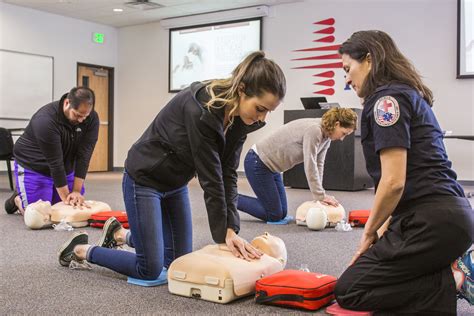
An EMT course curriculum typically includes both classroom instruction and clinical training, and covers topics such as patient assessment, trauma care, medical emergencies, and ambulance operations. Students learn how to assess patients, provide basic life support, and use medical equipment such as defibrillators and ventilators. They also learn how to communicate effectively with patients, families, and other healthcare professionals, and how to work as part of a team to provide emergency medical care.
In addition to the technical skills and knowledge, EMT courses also emphasize the importance of professionalism, ethics, and cultural competence in emergency medical care. Students learn how to work with patients from diverse backgrounds, how to maintain patient confidentiality, and how to respect patient autonomy. They also learn how to manage stress and maintain their own physical and emotional well-being in high-pressure situations.
EMT Certification Levels
There are four levels of EMT certification, each with its own set of requirements and responsibilities. EMT-Basic is the entry-level certification, and it requires completion of a training program that includes 120-150 hours of instruction. EMT-Intermediate and EMT-Advanced certifications require additional training and experience, and involve more complex patient care and medical procedures. EMT-Paramedic is the most advanced level of certification, and it requires completion of a paramedic training program that includes 1,200-1,800 hours of instruction.
| Certification Level | Training Hours | Responsibilities |
|---|---|---|
| EMT-Basic | 120-150 hours | Basic life support, patient assessment, and trauma care |
| EMT-Intermediate | 300-400 hours | Advanced patient care, medical procedures, and pharmacology |
| EMT-Advanced | 500-600 hours | Complex patient care, critical care, and medical specialties |
| EMT-Paramedic | 1,200-1,800 hours | Advanced life support, critical care, and medical direction |
Emergency Medical Technology Course Formats
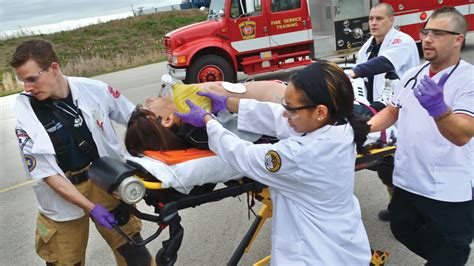
EMT courses can be offered in a variety of formats, including traditional classroom instruction, online courses, and hybrid programs that combine online and classroom instruction. Some programs may also offer part-time or full-time schedules, depending on the needs and goals of the students. It’s essential to research and compares different programs to find the one that best fits your needs and career goals.
Online EMT courses can provide flexibility and convenience for students who have work or family commitments, but they may lack the hands-on training and clinical experience that is essential for EMT certification. Hybrid programs can offer the best of both worlds, providing online instruction and classroom training, as well as clinical experience and hands-on training.
EMT Course Accreditation
EMT courses must be accredited by the Commission on Accreditation of Allied Health Education Programs (CAAHEP) or the Committee on Accreditation of Educational Programs for the Emergency Medical Services Professions (CoAEMSP). Accreditation ensures that the program meets the standards for EMT education and training, and that graduates are eligible to take the NREMT certification exam.
When selecting an EMT course, it's crucial to check the program's accreditation status and to research the program's reputation and outcomes. You should also consider factors such as the program's length, cost, and location, as well as the qualifications and experience of the instructors.
What is the difference between an EMT and a paramedic?
+An EMT provides basic life support and patient care, while a paramedic provides advanced life support and critical care. Paramedics have more extensive training and are qualified to perform more complex medical procedures.
How long does it take to become an EMT?
+The length of time it takes to become an EMT depends on the level of certification being pursued. EMT-Basic training typically takes 120-150 hours, while paramedic training can take 1,200-1,800 hours.
What is the job outlook for EMTs and paramedics?
+Employment of EMTs and paramedics is projected to grow 11% from 2020 to 2030, faster than the average for all occupations. This growth is driven by the increasing demand for emergency medical services, particularly in rural areas.