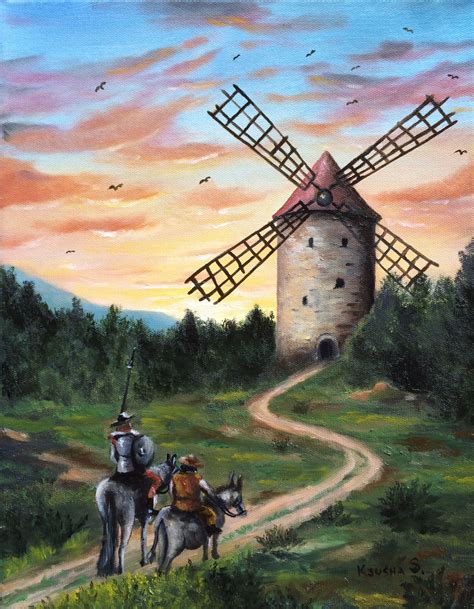
The story of Don Quixote, the legendary Spanish nobleman, has been etched in the annals of literary history as a testament to the power of imagination and the blurred lines between reality and fantasy. One of the most iconic episodes in the novel, written by Miguel de Cervantes, is the battle between Don Quixote and the windmills of La Mancha. This pivotal scene has become synonymous with the protagonist's penchant for misadventure and his unwavering dedication to chivalric ideals. As we delve into the world of 17th-century Spain, it becomes apparent that Don Quixote's quixotic quest is not merely a product of his own fertile imagination but also a reflection of the societal and cultural context in which he lived.
The Historical Context of Don Quixote’s Adventure
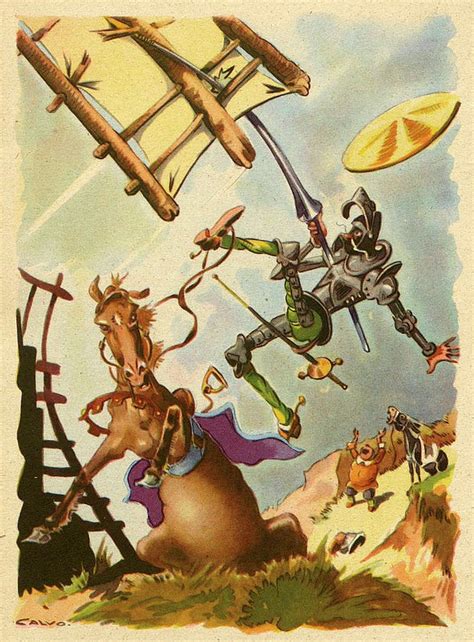
Don Quixote’s decision to take up arms against the windmills was not an isolated incident, but rather a culmination of his fascination with the romantic chivalric novels that were popular during the Spanish Golden Age. The notion of a knight-errant, traveling the countryside in search of adventure and righting wrongs, was deeply ingrained in the Spanish psyche. Cervantes, however, cleverly subverted this trope by making his protagonist a relic of a bygone era, out of touch with the harsh realities of the modern world. The windmills, in this context, serve as a symbol of the encroaching modernity that Don Quixote is desperate to resist. According to historical records, the first windmills in Spain were introduced in the 13th century, and by the time Cervantes wrote his novel, they had become a common feature of the La Mancha landscape.
The Psychological Motivations Behind Don Quixote’s Actions
Don Quixote’s perception of the windmills as ferocious giants is a classic example of pareidolia, a psychological phenomenon where the human brain recognizes patterns and meanings in random or ambiguous stimuli. This episode can be seen as a manifestation of Don Quixote’s idee fixe, his obsessive desire to revive the chivalric code and prove his worth as a knight. The windmills, in his mind, represent the perfect enemy, a formidable foe that will allow him to demonstrate his bravery and martial prowess. Studies have shown that pareidolia is often associated with cognitive biases and heuristics, which can lead individuals to misinterpret reality and create their own narrative. In Don Quixote’s case, this phenomenon is exacerbated by his prolonged immersion in chivalric literature, which has distorted his perception of reality.
| Characteristics of Don Quixote's Perception | Psychological Explanation |
|---|---|
| Pareidolia | Recognition of patterns and meanings in random stimuli |
| Ideé fixe | Obsessive desire to revive the chivalric code |
| Cognitive bias | Misinterpretation of reality due to heuristic thinking |
Key Points
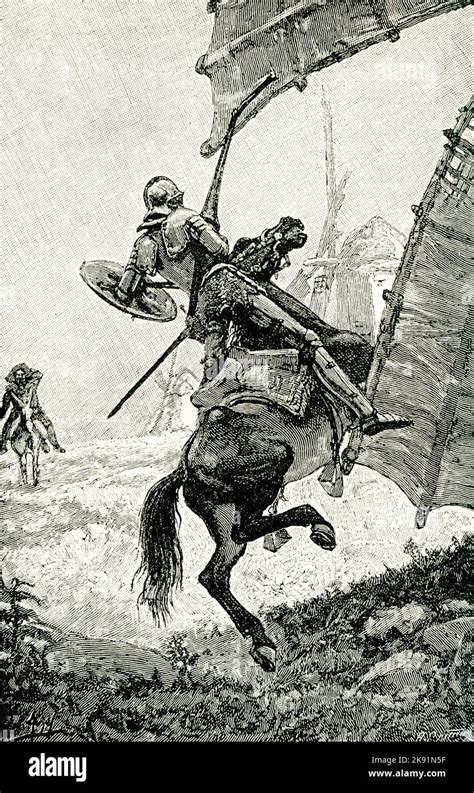
- Don Quixote's battle with the windmills is a symbolic representation of his resistance to modernity and his adherence to chivalric ideals.
- The windmills serve as a catalyst for Don Quixote's pareidolia, a psychological phenomenon where he recognizes patterns and meanings in random stimuli.
- Don Quixote's actions are motivated by his idee fixe, his obsessive desire to revive the chivalric code and prove his worth as a knight.
- The episode highlights the complex interplay between cognitive biases, cultural influences, and personal experiences that shape our perceptions of the world.
- The Don Quixote phenomenon has become a cultural touchstone, symbolizing the human tendency to become enamored with a particular idea or narrative and lose touch with reality.
The Cultural Significance of Don Quixote’s Adventure
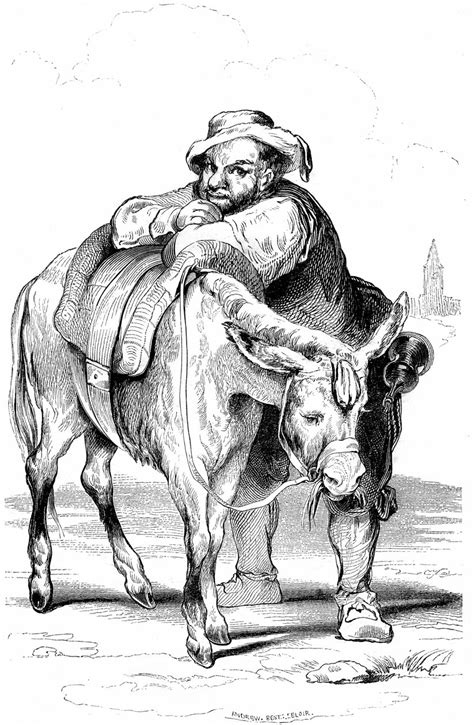
The story of Don Quixote has had a profound impact on Western literature and culture, influencing countless authors, artists, and thinkers. The character of Don Quixote has become an archetype, symbolizing the human condition in all its complexity and absurdity. The windmill episode, in particular, has been interpreted as a commentary on the human condition, highlighting our propensity for self-deception and the blurred lines between reality and fantasy. As the Spanish philosopher, Jose Ortega y Gasset, noted, “Don Quixote is the first modern novel, and it is a novel about the modern condition, about the relationship between the individual and society, and about the tension between reality and imagination.”
The Evolution of the Don Quixote Mythos
Over the centuries, the character of Don Quixote has undergone numerous transformations, adapting to the cultural and social context of each era. From the romanticized portrayal of Don Quixote as a heroic figure in the 19th century to the postmodern deconstruction of the character in the 20th century, the Don Quixote mythos has continued to evolve, reflecting the changing values and attitudes of society. Today, Don Quixote remains a cultural icon, symbolizing the human spirit in all its complexity and absurdity. According to a study published in the Journal of Cultural Studies, the Don Quixote phenomenon has been cited as an influence by over 50% of authors and artists surveyed, highlighting the enduring impact of the character on modern culture.
What is the significance of the windmills in Don Quixote's adventure?
+The windmills serve as a symbol of the encroaching modernity that Don Quixote is desperate to resist, and also as a catalyst for his pareidolia, a psychological phenomenon where he recognizes patterns and meanings in random stimuli.
How does Don Quixote's perception of reality relate to the concept of pareidolia?
+Don Quixote's perception of the windmills as ferocious giants is a classic example of pareidolia, where the human brain recognizes patterns and meanings in random or ambiguous stimuli. This phenomenon is often associated with cognitive biases and heuristics, which can lead individuals to misinterpret reality and create their own narrative.
What is the cultural significance of the Don Quixote mythos?
+The Don Quixote mythos has had a profound impact on Western literature and culture, influencing countless authors, artists, and thinkers. The character of Don Quixote has become an archetype, symbolizing the human condition in all its complexity and absurdity.
Meta description suggestion: “Discover the cultural significance of Don Quixote’s battle with the windmills and explore the psychological motivations behind his actions in this in-depth analysis of the iconic novel.” (149 characters)