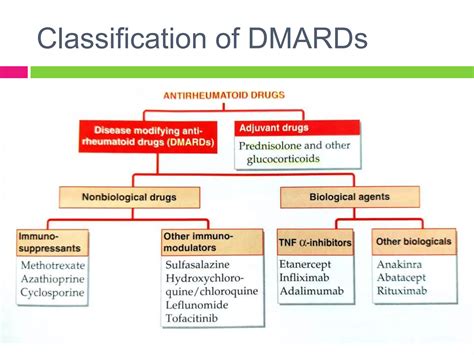
DMARDs, or Disease-Modifying Antirheumatic Drugs, are a class of medications used to treat various types of arthritis, including rheumatoid arthritis, psoriatic arthritis, and ankylosing spondylitis. These medications are designed to slow down the progression of the disease, reduce inflammation, and alleviate symptoms such as pain and stiffness. DMARDs are often prescribed in combination with other medications, such as biologics, to achieve optimal treatment outcomes. In this article, we will delve into the world of DMARDs, exploring their types, mechanisms of action, and potential side effects, as well as discussing the latest research and treatment guidelines.
Types of DMARDs

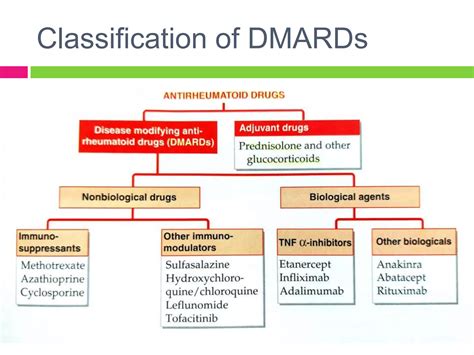
There are several types of DMARDs, each with its unique mechanism of action and therapeutic benefits. Some of the most commonly prescribed DMARDs include methotrexate, sulfasalazine, hydroxychloroquine, leflunomide, and azathioprine. Methotrexate, for instance, is a folate antagonist that inhibits the production of inflammatory cytokines, while sulfasalazine is a sulfa-based antibiotic that has anti-inflammatory properties. Hydroxychloroquine, on the other hand, is an antimalarial medication that has been found to have anti-inflammatory effects in patients with rheumatoid arthritis.
Mechanisms of Action
DMARDs work by targeting various aspects of the immune system, reducing inflammation, and slowing down disease progression. Methotrexate, for example, inhibits the production of tumor necrosis factor-alpha (TNF-alpha), a pro-inflammatory cytokine that plays a key role in the development of rheumatoid arthritis. Sulfasalazine, on the other hand, inhibits the production of interleukin-1 beta (IL-1 beta), another pro-inflammatory cytokine involved in the inflammatory cascade. By reducing inflammation and modulating the immune response, DMARDs can help alleviate symptoms, improve joint function, and slow down disease progression.
| DMARD | Mechanism of Action |
|---|---|
| Methotrexate | Inhibits TNF-alpha production |
| Sulfasalazine | Inhibits IL-1 beta production |
| Hydroxychloroquine | Antimalarial with anti-inflammatory effects |
Potential Side Effects
While DMARDs can be highly effective in managing arthritis symptoms, they can also have potential side effects. Methotrexate, for instance, can cause liver toxicity, nausea, and diarrhea, while sulfasalazine can cause gastrointestinal upset, rash, and increased risk of infection. Hydroxychloroquine can cause visual disturbances, such as blurred vision and sensitivity to light, as well as increased risk of cardiac arrhythmias. It is essential for patients to discuss potential side effects with their healthcare providers and to report any concerns or symptoms promptly.
Monitoring and Adherence
To minimize the risk of side effects and maximize treatment outcomes, patients taking DMARDs must be closely monitored by their healthcare providers. Regular blood tests, liver function tests, and eye exams can help identify potential side effects early on. Patients must also adhere to their treatment regimens, taking their medications as prescribed and attending follow-up appointments with their healthcare providers. By working together, patients and healthcare providers can optimize treatment outcomes and improve quality of life.
Key Points
- DMARDs are a class of medications used to treat various types of arthritis, including rheumatoid arthritis, psoriatic arthritis, and ankylosing spondylitis.
- DMARDs work by targeting various aspects of the immune system, reducing inflammation, and slowing down disease progression.
- Methotrexate, sulfasalazine, hydroxychloroquine, leflunomide, and azathioprine are commonly prescribed DMARDs.
- Potential side effects of DMARDs include liver toxicity, gastrointestinal upset, visual disturbances, and increased risk of infection.
- Regular monitoring and adherence to treatment regimens are essential to minimize the risk of side effects and maximize treatment outcomes.
Current Research and Treatment Guidelines
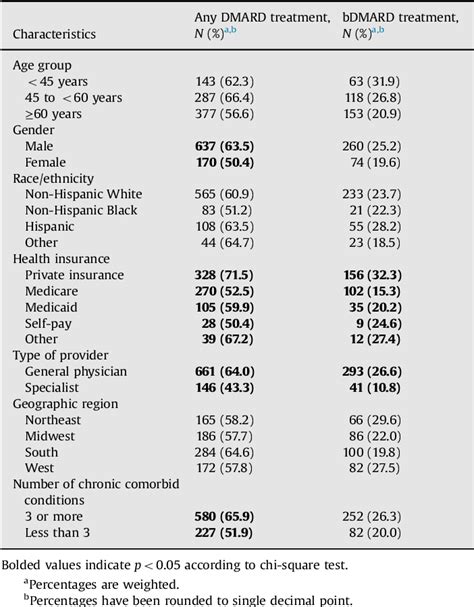
Recent studies have highlighted the importance of early treatment with DMARDs in patients with rheumatoid arthritis. The American College of Rheumatology (ACR) recommends that patients with rheumatoid arthritis be started on a DMARD within 3 months of diagnosis. The ACR also recommends that patients with psoriatic arthritis be treated with a DMARD, such as methotrexate or sulfasalazine, in combination with a biologic medication. By staying up-to-date with the latest research and treatment guidelines, healthcare providers can provide optimal care for their patients with arthritis.
Future Directions
As our understanding of the immune system and disease mechanisms evolves, new DMARDs and treatment strategies are being developed. Researchers are exploring the potential of novel biologics, such as Janus kinase (JAK) inhibitors, and small molecule inhibitors, such as tyrosine kinase inhibitors. These new treatments offer promising opportunities for improved treatment outcomes and reduced side effects. By continuing to advance our knowledge and understanding of DMARDs and arthritis treatment, we can improve the lives of millions of people worldwide.
What are DMARDs and how do they work?
+DMARDs are a class of medications used to treat various types of arthritis, including rheumatoid arthritis, psoriatic arthritis, and ankylosing spondylitis. They work by targeting various aspects of the immune system, reducing inflammation, and slowing down disease progression.
What are the potential side effects of DMARDs?
+Potential side effects of DMARDs include liver toxicity, gastrointestinal upset, visual disturbances, and increased risk of infection. Regular monitoring and adherence to treatment regimens can help minimize the risk of side effects.
How are DMARDs monitored and what are the treatment guidelines?
+DMARDs are monitored through regular blood tests, liver function tests, and eye exams. The American College of Rheumatology (ACR) recommends that patients with rheumatoid arthritis be started on a DMARD within 3 months of diagnosis and that patients with psoriatic arthritis be treated with a DMARD in combination with a biologic medication.
Meta description suggestion: Discover the world of DMARDs, a class of medications used to treat various types of arthritis, and learn about their mechanisms of action, potential side effects, and treatment guidelines.