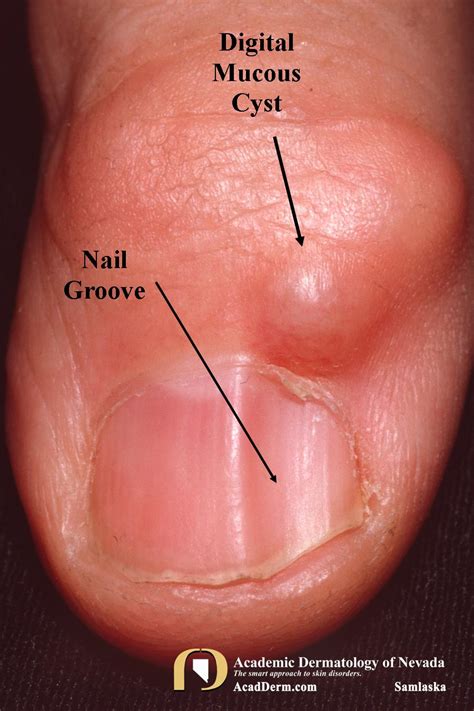
Digital mucous cysts, also known as mucous cysts or ganglions, are benign lesions that occur on the fingers or toes. These cysts are characterized by a small, fluid-filled sac that forms under the skin, often appearing as a small, dome-shaped bump. Digital mucous cysts are relatively common and can be found in people of all ages, although they tend to occur more frequently in older adults.
The exact cause of digital mucous cysts is not fully understood, but they are thought to be related to the aging process and the wear and tear on the joints. Over time, the joints in the fingers and toes can become irritated, leading to the formation of a small cyst. In some cases, digital mucous cysts may be associated with underlying conditions such as osteoarthritis or rheumatoid arthritis. The cysts can also be caused by trauma or injury to the finger or toe, such as a cut or a blow to the area.
Key Points
- Digital mucous cysts are benign lesions that occur on the fingers or toes
- The exact cause of digital mucous cysts is not fully understood, but they are thought to be related to the aging process and wear and tear on the joints
- Digital mucous cysts can be associated with underlying conditions such as osteoarthritis or rheumatoid arthritis
- The cysts can be caused by trauma or injury to the finger or toe
- Treatment options for digital mucous cysts include observation, drainage, and surgical removal
Symptoms and Diagnosis
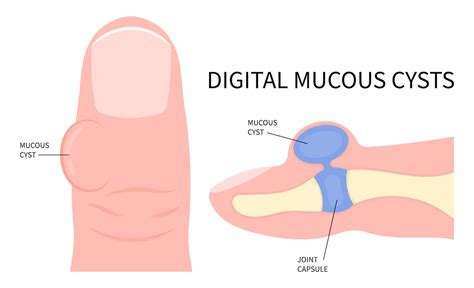
Digital mucous cysts are usually painless and may not cause any symptoms at all. However, in some cases, they can cause discomfort or pain, especially if they become large or inflamed. The cysts can also cause stiffness or limited mobility in the affected finger or toe. To diagnose a digital mucous cyst, a doctor will typically perform a physical examination and take a medical history. They may also order imaging tests such as X-rays or an MRI to rule out other conditions.
The diagnosis of digital mucous cysts can be confirmed by a physical examination, where the doctor will look for a small, fluid-filled sac under the skin. The doctor may also use a needle to drain the cyst and examine the fluid for any signs of infection or other conditions. In some cases, a biopsy may be necessary to confirm the diagnosis and rule out other conditions such as a tumor or an abscess.
Treatment Options
Treatment for digital mucous cysts usually depends on the size and location of the cyst, as well as the symptoms it is causing. In some cases, no treatment may be necessary, and the cyst may resolve on its own. However, if the cyst is large or causing discomfort, treatment may be necessary. Treatment options for digital mucous cysts include observation, drainage, and surgical removal.
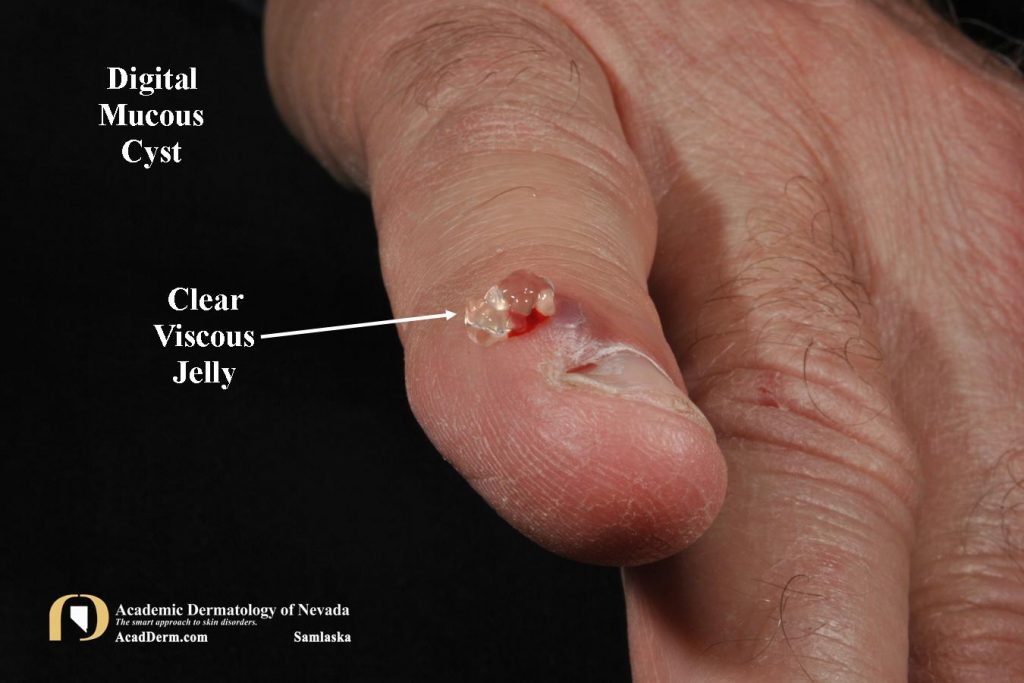
Observation involves monitoring the cyst to see if it resolves on its own. This is often the best option for small cysts that are not causing any symptoms. Drainage involves using a needle to drain the fluid from the cyst. This can provide temporary relief, but the cyst may refill over time. Surgical removal involves surgically removing the cyst and is usually reserved for large or persistent cysts that are causing symptoms.
| Treatment Option | Description |
|---|---|
| Observation | Monitoring the cyst to see if it resolves on its own |
| Drainage | Using a needle to drain the fluid from the cyst |
| Surgical Removal | Surgically removing the cyst |
Prevention and Complications

Preventing digital mucous cysts can be challenging, as the exact cause is not fully understood. However, taking care of the joints and avoiding trauma or injury to the fingers and toes can help reduce the risk of developing a digital mucous cyst. Wearing protective gear such as gloves when engaging in activities that involve repetitive strain on the hands or feet can also help prevent digital mucous cysts.
Complications of digital mucous cysts are rare, but they can occur. Infection is a possible complication, especially if the cyst becomes inflamed or ruptures. If the cyst becomes infected, it may need to be treated with antibiotics. In rare cases, a digital mucous cyst can cause nerve damage or limited mobility in the affected finger or toe.
Long-term Outlook
The long-term outlook for digital mucous cysts is generally good. With proper treatment, most people can expect to make a full recovery and return to normal activities. However, in some cases, the cyst may recur, and additional treatment may be necessary. It’s essential to follow up with a healthcare professional to ensure that the cyst has fully resolved and to address any concerns or questions.
What is a digital mucous cyst?
+A digital mucous cyst is a benign lesion that occurs on the fingers or toes, characterized by a small, fluid-filled sac under the skin.
What causes digital mucous cysts?
+The exact cause of digital mucous cysts is not fully understood, but they are thought to be related to the aging process and wear and tear on the joints.
How are digital mucous cysts treated?
+Treatment options for digital mucous cysts include observation, drainage, and surgical removal, depending on the size and location of the cyst and the symptoms it is causing.