Poetry is a vast and diverse form of literature that has been a cornerstone of human expression for centuries. With its rich history and varied forms, poetry offers a unique window into the human experience, allowing us to explore emotions, ideas, and experiences through the careful selection of words. One of the most fascinating aspects of poetry is its numerous forms, each with its own distinct characteristics, structures, and emotional resonance. In this exploration, we will delve into the types of poems, examining their definitions, examples, and the nuances that make each form unique.
Key Points
- Sonnets are 14-line poems, typically written in iambic pentameter, with a specific rhyme scheme and structure, exploring themes of love, beauty, and mortality.
- Free Verse poems abandon traditional rhyme and meter, allowing poets to express themselves freely, often focusing on the natural rhythm of language and the emotional intensity of the subject matter.
- Haikus are short, three-line poems originating from Japan, capturing moments in time or expressing feelings, with a traditional syllable count of 5-7-5.
- Ballads are narrative poems that tell stories, often with a folkloric or legendary theme, and are characterized by their strong rhythm and rhyme scheme, making them memorable and engaging.
- Odes are poems that express praise or admiration for a person, place, or thing, typically formal and expressive, using language that is rich and evocative.
Exploring Traditional Forms

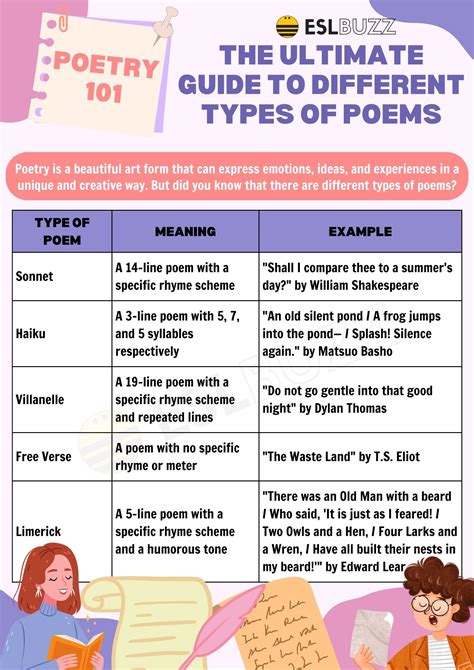
Traditional forms of poetry are characterized by their adherence to specific structural guidelines, such as rhyme schemes, meter, and line lengths. These forms have been developed over centuries and continue to influence contemporary poetry. One of the most recognized traditional forms is the sonnet. A sonnet is a 14-line poem, typically written in iambic pentameter, with a specific rhyme scheme and structure. There are two main types of sonnets: the Shakespearean sonnet, also known as the English sonnet, and the Italian sonnet. Both forms explore themes of love, beauty, and mortality, but they differ in their rhyme schemes and the way the poem is divided.
The Sonnet: A Closer Look
The Shakespearean sonnet consists of 14 lines, with a rhyme scheme of ABAB CDCD EFEF GG. It is divided into four quatrains and a final couplet, which usually resolves the poem’s theme or presents a conclusion. In contrast, the Italian sonnet, also known as the Petrarchan sonnet, is divided into an octave (eight lines) and a sestet (six lines), with a rhyme scheme of ABBA ABBA CDCD CD. Both forms require a careful balance between the structure and the natural flow of the language, making them challenging yet rewarding to write.
| Poem Type | Characteristics |
|---|---|
| Sonnet | 14 lines, specific rhyme scheme, iambic pentameter |
| Haiku | 3 lines, 5-7-5 syllables, nature-themed |
| Free Verse | No rhyme or meter, expressive and flexible |
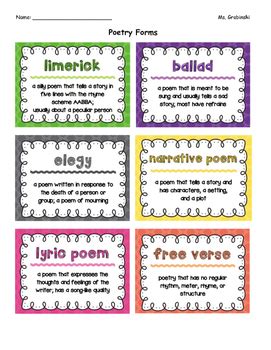
| Ballad | Narrative, strong rhythm, folkloric theme |
| Ode | Expressive, formal, praise or admiration |
Modern and Experimental Forms
In contrast to traditional forms, modern and experimental poetry often rejects strict structural guidelines, embracing freedom and creativity. Free Verse is a prime example of this, where poets are not bound by traditional rhyme or meter. This form allows for a wide range of expression, from the deeply personal to the broadly political, and is characterized by its emphasis on the natural rhythm of language and the emotional intensity of the subject matter. Another form that has gained popularity is the Haiku, a short, three-line poem that originated in Japan. Haikus capture moments in time or express feelings, with a traditional syllable count of 5-7-5, and often incorporate natural imagery.
Free Verse and Haiku: Expressing the Inexpressible
Free Verse poems can range from a few lines to several pages, and their lack of structure makes them highly adaptable to different themes and subjects. This form is particularly suited to expressing complex, abstract ideas or personal feelings, as it allows the poet to experiment with language and form in a highly individualized way. Haikus, on the other hand, are concise and powerful, requiring the poet to distill their thoughts and feelings into a very short space. This conciseness makes Haikus challenging to write but also rewarding, as they can convey profound insights and emotions with simplicity and elegance.
Poetry, in all its forms, offers a unique lens through which we can view the world and ourselves. Whether through the strict structures of traditional forms or the expressive freedom of modern and experimental poetry, poets continue to explore, express, and connect with the human experience. As we delve into the world of poetry, we find not just a reflection of our own thoughts and feelings but also a mirror held up to the complexities, joys, and sorrows of life itself.
What is the main difference between a Shakespearean and an Italian sonnet?
+The main difference lies in their structure and rhyme scheme. A Shakespearean sonnet is divided into four quatrains and a final couplet, with a rhyme scheme of ABAB CDCD EFEF GG, while an Italian sonnet is divided into an octave and a sestet, with a rhyme scheme of ABBA ABBA CDCD CD.
What characterizes a Haiku?
+A Haiku is characterized by its short, three-line structure, with a traditional syllable count of 5-7-5, and often incorporates natural imagery to capture moments in time or express feelings.
What is the primary feature of Free Verse poetry?
+The primary feature of Free Verse poetry is its lack of adherence to traditional rhyme and meter, allowing poets to express themselves freely without structural constraints.