
Dense regular connective tissue is a type of connective tissue that is characterized by its dense and regular arrangement of collagen fibers and cells. This type of tissue is found in various parts of the body, such as tendons, ligaments, and aponeuroses, and plays a crucial role in providing support, stability, and strength to the body's structures. In this article, we will delve into the world of dense regular connective tissue, exploring its composition, functions, and significance in the human body.
Key Points
- Dense regular connective tissue is composed of collagen fibers, cells, and ground substance, which work together to provide support and stability to the body's structures.
- This type of tissue is found in tendons, ligaments, and aponeuroses, and plays a crucial role in facilitating movement and maintaining posture.
- Dense regular connective tissue has a high tensile strength, making it resistant to stretching and deformation.
- The tissue's composition and structure can be affected by various factors, such as age, exercise, and disease.
- Understanding the properties and functions of dense regular connective tissue is essential for the diagnosis and treatment of various musculoskeletal disorders.
Composition and Structure of Dense Regular Connective Tissue
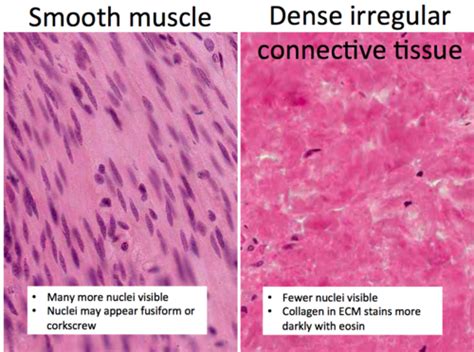
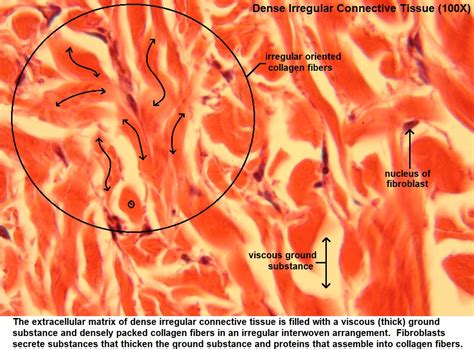
Dense regular connective tissue is composed of three main components: collagen fibers, cells, and ground substance. Collagen fibers are the primary component of this tissue, making up approximately 70-80% of its dry weight. These fibers are arranged in a regular and parallel manner, which provides the tissue with its characteristic density and strength. The cells found in dense regular connective tissue are primarily fibroblasts, which are responsible for producing and maintaining the collagen fibers. The ground substance, which is a gel-like material, fills the spaces between the collagen fibers and cells, providing the tissue with its rigidity and stiffness.
Functions of Dense Regular Connective Tissue
Dense regular connective tissue plays a vital role in providing support and stability to the body’s structures. Its primary functions include: providing tensile strength to tendons and ligaments, facilitating movement by allowing for the transmission of forces between bones and muscles, and maintaining posture by providing stability to the vertebral column. Additionally, dense regular connective tissue acts as a shock absorber, reducing the impact of stress and strain on the body’s structures.
| Component | Percentage of Dry Weight |
|---|---|
| Collagen Fibers | 70-80% |
| Cells (Fibroblasts) | 10-20% |
| Ground Substance | 5-10% |
Types of Dense Regular Connective Tissue
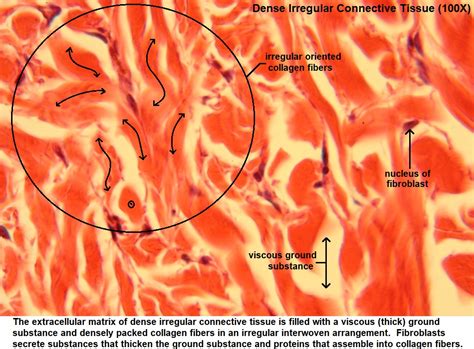
There are several types of dense regular connective tissue, each with its unique characteristics and functions. These include: tendinous tissue, which is found in tendons and provides attachment to muscles; ligamentous tissue, which is found in ligaments and provides stability to joints; and aponeurotic tissue, which is found in aponeuroses and provides a broad attachment to muscles.
Factors Affecting Dense Regular Connective Tissue
Dense regular connective tissue can be affected by various factors, such as age, exercise, and disease. With age, the tissue’s composition and structure can change, leading to a decrease in its tensile strength and an increase in its stiffness. Exercise can also affect the tissue, with regular physical activity leading to an increase in its strength and flexibility. Certain diseases, such as osteoarthritis and rheumatoid arthritis, can also affect the tissue, leading to inflammation and degeneration.
What is the primary function of dense regular connective tissue?
+The primary function of dense regular connective tissue is to provide support and stability to the body's structures, facilitating movement and maintaining posture.
What are the main components of dense regular connective tissue?
+The main components of dense regular connective tissue are collagen fibers, cells (primarily fibroblasts), and ground substance.
How does age affect dense regular connective tissue?
+With age, the composition and structure of dense regular connective tissue can change, leading to a decrease in its tensile strength and an increase in its stiffness.
In conclusion, dense regular connective tissue is a vital component of the musculoskeletal system, providing support, stability, and strength to the body's structures. Its unique composition and structure make it an essential tissue for facilitating movement and maintaining posture. Understanding the properties and functions of dense regular connective tissue is essential for the diagnosis and treatment of various musculoskeletal disorders. By recognizing the importance of this tissue, we can better appreciate the intricate mechanisms that govern the human body and take steps to maintain its health and function.
Meta Description: Discover the importance of dense regular connective tissue in the human body, its composition, functions, and significance in maintaining posture and facilitating movement. Learn how age, exercise, and disease can affect this tissue and its role in the musculoskeletal system.