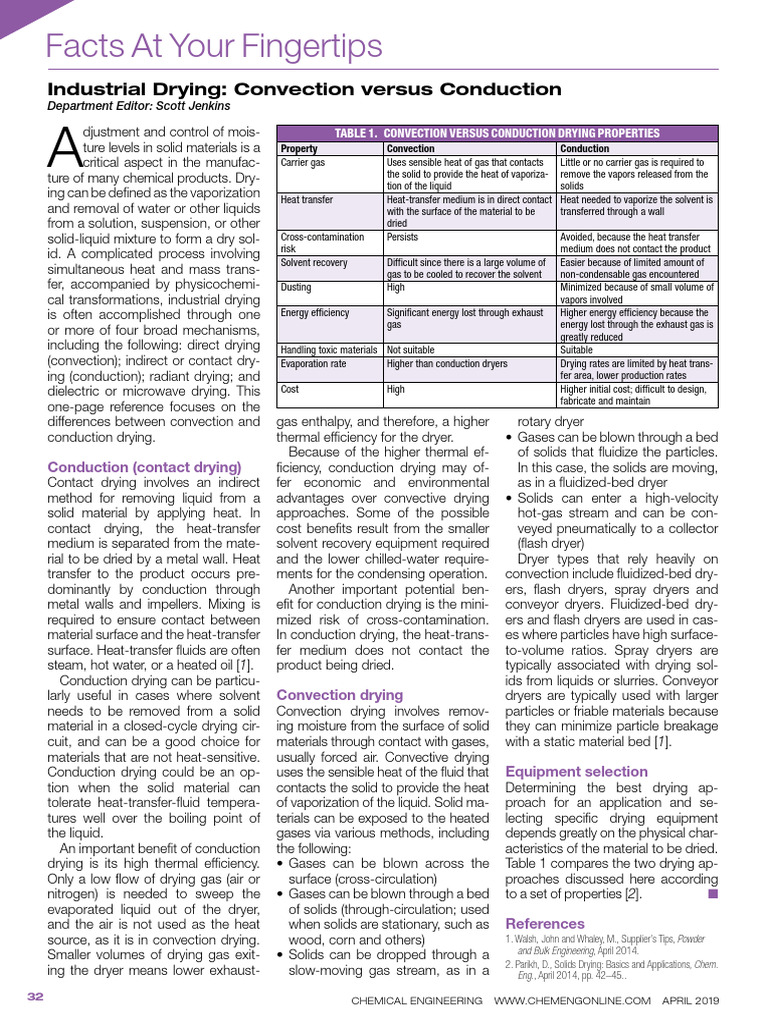
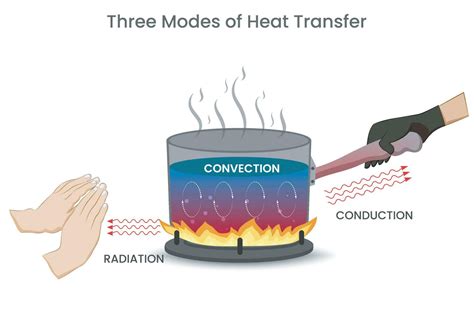
The realm of heat transfer is a fascinating field that has garnered significant attention in various industries, including engineering, physics, and materials science. At its core, heat transfer is the process by which energy is transmitted from one body to another due to a temperature difference. There are three primary modes of heat transfer: conduction, convection, and radiation. In this article, we will delve into the nuances of conduction and convection heat transfer, exploring their underlying principles, applications, and differences.
Key Points
- Conduction heat transfer occurs through direct contact between particles or molecules, with energy being transmitted through vibrations or collisions.
- Convection heat transfer involves the transfer of energy through the movement of fluids, which can be either natural or forced.
- The Nusselt number (Nu) is a dimensionless quantity used to characterize convective heat transfer, with values ranging from 1 (laminar flow) to 1000 (turbulent flow).
- Conduction is generally more efficient in solids, while convection is more prevalent in fluids.
- Real-world applications of conduction and convection heat transfer include electronics cooling, HVAC systems, and heat exchangers.
Conduction Heat Transfer
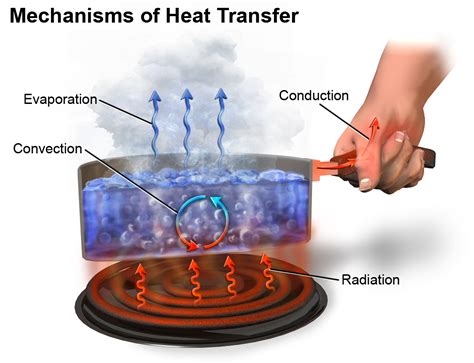
Conduction heat transfer is the process by which energy is transmitted through direct contact between particles or molecules. This mode of heat transfer is most prevalent in solids, where the atoms or molecules are closely packed, allowing for efficient energy transfer through vibrations or collisions. The rate of conduction heat transfer is governed by the thermal conductivity of the material, which is a measure of its ability to conduct heat. Materials with high thermal conductivity, such as copper or silver, are excellent conductors of heat, while those with low thermal conductivity, such as air or vacuum, are poor conductors.
Mathematical Formulation of Conduction Heat Transfer
The mathematical formulation of conduction heat transfer is based on Fourier’s Law, which states that the heat flux (q) is proportional to the temperature gradient (-dT/dx) and the thermal conductivity (k) of the material: q = -k * dT/dx. This equation is a fundamental concept in heat transfer and is widely used to analyze and design conduction-based systems.
Convection Heat Transfer

Convection heat transfer, on the other hand, involves the transfer of energy through the movement of fluids. This mode of heat transfer is more prevalent in fluids, where the molecules are free to move and transfer energy through the bulk motion of the fluid. Convection heat transfer can be either natural or forced, depending on whether the fluid motion is driven by external means, such as a pump or fan, or by buoyancy forces, such as those arising from density gradients. The rate of convective heat transfer is governed by the Nusselt number (Nu), which is a dimensionless quantity that characterizes the convective heat transfer process.
Types of Convection Heat Transfer
There are two primary types of convection heat transfer: laminar and turbulent. Laminar convection occurs when the fluid flow is smooth and orderly, with minimal mixing or turbulence. In contrast, turbulent convection occurs when the fluid flow is chaotic and disordered, with significant mixing and turbulence. The Nusselt number (Nu) is used to distinguish between these two regimes, with values ranging from 1 (laminar flow) to 1000 (turbulent flow).
| Mode of Heat Transfer | Heat Transfer Coefficient (h) | Nusselt Number (Nu) |
|---|---|---|
| Conduction | 10-100 W/m²K | N/A |
| Convection (Laminar) | 10-100 W/m²K | 1-10 |
| Convection (Turbulent) | 100-1000 W/m²K | 10-1000 |
Applications of Conduction and Convection Heat Transfer
Conduction and convection heat transfer have numerous applications in various industries, including electronics, HVAC systems, and heat exchangers. In electronics, conduction heat transfer is used to dissipate heat from components, such as CPUs and GPUs, while convection heat transfer is used to cool the surrounding air or fluid. In HVAC systems, convection heat transfer is used to transfer heat from the indoor air to the outdoor air, while conduction heat transfer is used to transfer heat through the building envelope. Heat exchangers, such as those used in power plants and refrigeration systems, rely on a combination of conduction and convection heat transfer to transfer energy between fluids.
Real-World Examples
Some real-world examples of conduction and convection heat transfer include the cooling of electronic devices, such as smartphones and laptops, the heating and cooling of buildings, and the operation of heat exchangers in power plants and refrigeration systems. In each of these applications, a combination of conduction and convection heat transfer is used to achieve efficient energy transfer and minimize heat-related issues.
What is the primary difference between conduction and convection heat transfer?
+The primary difference between conduction and convection heat transfer is the mechanism by which energy is transferred. Conduction heat transfer occurs through direct contact between particles or molecules, while convection heat transfer occurs through the movement of fluids.
What is the Nusselt number (Nu), and how is it used to characterize convective heat transfer?
+The Nusselt number (Nu) is a dimensionless quantity used to characterize convective heat transfer. It is defined as the ratio of convective heat transfer to conductive heat transfer and is used to distinguish between laminar and turbulent flow regimes.
What are some real-world applications of conduction and convection heat transfer?
+Some real-world applications of conduction and convection heat transfer include the cooling of electronic devices, the heating and cooling of buildings, and the operation of heat exchangers in power plants and refrigeration systems.
In conclusion, conduction and convection heat transfer are two fundamental modes of heat transfer that play a critical role in various industries and applications. Understanding the principles and differences between these modes is essential for designing and optimizing heat transfer systems, minimizing heat-related issues, and improving overall efficiency. By recognizing the importance of conduction and convection heat transfer, we can better appreciate the intricate mechanisms that govern energy transfer and develop innovative solutions to address the complex challenges of heat transfer.