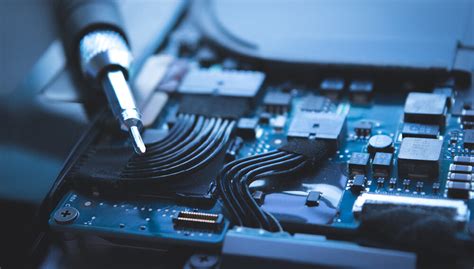
As a computer hardware engineer, designing and developing innovative computer hardware components is a complex task that requires a deep understanding of computer architecture, electronics, and software interactions. With the rapid evolution of technology, the role of a computer hardware engineer has become increasingly critical in creating high-performance, energy-efficient, and reliable computing systems. In this article, we will explore five essential tips for computer hardware engineers to enhance their skills and stay ahead in the field.
Key Points
- Stay updated with the latest advancements in computer architecture and semiconductor technology
- Develop a strong understanding of computer-aided design (CAD) tools and simulation software
- Focus on designing energy-efficient and thermally optimized hardware components
- Collaborate with software engineers to ensure seamless hardware-software integration
- Continuously test and validate hardware designs to ensure reliability and performance
Understanding Computer Architecture and Semiconductor Technology

A strong foundation in computer architecture is crucial for computer hardware engineers. This includes understanding the design and operation of central processing units (CPUs), graphics processing units (GPUs), and memory hierarchies. Moreover, with the advancements in semiconductor technology, such as the transition from planar transistors to 3D FinFETs and gate-all-around FETs, engineers need to stay updated on the latest manufacturing processes and their implications on hardware design. For instance, the 5nm process node has enabled the creation of more complex and powerful chips, but it also poses significant challenges in terms of power consumption and heat dissipation.
Computer-Aided Design (CAD) Tools and Simulation Software
Proficiency in CAD tools and simulation software is essential for designing and verifying hardware components. Engineers should be familiar with tools like Verilog and VHDL for hardware description and simulation, as well as SPICE for circuit simulation. Additionally, understanding the principles of Design for Testability (DFT) and Design for Manufacturability (DFM) is critical for ensuring that hardware designs can be efficiently tested and manufactured. By leveraging these tools and methodologies, engineers can reduce design errors, improve product quality, and accelerate the development process.
| Design Tool | Primary Function |
|---|---|
| Verilog | Hardware description and simulation |
| VHDL | Hardware description and simulation |
| SPICE | Circuit simulation |
| DFT | Design for Testability |
| DFM | Design for Manufacturability |
Designing Energy-Efficient and Thermally Optimized Hardware Components

With the growing concern about energy consumption and heat dissipation in computing systems, designing energy-efficient and thermally optimized hardware components has become a critical aspect of computer hardware engineering. This involves understanding the principles of power management and thermal management, as well as developing strategies to minimize power consumption and heat generation. For example, the use of dynamic voltage and frequency scaling (DVFS) can help reduce power consumption by adjusting the voltage and frequency of hardware components based on workload demands.
Collaboration with Software Engineers
Effective collaboration between hardware and software engineers is essential for ensuring seamless hardware-software integration. This involves understanding the software requirements and constraints, as well as developing hardware components that can efficiently execute software instructions. By working closely together, engineers can optimize system performance, reduce power consumption, and improve overall system reliability. For instance, the development of Domain-Specific Architectures (DSAs) requires close collaboration between hardware and software engineers to create customized hardware accelerators that can efficiently execute specific software workloads.
Testing and Validation of Hardware Designs
Finally, continuously testing and validating hardware designs is crucial to ensure reliability and performance. This involves developing a comprehensive testing strategy that includes simulation, emulation, and physical prototyping. By leveraging these methodologies, engineers can identify and fix design errors early in the development process, reducing the risk of costly rework and improving overall product quality. For example, the use of functional verification can help ensure that hardware components function correctly and meet the required specifications.
What are the key challenges in designing energy-efficient hardware components?
+The key challenges in designing energy-efficient hardware components include minimizing power consumption, reducing heat generation, and optimizing system performance. This requires a deep understanding of power management and thermal management principles, as well as the development of strategies to minimize power consumption and heat generation.
How can computer hardware engineers stay updated with the latest advancements in semiconductor technology?
+Computer hardware engineers can stay updated with the latest advancements in semiconductor technology by attending industry conferences, participating in online forums and discussions, and reading technical papers and journals. Additionally, they can take online courses and workshops to learn about new technologies and design methodologies.
What is the importance of collaboration between hardware and software engineers in computer hardware design?
+Collaboration between hardware and software engineers is essential for ensuring seamless hardware-software integration. This involves understanding the software requirements and constraints, as well as developing hardware components that can efficiently execute software instructions. By working closely together, engineers can optimize system performance, reduce power consumption, and improve overall system reliability.
In conclusion, computer hardware engineering is a complex and challenging field that requires a deep understanding of computer architecture, semiconductor technology, and software interactions. By following these five essential tips, engineers can enhance their skills, stay ahead in the field, and contribute to the development of innovative and high-performance computing systems. Whether it’s designing energy-efficient hardware components, collaborating with software engineers, or testing and validating hardware designs, the role of a computer hardware engineer is critical in shaping the future of computing.