
Cleopatra VII, the last active pharaoh of Ancient Egypt, has been a subject of fascination for centuries. Her life and reign are marked by significant events and relationships, one of the most notable being her connection with Julius Caesar. Here are five key facts about Cleopatra and her relationship with Caesar, providing a glimpse into the complex and intriguing history of these two figures.
Key Points
- Cleopatra VII was the last active pharaoh of Ancient Egypt, ruling from 51 BC until her death in 30 BC.
- She formed an alliance with Julius Caesar, which significantly impacted her reign and the history of Egypt.
- Cleopatra's relationship with Caesar was both political and personal, leading to her visit to Rome and the birth of their son, Caesarion.
- After Caesar's assassination, Cleopatra aligned herself with Mark Antony, one of Caesar's most powerful generals, in an effort to maintain Egypt's power and independence.
- The ultimate defeat of Cleopatra and Mark Antony by Octavian (later known as Augustus Caesar) marked the end of the Ptolemaic Kingdom and the beginning of the Roman Period in Egypt.
Cleopatra and Caesar: An Introduction
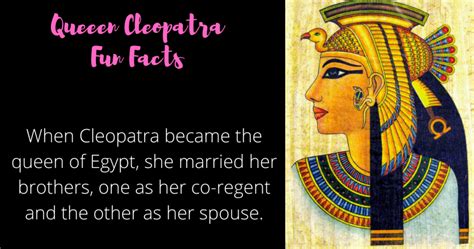
Cleopatra VII, a member of the Ptolemaic dynasty, which was a Greek dynasty that ruled Egypt after the death of Alexander the Great, ascended to the throne at the age of 18. Her reign was marked by attempts to maintain Egypt’s independence and power in a world where the Roman Empire was expanding. Julius Caesar, the Roman general and statesman, played a crucial role in Cleopatra’s life and the fate of Egypt.
Early Alliance and Visit to Rome
Cleopatra formed an alliance with Julius Caesar to secure his support for her claim to the throne of Egypt, which was contested by her brother Ptolemy XIII. This alliance not only provided Cleopatra with the military backing she needed but also led to a personal relationship between the two. In 46 BC, Cleopatra traveled to Rome, where she was received as a royal visitor. This visit was significant, as it marked one of the first times a reigning Egyptian monarch had visited Rome. During her stay, Cleopatra and Caesar’s relationship deepened, resulting in the birth of their son, Caesarion, in 47 BC.
| Event | Year | Significance |
|---|---|---|
| Cleopatra VII ascends to the throne | 51 BC | Beginning of Cleopatra's reign |
| Cleopatra forms an alliance with Julius Caesar | 48 BC | Secures Roman support for her claim to the throne |
| Cleopatra visits Rome | 46 BC | Strengthens alliance with Caesar and gives birth to Caesarion |
| Assassination of Julius Caesar | 44 BC | End of Cleopatra's alliance with Caesar and beginning of her relationship with Mark Antony |
| Death of Cleopatra VII | 30 BC | End of the Ptolemaic Kingdom and the beginning of the Roman Period in Egypt |
After Caesar: Cleopatra and Mark Antony
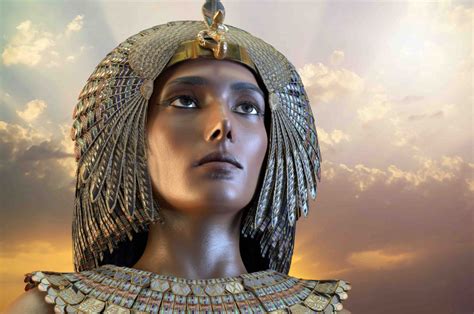
Following Julius Caesar’s assassination in 44 BC, Cleopatra returned to Egypt. She then formed an alliance with Mark Antony, one of Caesar’s most powerful generals, in an effort to protect Egypt’s interests. This alliance was not only strategic but also romantic, mirroring her earlier relationship with Caesar. The relationship between Cleopatra and Mark Antony was significant, as it represented a challenge to Octavian (later known as Augustus Caesar), who would eventually become the ruler of the Roman Empire.
Battle of Actium and Its Aftermath
The alliance between Cleopatra and Mark Antony culminated in the Battle of Actium in 31 BC, where their forces were defeated by those of Octavian. This defeat marked the beginning of the end for Cleopatra and Mark Antony. They retreated to Alexandria, where, after a prolonged siege, they realized their situation was hopeless. In 30 BC, Mark Antony took his own life, and shortly after, Cleopatra followed suit, allegedly by allowing a poisonous snake to bite her. The death of Cleopatra VII marked the end of the Ptolemaic Kingdom and the beginning of the Roman Period in Egypt.
What was the significance of Cleopatra's alliance with Julius Caesar?
+Cleopatra's alliance with Julius Caesar was significant because it provided her with the military support she needed to secure her throne and maintain Egypt's independence in a world dominated by the Roman Empire. It also led to a personal relationship between the two, resulting in the birth of their son, Caesarion.
How did the death of Julius Caesar affect Cleopatra's reign?
+The death of Julius Caesar had a profound impact on Cleopatra's reign. It led to her forming an alliance with Mark Antony, one of Caesar's generals, in an attempt to protect Egypt's interests and maintain her power. This ultimately led to her downfall, as she and Mark Antony were defeated by Octavian in the Battle of Actium.
What marked the end of the Ptolemaic Kingdom and the beginning of the Roman Period in Egypt?
+The death of Cleopatra VII in 30 BC marked the end of the Ptolemaic Kingdom and the beginning of the Roman Period in Egypt. After her death, Egypt became a Roman province under the rule of Octavian, later known as Augustus Caesar, signaling the end of Egyptian independence and the start of Roman dominance.
In conclusion, the story of Cleopatra and Julius Caesar is one of political intrigue, personal passion, and historical significance. Their alliance not only shaped the course of their lives but also had lasting impacts on the ancient world, leading to the downfall of the Ptolemaic dynasty and the rise of the Roman Empire. Through their relationships and conflicts, we see the complex interplay of power, politics, and passion that defined the lives of these ancient leaders.