
Celebrex and ibuprofen are two popular nonsteroidal anti-inflammatory drugs (NSAIDs) used to treat pain, inflammation, and stiffness. While both medications share similar uses, they have distinct differences in their mechanism of action, side effects, and suitability for certain patient populations. Understanding these differences is essential for healthcare providers and patients to make informed decisions about which medication to use for various conditions.
Key Points
- Celebrex (celecoxib) is a COX-2 inhibitor, whereas ibuprofen is a non-selective NSAID.
- Celebrex is generally considered safer for patients at risk of gastrointestinal bleeding, but it may increase the risk of cardiovascular events.
- Ibuprofen is available over-the-counter (OTC), while Celebrex is available by prescription only.
- Both medications are effective for treating pain and inflammation, but Celebrex may be more effective for certain conditions, such as osteoarthritis.
- Patient factors, such as age, medical history, and concomitant medications, should be considered when choosing between Celebrex and ibuprofen.
Mechanism of Action and Pharmacology

Celebrex (celecoxib) is a selective cyclooxygenase-2 (COX-2) inhibitor, which means it specifically targets the COX-2 enzyme responsible for producing prostaglandins that cause pain and inflammation. In contrast, ibuprofen is a non-selective NSAID that inhibits both COX-1 and COX-2 enzymes. COX-1 is involved in maintaining the protective lining of the stomach and intestines, whereas COX-2 is primarily responsible for producing prostaglandins that cause inflammation.
Pharmacokinetics and Pharmacodynamics
Celebrex has a half-life of approximately 11 hours, allowing for once-daily dosing. It is highly bound to plasma proteins and undergoes extensive hepatic metabolism. Ibuprofen, on the other hand, has a half-life of around 2-4 hours, requiring more frequent dosing. Ibuprofen is also highly bound to plasma proteins and undergoes renal excretion. Understanding the pharmacokinetics and pharmacodynamics of these medications is essential for optimizing their use and minimizing potential side effects.
| Medication | Half-Life | Metabolism | Excretion |
|---|---|---|---|
| Celebrex (celecoxib) | 11 hours | Hepatic | Fecal |
| Ibuprofen | 2-4 hours | Hepatic | Renal |

Clinical Uses and Efficacy
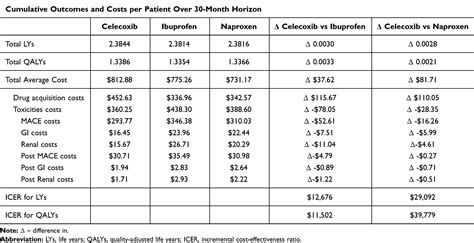
Both Celebrex and ibuprofen are effective for treating various conditions, including osteoarthritis, rheumatoid arthritis, and ankylosing spondylitis. Celebrex has been shown to be more effective than ibuprofen for certain conditions, such as osteoarthritis of the knee. However, ibuprofen may be more effective for acute pain and inflammation, such as in the treatment of headaches or menstrual cramps.
Side Effects and Safety Profile
Celebrex has a lower risk of gastrointestinal bleeding compared to ibuprofen, particularly in patients taking concomitant medications that increase the risk of bleeding, such as anticoagulants or antiplatelet agents. However, Celebrex may increase the risk of cardiovascular events, such as myocardial infarction or stroke, particularly in patients with pre-existing cardiovascular disease. Ibuprofen, on the other hand, has a higher risk of gastrointestinal bleeding, but it may have a lower risk of cardiovascular events compared to Celebrex.
Special Considerations and Contraindications
Celebrex and ibuprofen have different contraindications and special considerations. Celebrex is contraindicated in patients with a history of allergic reactions to sulfonamides or other NSAIDs. Ibuprofen is contraindicated in patients with a history of allergic reactions to aspirin or other NSAIDs. Additionally, both medications should be used with caution in patients with renal impairment, as they may worsen renal function.
What is the primary difference between Celebrex and ibuprofen?
+The primary difference between Celebrex and ibuprofen is their mechanism of action. Celebrex is a selective COX-2 inhibitor, whereas ibuprofen is a non-selective NSAID that inhibits both COX-1 and COX-2 enzymes.
Which medication is safer for patients at risk of gastrointestinal bleeding?
+Celebrex is generally considered safer for patients at risk of gastrointestinal bleeding, as it has a lower risk of bleeding compared to ibuprofen.
Can Celebrex and ibuprofen be used together?
+Using Celebrex and ibuprofen together is not recommended, as it may increase the risk of adverse effects, such as gastrointestinal bleeding or renal impairment.
In conclusion, Celebrex and ibuprofen are two distinct medications with different mechanisms of action, side effects, and suitability for certain patient populations. Healthcare providers should carefully evaluate the patient’s medical history and consider the potential benefits and risks of each medication before making a treatment decision. By understanding the differences between Celebrex and ibuprofen, healthcare providers can optimize the use of these medications and improve patient outcomes.