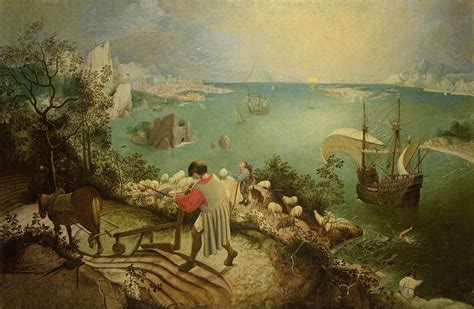
The Bruegel landscape, specifically "The Fall of Icarus," is a seminal work of art that showcases the mastery of Pieter Bruegel the Elder, a Flemish painter from the 16th century. This painting, created around 1555, is a testament to Bruegel's innovative style, which seamlessly blended elements of landscape, genre painting, and classical mythology. The story of Icarus, a figure from Greek mythology who flew too close to the sun with wings made of wax, only to plummet to his death in the sea, is subtly integrated into a serene and idyllic landscape, reflecting Bruegel's unique approach to storytelling through art.
The Artistic and Historical Context
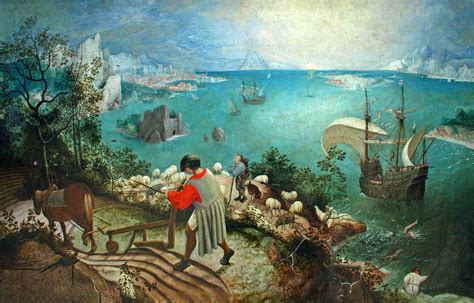
Bruegel’s “The Fall of Icarus” is not merely a depiction of a mythological event but a rich tapestry of symbolism, social commentary, and artistic innovation. Painted during the Northern Renaissance, a period marked by significant cultural, religious, and artistic transformations, this work reflects the complexities and nuances of its time. The artist’s choice of subject matter, his handling of light and shadow, and the composition of the painting all contribute to a work that is both a commentary on human folly and a celebration of the beauty of nature.
Symbolism and Interpretation
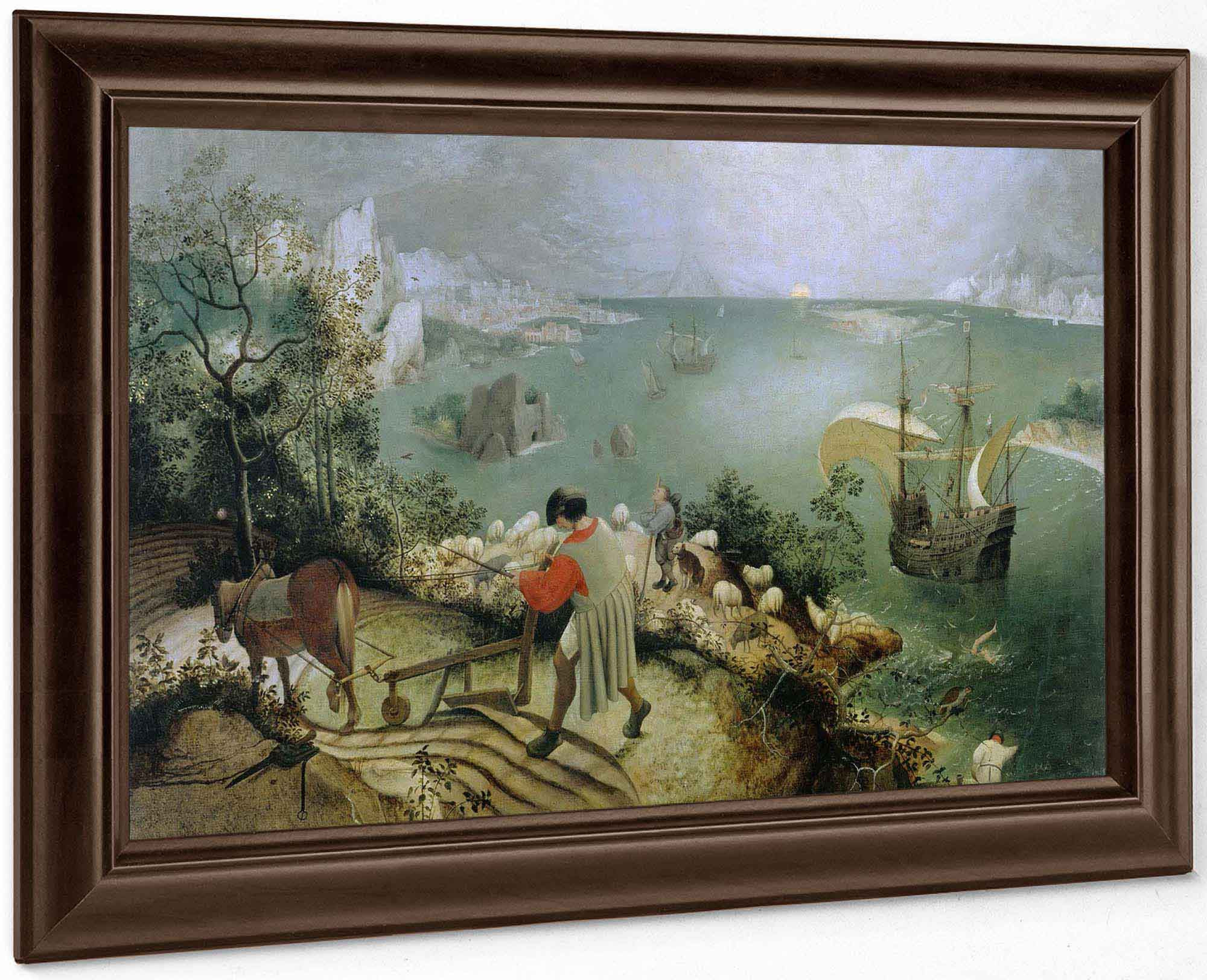
The symbolism in “The Fall of Icarus” is multifaceted, inviting various interpretations. Icarus himself is barely visible in the painting, a small figure in the background, plummeting towards the sea. This understatement of the mythological event in favor of the expansive landscape has been interpreted in many ways. Some see it as a reflection of the human condition, where individual tragedies are but a small part of the larger tapestry of life and nature. Others interpret it as a commentary on the dangers of hubris and the inevitability of fate. The plowman in the foreground, oblivious to Icarus’s fall, is often seen as a symbol of the indifference of nature to human affairs, or as a representation of the ordinary, earthly life that continues unabated by the dramas of the gods.
| Element | Symbolic Meaning |
|---|---|
| Icarus | Human folly, tragedy, the inevitability of fate |
| The Plowman | Indifference of nature, ordinary life, continuity |
| The Landscape | Serenity, beauty, the larger context of human existence |
Technical Aspects and Preservation
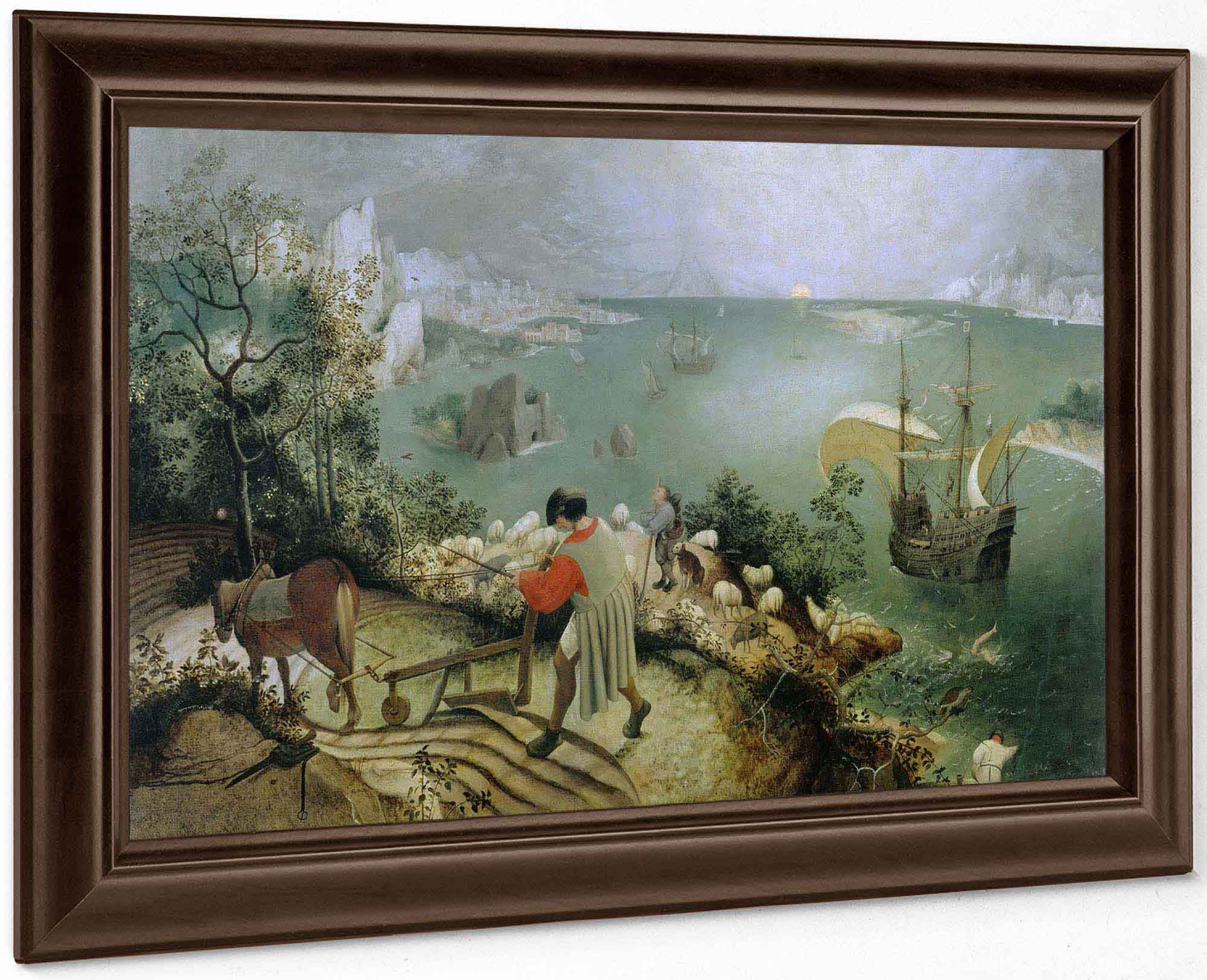
Technically, “The Fall of Icarus” is a masterpiece of oil painting on canvas, measuring approximately 73.5 cm by 112 cm. Bruegel’s use of color, composition, and perspective creates a deep sense of space and atmosphere, drawing the viewer into the world of the painting. The preservation of the work has been a subject of interest, with various restorations and analyses conducted over the years to understand the materials and techniques used by Bruegel. These studies not only shed light on the artist’s methods but also contribute to the broader understanding of Renaissance painting techniques.
Conservation Efforts
Conservation efforts for “The Fall of Icarus” have been meticulous, aiming to preserve the original intent and integrity of the painting while ensuring its longevity for future generations. This includes careful cleaning, restoration of damaged areas, and the application of advanced technologies to analyze and understand the painting’s composition and aging process. Such efforts are crucial in maintaining the health of the painting, given its age and the inherent fragility of the materials used in its creation.
Key Points
- Bruegel's "The Fall of Icarus" is a seminal work of Renaissance art, combining landscape, genre painting, and classical mythology.
- The painting's composition, with Icarus's fall relegated to the background, offers a unique commentary on human existence and nature.
- The work reflects Bruegel's innovative style and his contribution to the evolution of landscape painting.
- Symbolism in the painting, including Icarus, the plowman, and the landscape itself, invites multiple interpretations and reflections on the human condition.
- Technical aspects, such as Bruegel's use of color and perspective, and conservation efforts are crucial to understanding and preserving the painting.
In conclusion, "The Fall of Icarus" by Pieter Bruegel the Elder stands as a testament to the artist's genius and the enduring power of Renaissance art. Its blend of mythological narrative, social commentary, and breathtaking landscape continues to captivate audiences, offering insights into the artistic, cultural, and philosophical currents of its time. As a work of art, it not only reflects the past but also speaks to the present, inviting viewers to ponder the timeless themes it embodies.
What is the significance of “The Fall of Icarus” in the context of Renaissance art?
+“The Fall of Icarus” is significant because it represents a pivotal moment in the evolution of landscape painting, showcasing Bruegel’s innovative approach to composition and symbolism.
How does the painting reflect the cultural and artistic trends of its time?
+The painting reflects the cultural and artistic trends of the Northern Renaissance, incorporating elements of classical mythology, social commentary, and a deep appreciation for the beauty of nature.
What conservation efforts have been undertaken to preserve “The Fall of Icarus”?
+Conservation efforts have included careful cleaning, restoration of damaged areas, and the use of advanced technologies to analyze and preserve the painting, ensuring its longevity for future generations.