
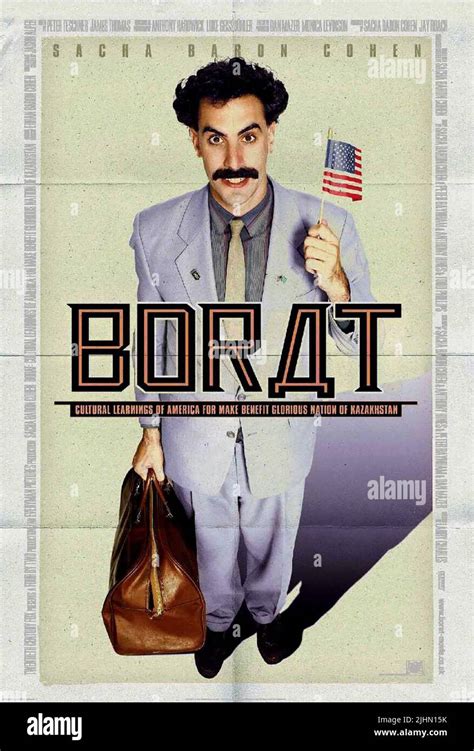
The 2006 film "Borat: Cultural Learnings of America for Make Benefit Glorious Nation of Kazakhstan" is a mockumentary that follows the journey of Borat Sagdiyev, a fictional Kazakh journalist, as he travels across the United States to learn about American culture. The film, directed by Larry Charles and starring Sacha Baron Cohen as Borat, is a satirical comedy that uses humor to critique societal norms, cultural differences, and the people in them. In this article, we will delve into the cultural learnings of America as presented in the film, exploring the themes, characters, and societal commentary that make "Borat" a thought-provoking and entertaining work.
Introduction to Borat and His Mission

Borat, a well-intentioned but misguided and eccentric journalist, is sent by the Kazakh government to the United States to learn about American culture and bring back ideas to improve his home country. Armed with a camera crew and a penchant for getting into awkward situations, Borat sets out on a cross-country road trip, interacting with a diverse range of Americans, from politicians and businessmen to ordinary citizens. Through his interactions, Borat challenges cultural norms, often unintentionally, and provides a fresh, albeit biased, perspective on American society.
Key Points
- The film "Borat" is a mockumentary that satirizes American culture and societal norms.
- Borat, the main character, is a fictional Kazakh journalist who travels across the United States to learn about American culture.
- The film critiques cultural differences, racism, sexism, and homophobia through humor and irony.
- Borat's interactions with Americans challenge cultural norms and provide a fresh perspective on American society.
- The film has been both praised and criticized for its portrayal of Kazakhstan and its people.
Satire and Social Commentary
At its core, “Borat” is a satirical film that uses comedy to comment on serious social issues. Borat’s character, with his antiquated and often offensive views, serves as a mirror to American society, reflecting back the prejudices, biases, and hypocrisies that exist within it. The film tackles topics such as racism, sexism, homophobia, and anti-Semitism, often using Borat’s ignorance and naivety to highlight the absurdity and intolerance of these attitudes. Through its satire, the film encourages viewers to reflect on their own beliefs and behaviors, challenging them to consider the impact of their words and actions on others.
| Theme | Description |
|---|---|
| Racism | Borat's interactions with African Americans and his use of racist language highlight the persistence of racism in American society. |
| Sexism | Borat's treatment of women and his views on gender roles illustrate the ongoing struggle for gender equality in the United States. |
| Homophobia | Borat's reactions to homosexuality and his encounters with gay individuals underscore the need for greater understanding and acceptance of LGBTQ+ individuals. |
Cultural Learnings and Misunderstandings

Throughout the film, Borat’s cultural learnings are often marked by misunderstandings and misinterpretations. His attempts to understand American customs, such as greeting people with a kiss on the cheek or trying to purchase a gun, lead to humorous and sometimes uncomfortable situations. These interactions serve as a commentary on the challenges of cultural exchange and the dangers of making assumptions about others based on limited knowledge or stereotypes. Borat’s experiences also highlight the importance of empathy and open-mindedness in building bridges between different cultures and communities.
The Impact of “Borat” on Popular Culture
The release of “Borat” in 2006 had a significant impact on popular culture, sparking conversations about the film’s satire and social commentary. The film’s success can be measured by its box office performance, with over $261 million in worldwide grosses, as well as its influence on subsequent comedy films and TV shows. The character of Borat has become a cultural icon, symbolizing the power of satire to challenge societal norms and inspire critical thinking. However, the film has also been criticized for its portrayal of Kazakhstan and its people, with some arguing that it perpetuates negative stereotypes and reinforces cultural prejudices.
In conclusion, "Borat: Cultural Learnings of America for Make Benefit Glorious Nation of Kazakhstan" is a thought-provoking and entertaining film that uses satire and social commentary to challenge American cultural norms and societal attitudes. Through its portrayal of Borat's interactions with Americans, the film encourages viewers to reflect on their own beliefs and behaviors, promoting empathy, open-mindedness, and critical thinking. As a cultural phenomenon, "Borat" continues to influence popular culture, inspiring new generations of comedians, writers, and thinkers to use satire as a tool for social commentary and critique.
What is the main theme of the film “Borat”?
+The main theme of the film “Borat” is the use of satire and social commentary to challenge American cultural norms and societal attitudes, particularly with regards to racism, sexism, homophobia, and anti-Semitism.
How does the film “Borat” portray cultural exchange and misunderstanding?
+The film “Borat” portrays cultural exchange and misunderstanding through the character of Borat, who often misinterprets American customs and norms, leading to humorous and sometimes uncomfortable situations. These interactions serve as a commentary on the challenges of cultural exchange and the importance of empathy and open-mindedness.
What is the impact of “Borat” on popular culture?
+The release of “Borat” in 2006 had a significant impact on popular culture, sparking conversations about the film’s satire and social commentary. The film’s success can be measured by its box office performance, as well as its influence on subsequent comedy films and TV shows. The character of Borat has become a cultural icon, symbolizing the power of satire to challenge societal norms and inspire critical thinking.