
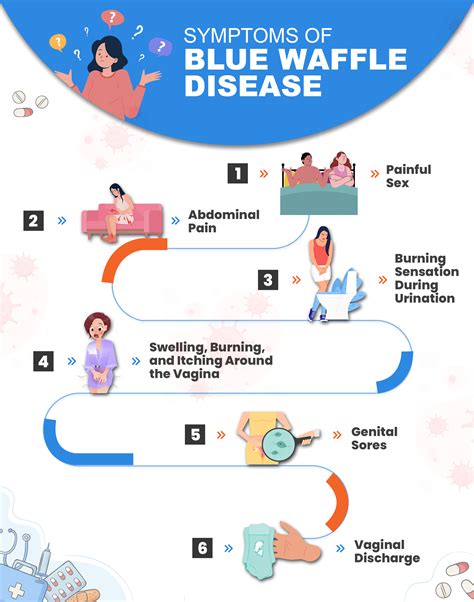
The term "blue waffle vagina" refers to a slang expression that has been used to describe a condition where the vagina appears blue or has a blue tint. However, it's essential to note that this term is not a medically recognized condition and has been largely debunked as an urban legend or a hoax. The origins of this term are unclear, but it's believed to have started as a meme or a joke on the internet.
Debunking the Myth

There is no scientific evidence to support the existence of a condition that causes the vagina to turn blue. The vagina’s normal color can vary from person to person, ranging from a light pink to a deeper pink or purple color, depending on factors such as blood flow, hormone levels, and overall health. Any changes in the vagina’s color or appearance can be a sign of an underlying medical condition, such as an infection or inflammation, but a blue tint is not a known symptom of any legitimate medical condition.
Understanding Vaginal Health
It’s crucial to separate fact from fiction when it comes to vaginal health. The vagina is a complex and dynamic system that requires proper care and attention to maintain its health. This includes practicing good hygiene, using protection during sex, getting regular check-ups, and being aware of any changes in discharge, odor, or discomfort. Any concerns or questions about vaginal health should be addressed with a healthcare provider, who can provide accurate and reliable information.
| Common Vaginal Conditions | Symptoms |
|---|---|
| Bacterial Vaginosis (BV) | Abnormal discharge, odor, itching, or burning |
| Yeast Infections | Itching, burning, redness, or a white, clumpy discharge |
| STIs (Sexually Transmitted Infections) | Discharge, odor, itching, or burning, depending on the type of STI |
Key Points
- The term "blue waffle vagina" is not a medically recognized condition and is likely an urban legend or hoax.
- Changes in vaginal color or appearance can be a sign of an underlying medical condition, such as an infection or inflammation.
- Practicing good hygiene, using protection during sex, and getting regular check-ups are essential for maintaining vaginal health.
- Any concerns or questions about vaginal health should be addressed with a healthcare provider.
- Reliable sources of information are crucial for understanding and maintaining vaginal health.
Vaginal Health and Hygiene

Maintaining good vaginal health involves a combination of proper hygiene, safe sex practices, and regular health check-ups. This includes avoiding the use of scented soaps, douches, or other products that can disrupt the vagina’s natural balance, as well as wearing breathable clothing and practicing safe sex. By taking these steps, individuals can help prevent infections and maintain optimal vaginal health.
Importance of Regular Check-Ups
Regular health check-ups are vital for maintaining vaginal health and catching any potential issues early. This includes annual gynecological exams, STI screenings, and Pap tests. By staying on top of these check-ups, individuals can help ensure their vaginal health and address any concerns or questions they may have.
What is the normal color of the vagina?
+The normal color of the vagina can vary from person to person, ranging from a light pink to a deeper pink or purple color, depending on factors such as blood flow, hormone levels, and overall health.
What are some common vaginal conditions?
+Common vaginal conditions include bacterial vaginosis (BV), yeast infections, and STIs (sexually transmitted infections). Each of these conditions has distinct symptoms, such as abnormal discharge, odor, itching, or burning.
How can I maintain good vaginal health?
+Maintaining good vaginal health involves a combination of proper hygiene, safe sex practices, and regular health check-ups. This includes avoiding the use of scented soaps, douches, or other products that can disrupt the vagina's natural balance, as well as wearing breathable clothing and practicing safe sex.
In conclusion, the term “blue waffle vagina” is not a medically recognized condition and is likely an urban legend or hoax. It’s essential to rely on credible sources of information when it comes to vaginal health and to practice good hygiene, safe sex, and regular health check-ups to maintain optimal vaginal health.