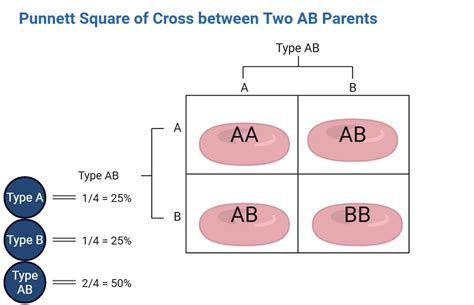
Blood type is a fundamental concept in genetics, and understanding how it is inherited can be a fascinating topic. The ABO blood group system, which categorizes blood into four main types - A, B, AB, and O, is a classic example of multiple allele inheritance. One of the most effective tools for predicting the probability of different blood types in offspring is the Punnett square. In this article, we will delve into the world of blood type Punnett squares, exploring how they work, and providing a step-by-step guide on how to create and interpret them.
Key Points
- The ABO blood group system is controlled by a single gene with three alleles: A, B, and O.
- The Punnett square is a graphical representation of the possible genotypes and phenotypes of offspring.
- To create a Punnett square, you need to know the genotypes of the parents.
- The Punnett square can be used to predict the probability of different blood types in offspring.
- Understanding blood type inheritance is important for medical purposes, such as blood transfusions.
Understanding Blood Type Genetics
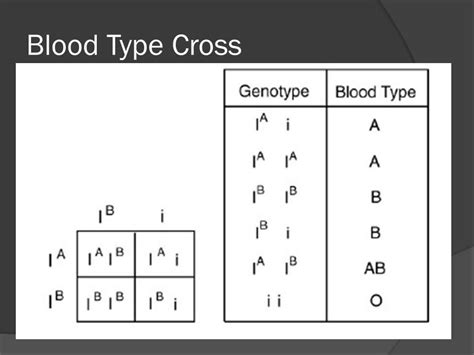
The ABO blood group system is controlled by a single gene with three alleles: A, B, and O. The A and B alleles are codominant, meaning that they have an equal effect on the phenotype, while the O allele is recessive. The possible genotypes and phenotypes are as follows:
| Genotype | Phenotype |
|---|---|
| AA or AO | A |
| BB or BO | B |
| AB | AB |
| OO | O |
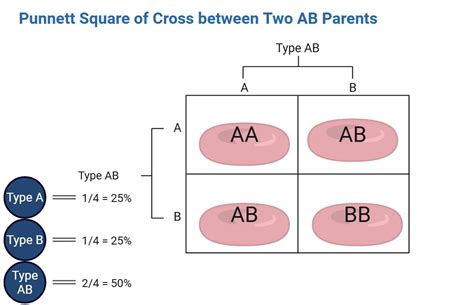
Each parent has two alleles, one inherited from each parent, and can be either homozygous (having two of the same allele) or heterozygous (having two different alleles). The possible genotypes of the parents are:
- AA or AO (type A)
- BB or BO (type B)
- AB (type AB)
- OO (type O)
Creating a Punnett Square
To create a Punnett square, you need to know the genotypes of the parents. Let’s consider an example where one parent is type A (AO) and the other parent is type B (BO). The Punnett square would look like this:
| O | B | |
|---|---|---|
| A | AO | AB |
| O | OO | BO |
In this Punnett square, the alleles of the parents are listed on the top and side, and the possible genotypes of the offspring are shown in the center. The probability of each genotype can be calculated by counting the number of times it appears in the Punnett square.
Interpreting the Punnett Square
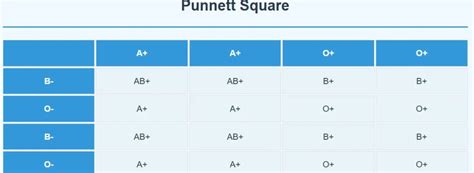
Once you have created the Punnett square, you can interpret the results to predict the probability of different blood types in offspring. In the example above, the Punnett square shows that:
- 25% of the offspring will have the genotype AO (type A)
- 25% of the offspring will have the genotype AB (type AB)
- 25% of the offspring will have the genotype OO (type O)
- 25% of the offspring will have the genotype BO (type B)
By analyzing the Punnett square, you can see that there is a 25% chance of each blood type occurring in the offspring. This information is crucial for medical purposes, such as blood transfusions, where compatibility between the donor and recipient is essential.
Real-World Applications
Understanding blood type inheritance is vital in various medical scenarios, including blood transfusions, organ transplants, and prenatal testing. For instance, if a mother has type O blood and her partner has type A blood, the Punnett square can help predict the probability of their offspring having different blood types. This information can inform medical decisions, such as the need for Rh immunoglobulin during pregnancy.
| Scenario | Punnett Square | Probability |
|---|---|---|
| Mother: O, Father: A | AO, OO | 50% chance of type A, 50% chance of type O |
| Mother: A, Father: B | AB, AO, BB, BO | 25% chance of type AB, 25% chance of type A, 25% chance of type B, 25% chance of type O |
What is the ABO blood group system?
+The ABO blood group system is a classification system that categorizes blood into four main types: A, B, AB, and O. It is controlled by a single gene with three alleles: A, B, and O.
How do I create a Punnett square for blood type?
+To create a Punnett square for blood type, you need to know the genotypes of the parents. List the alleles of the parents on the top and side of the square, and then fill in the possible genotypes of the offspring in the center.
What is the probability of a child inheriting a certain blood type?
+The probability of a child inheriting a certain blood type can be calculated using a Punnett square. The Punnett square shows all possible combinations of alleles, allowing you to predict the probability of different genotypes and phenotypes.
In conclusion, understanding blood type inheritance is a fascinating topic that has numerous real-world applications. By creating and interpreting Punnett squares, you can predict the probability of different blood types in offspring, which is essential for medical purposes. Whether you’re a student, a medical professional, or simply interested in genetics, mastering the art of blood type Punnett squares can provide valuable insights into the complexities of human inheritance.