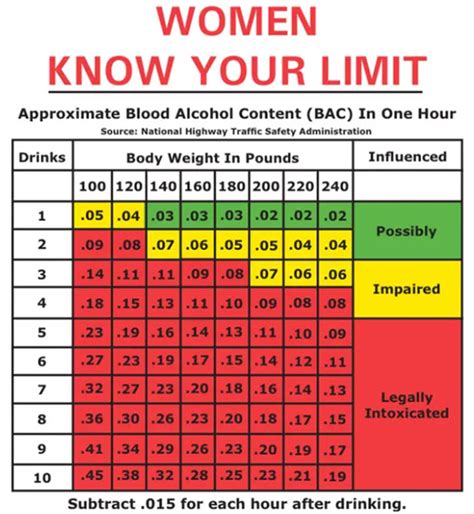
Calculating Blood Alcohol Concentration (BAC) is a crucial aspect of understanding the effects of alcohol consumption on the human body. BAC is defined as the percentage of alcohol in a person's bloodstream, and it is used to determine the level of impairment. There are several ways to calculate BAC, each with its own set of factors and considerations. In this article, we will explore five ways to calculate BAC, highlighting the key elements and limitations of each method.
Key Points
- Understanding the concept of Blood Alcohol Concentration (BAC) and its significance in assessing alcohol impairment
- Exploring five different methods for calculating BAC, including the Widmark formula, the Watson formula, and others
- Recognizing the factors that influence BAC, such as body weight, gender, and drinking patterns
- Appreciating the limitations and potential inaccuracies of BAC calculation methods
- Considering the practical applications and implications of BAC calculation in real-world scenarios
Introduction to BAC Calculation
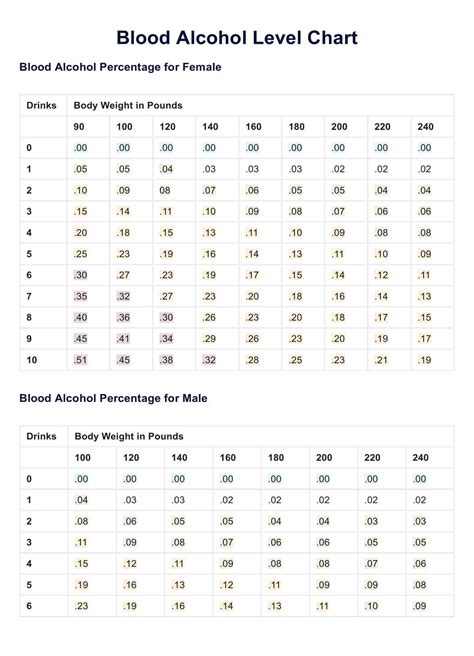
Before diving into the various methods for calculating BAC, it is essential to understand the fundamental principles behind this calculation. BAC is typically measured in grams of alcohol per 100 milliliters of blood (g/100mL) or as a percentage (%). The most common methods for calculating BAC involve estimating the amount of alcohol consumed, the time frame over which it was consumed, and individual factors such as body weight and gender.
Method 1: The Widmark Formula
The Widmark formula is a widely used method for calculating BAC. Developed by Erik M.P. Widmark in the early 20th century, this formula takes into account the amount of alcohol consumed, the individual’s body weight, and the time elapsed since drinking began. The formula is as follows: BAC (in %) = (A x (5.14/W x r)) - (0.015 x T), where A is the amount of alcohol consumed in ounces, W is the individual’s weight in pounds, r is the gender factor (0.68 for men and 0.55 for women), and T is the time in hours since drinking started.
| Variable | Description |
|---|---|
| A | Amount of alcohol consumed in ounces |
| W | Individual's weight in pounds |
| r | Gender factor (0.68 for men, 0.55 for women) |
| T | Time in hours since drinking started |
Alternative Methods for Calculating BAC
Beyond the Widmark formula, there are several other methods for calculating BAC, each with its own strengths and limitations. The Watson formula, for example, offers a more detailed approach by considering additional factors such as the volume of alcohol distribution in the body. Other methods may incorporate factors like drinking patterns, food consumption, and individual metabolic rates.
Method 2: The Watson Formula
The Watson formula is another method used to calculate BAC, offering a more detailed estimation by taking into account the volume of alcohol distribution in the body. This formula is particularly useful for calculating BAC in individuals with varying body compositions. The formula is: BAC (in %) = (A x (100/W x Vd)) - (0.015 x T), where A is the amount of alcohol consumed, W is the individual’s weight, Vd is the volume of distribution, and T is the time elapsed.
Method 3: The Zero-Order Kinetics Method
This method assumes that alcohol is eliminated from the body at a constant rate, regardless of the BAC level. The formula for calculating BAC using zero-order kinetics is BAC (in %) = A - (r x T), where A is the initial BAC, r is the rate of elimination, and T is the time elapsed. This method is simpler but may be less accurate for high BAC levels or prolonged drinking periods.
Method 4: The First-Order Kinetics Method
The first-order kinetics method assumes that the rate of alcohol elimination is proportional to the BAC level. This method is more complex and requires an understanding of the individual’s metabolic rate and the initial BAC level. The formula is BAC (in %) = A x e^(-kt), where A is the initial BAC, k is the elimination rate constant, and t is the time elapsed.
Method 5: The Online BAC Calculators
For a more straightforward approach, online BAC calculators can be used. These tools typically ask for the amount of alcohol consumed, the time frame, body weight, and gender, and then provide an estimated BAC. While convenient, it is essential to understand the underlying assumptions and limitations of these calculators, as they may not account for all individual factors that influence BAC.
What is the most accurate method for calculating BAC?
+The most accurate method often depends on the individual's specific circumstances, including their drinking pattern, body composition, and metabolic rate. The Widmark formula and the Watson formula are commonly used and provide a good estimate, but it's crucial to consider the limitations and potential inaccuracies of each method.
How does body weight affect BAC calculation?
+Body weight is a significant factor in BAC calculation because it influences the volume of distribution of alcohol in the body. Generally, individuals with a higher body weight will have a lower BAC for the same amount of alcohol consumed compared to those with a lower body weight, assuming all other factors are equal.
Can BAC be affected by factors other than alcohol consumption and body weight?
+Yes, several factors can influence BAC beyond alcohol consumption and body weight. These include gender, drinking pattern (whether drinks are consumed quickly or over a prolonged period), the presence of food in the stomach, and individual variations in metabolism and alcohol elimination rates.
In conclusion, calculating BAC is a complex process that involves considering multiple factors, including the amount of alcohol consumed, body weight, gender, and the time elapsed since drinking began. Each of the five methods for calculating BAC has its strengths and limitations, and understanding these is crucial for making informed decisions about alcohol consumption. By appreciating the nuances of BAC calculation and the factors that influence it, individuals can better assess their alcohol intake and its potential effects on their body and behavior.