
The unveiling of the first-ever black hole images in 2019 marked a groundbreaking moment in the field of astrophysics, captivating the imagination of scientists and the general public alike. This achievement was the result of a decade-long endeavor by the Event Horizon Telescope (EHT) project, a collaborative effort involving a network of telescopes spanning the globe. By harnessing the power of very long baseline interferometry (VLBI), the EHT was able to form a virtual Earth-sized telescope, capable of resolving the environment surrounding a black hole with unprecedented precision.
The first black hole to be imaged was located at the center of the galaxy Messier 87 (M87), a supergiant elliptical galaxy approximately 55 million light-years from Earth. This black hole, designated as M87*, possesses a mass of approximately 6.5 billion times that of the sun, making it one of the most massive known black holes in the universe. The image revealed a bright ring of light around a dark center, which corresponds to the event horizon of the black hole. The event horizon marks the boundary beyond which nothing, including light, can escape the gravitational pull of the black hole.
Key Points
- The first black hole images were captured by the Event Horizon Telescope (EHT) project in 2019.
- The imaged black hole, M87*, is located at the center of the galaxy Messier 87 and has a mass of approximately 6.5 billion times that of the sun.
- The image shows a bright ring of light around a dark center, corresponding to the event horizon of the black hole.
- The EHT project uses very long baseline interferometry (VLBI) to form a virtual Earth-sized telescope, allowing for high-resolution imaging of black hole environments.
- The revelation of black hole images has significant implications for our understanding of these enigmatic objects and the role they play in the evolution of the universe.
The Science Behind Black Hole Imaging
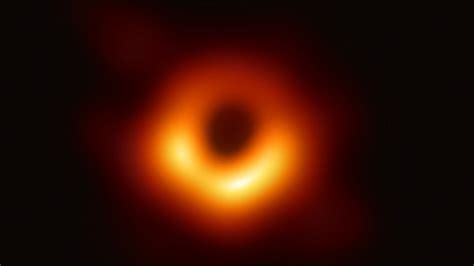
The process of capturing black hole images is extremely challenging due to the vast distances involved and the limited resolution of traditional telescopes. The EHT project overcomes these limitations by combining the signals from a network of telescopes located around the world, effectively creating a virtual telescope with a diameter equal to the distance between the telescopes. This technique allows for the achievement of an angular resolution that is substantially higher than what can be attained by individual telescopes.
The imaging process involves collecting data from each telescope in the network and then synchronizing these data using atomic clocks. The synchronized data are subsequently processed using sophisticated algorithms to produce a reconstructed image of the black hole environment. The image reconstruction is a complex task, requiring significant computational resources and advanced software tools.
Technical Challenges and Achievements
The EHT project faced numerous technical challenges, including the development of specialized hardware and software to support the VLBI technique. The project required the creation of high-speed data recording systems, advanced data processing algorithms, and sophisticated image reconstruction software. Additionally, the EHT had to overcome the effects of atmospheric interference, which can distort the signals received by the telescopes.
Despite these challenges, the EHT project has achieved a number of significant milestones, including the capture of the first-ever black hole images and the detection of polarized light around the M87* black hole. These achievements have opened up new avenues for research into the nature of black holes and their role in the universe.
| Black Hole Property | M87* Value |
|---|---|
| Mass | 6.5 billion solar masses (M) |
| Event Horizon Diameter | Approximately 12 million kilometers |
| Distance from Earth | 55 million light-years |
Implications and Future Directions
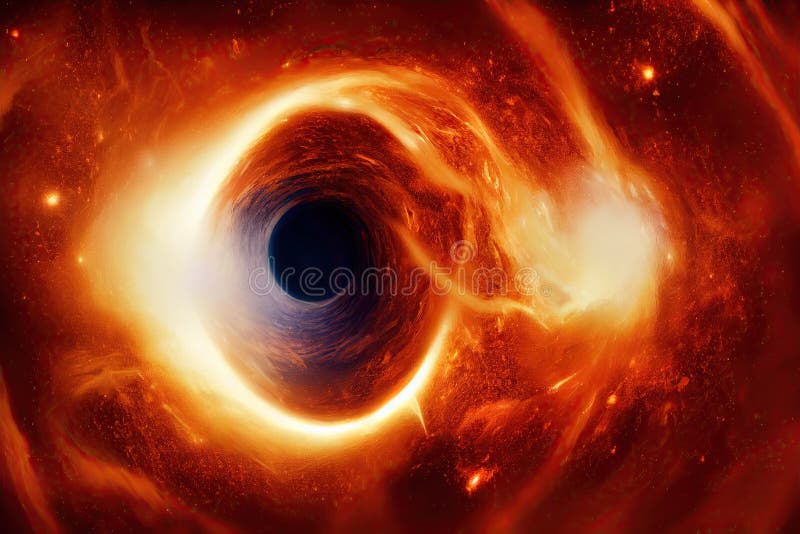
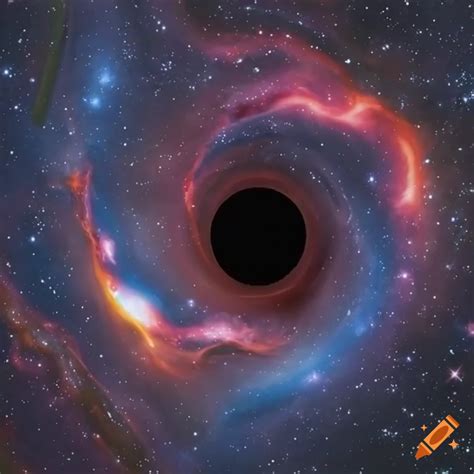
The revelation of black hole images has far-reaching implications for the field of astrophysics, from our understanding of black hole physics to the role of these objects in the evolution of the universe. Future research directions include the study of black hole accretion processes, the investigation of black hole mergers, and the exploration of the connection between black holes and the growth of galaxies.
The EHT project is expected to continue pushing the boundaries of black hole research, with plans to expand the telescope network and improve the resolution and sensitivity of the imaging capabilities. The future of black hole imaging holds much promise, with the potential to reveal new and exciting insights into the nature of these mysterious objects.
What is the significance of capturing black hole images?
+Capturing black hole images allows scientists to study the environment surrounding these objects, gaining insights into the behavior of matter in extreme conditions and the role of black holes in shaping the evolution of galaxies.
How does the EHT project overcome the technical challenges of black hole imaging?
+The EHT project uses very long baseline interferometry (VLBI) to form a virtual Earth-sized telescope, allowing for high-resolution imaging of black hole environments. The project also employs sophisticated algorithms and software tools to process and reconstruct the images.
What are the future directions for black hole research using the EHT project?
+Future research directions include the study of black hole accretion processes, the investigation of black hole mergers, and the exploration of the connection between black holes and the growth of galaxies. The EHT project is expected to continue expanding its capabilities, enabling higher-resolution imaging and more detailed studies of black hole environments.
In conclusion, the unveiling of the first-ever black hole images marks a major breakthrough in the field of astrophysics, offering new insights into the nature of these enigmatic objects and their role in the universe. As the EHT project continues to push the boundaries of black hole research, we can expect to gain a deeper understanding of the behavior of matter in extreme conditions and the evolution of galaxies.