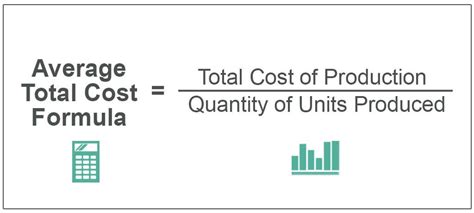
The concept of Average Total Cost (ATC) is a fundamental principle in economics, particularly in the field of microeconomics. It refers to the total cost of production divided by the number of units produced, and it plays a crucial role in determining the profitability and efficiency of a firm. In this article, we will delve into the world of Average Total Cost, exploring its definition, calculation, and implications for businesses and industries.
Key Points
- Average Total Cost (ATC) is the total cost of production divided by the number of units produced.
- ATC is calculated by adding fixed and variable costs and dividing by the quantity produced.
- The ATC curve is typically U-shaped, with decreasing costs at low output levels and increasing costs at high output levels.
- Minimizing ATC is essential for businesses to maximize profitability and remain competitive.
- Understanding ATC is crucial for making informed decisions about production, pricing, and investment.
Understanding Average Total Cost
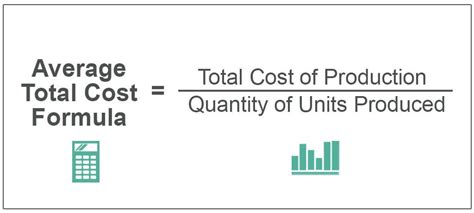
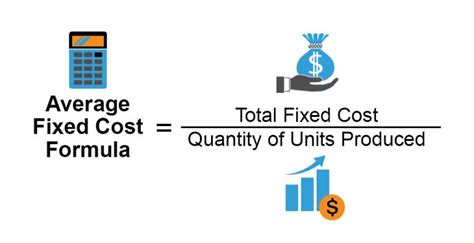
To grasp the concept of Average Total Cost, it’s essential to understand the different types of costs involved in production. The two primary categories of costs are fixed costs and variable costs. Fixed costs remain the same regardless of the level of production, whereas variable costs change with the quantity produced. Examples of fixed costs include rent, salaries, and equipment, while variable costs include raw materials, labor, and marketing expenses.
The Average Total Cost is calculated by adding the fixed and variable costs and dividing by the quantity produced. This can be represented by the following formula: ATC = (Fixed Costs + Variable Costs) / Quantity Produced. For instance, if a company has fixed costs of $10,000 and variable costs of $50,000, and it produces 1,000 units, the ATC would be ($10,000 + $50,000) / 1,000 = $60 per unit.
The ATC Curve
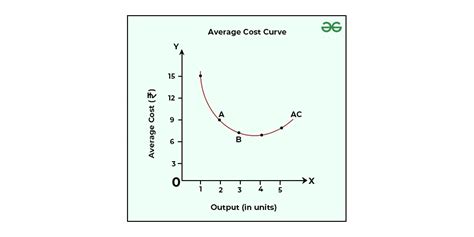
The Average Total Cost curve is a graphical representation of the relationship between the ATC and the quantity produced. The curve is typically U-shaped, with decreasing costs at low output levels and increasing costs at high output levels. This is because as production increases, the fixed costs are spread over a larger number of units, reducing the ATC. However, as production continues to rise, the variable costs increase, causing the ATC to rise as well.
The U-shaped curve can be divided into three stages: decreasing returns, constant returns, and increasing returns. In the decreasing returns stage, the ATC decreases as production increases, due to the spreading of fixed costs. In the constant returns stage, the ATC remains relatively constant, as the increase in variable costs is offset by the decrease in fixed costs per unit. Finally, in the increasing returns stage, the ATC rises as the variable costs increase more rapidly than the decrease in fixed costs per unit.
| Stage | Characteristics |
|---|---|
| Decreasing Returns | ATC decreases as production increases, fixed costs are spread over more units |
| Constant Returns | ATC remains relatively constant, increase in variable costs is offset by decrease in fixed costs per unit |
| Increasing Returns | ATC rises as variable costs increase more rapidly than decrease in fixed costs per unit |
Implications of Average Total Cost
The Average Total Cost has significant implications for businesses and industries. Minimizing ATC is essential for companies to remain competitive and maximize profitability. By reducing their ATC, businesses can lower their prices, increase their market share, and improve their profitability. Conversely, high ATC can lead to reduced profitability, decreased competitiveness, and even business failure.
Understanding ATC is also crucial for making informed decisions about production, pricing, and investment. By analyzing the ATC curve, companies can determine the optimal production level, set prices that balance profitability and demand, and invest in technologies and processes that reduce costs and improve efficiency.
Strategic Considerations
Businesses can employ several strategies to minimize their ATC and improve their competitiveness. These include increasing production to spread fixed costs, investing in technologies and processes that reduce variable costs, and improving supply chain management to reduce raw material costs. Additionally, companies can consider outsourcing certain functions or activities to specialized providers, who can produce them at a lower ATC.
Furthermore, understanding ATC is essential for making informed decisions about expansion, contraction, or diversification. By analyzing the ATC curve, companies can determine the optimal production level, identify areas for cost reduction, and allocate resources effectively. This can help businesses to stay competitive, adapt to changing market conditions, and achieve long-term sustainability.
What is the significance of Average Total Cost in business decision-making?
+Average Total Cost is crucial in business decision-making, as it helps companies to minimize their costs, maximize profitability, and remain competitive. By understanding ATC, businesses can make informed decisions about production, pricing, and investment, and allocate resources effectively.
How can businesses minimize their Average Total Cost?
+Businesses can minimize their Average Total Cost by increasing production to spread fixed costs, investing in technologies and processes that reduce variable costs, and improving supply chain management to reduce raw material costs. Additionally, companies can consider outsourcing certain functions or activities to specialized providers.
What is the relationship between Average Total Cost and profitability?
+There is a direct relationship between Average Total Cost and profitability. Minimizing ATC is essential for businesses to maximize profitability, as lower costs enable companies to lower their prices, increase their market share, and improve their profitability. Conversely, high ATC can lead to reduced profitability, decreased competitiveness, and even business failure.
In conclusion, Average Total Cost is a critical concept in economics, and understanding its definition, calculation, and implications is essential for businesses to remain competitive and achieve long-term sustainability. By analyzing the ATC curve, companies can minimize their costs, maximize profitability, and make informed decisions about production, pricing, and investment. As the business landscape continues to evolve, understanding ATC will remain a vital component of strategic decision-making, enabling companies to adapt to changing market conditions and achieve success in an increasingly competitive environment.