The conversion of atmospheric pressure (atm) to torr is a fundamental process in physics and chemistry, particularly in the context of gas laws and pressure measurements. Understanding the relationship between these two units is crucial for accurate calculations and conversions in various scientific and engineering applications.
Introduction to atm and torr Units
Atmospheric pressure, denoted as atm, is the pressure exerted by the weight of air in the atmosphere of Earth. It is a standard unit of pressure and is equivalent to 1013.25 millibars (mbar) or 101,325 Pascals (Pa). On the other hand, the torr is a unit of pressure that is defined as 1⁄760 of standard atmospheric pressure. It is named after Evangelista Torricelli, who invented the mercury barometer. One torr is equivalent to 1 mmHg (millimeter of mercury), which is the pressure exerted by a column of mercury one millimeter high at 0°C (32°F) under the standard acceleration of gravity.
Conversion Factor: atm to torr
The conversion factor between atm and torr is based on the definition of the torr as 1⁄760 of the standard atmospheric pressure. Given that 1 atm equals 760 torr, the conversion can be easily calculated. To convert atm to torr, you multiply the pressure in atm by 760. Conversely, to convert torr to atm, you divide the pressure in torr by 760.
| Unit | Conversion Factor |
|---|---|
| 1 atm | = 760 torr |
| 1 torr | = 1/760 atm |
Practical Applications of atm to torr Conversion
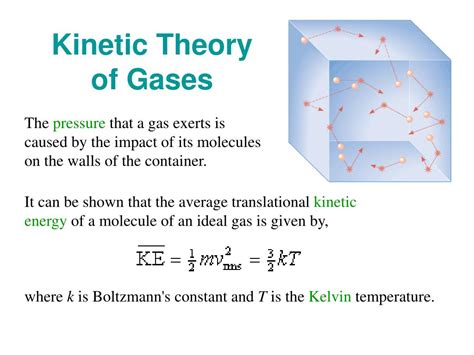
The ability to convert between atm and torr is essential in various fields, including chemistry, physics, and engineering. For example, in laboratory settings, pressures are often measured in torr, especially when using vacuum pumps or manometers. However, atmospheric pressure is commonly referenced in atm for calculations involving gas laws, such as Boyle’s Law, Charles’s Law, and the Ideal Gas Law. The conversion facilitates the comparison and application of data across different measurement contexts.
Calculations and Examples
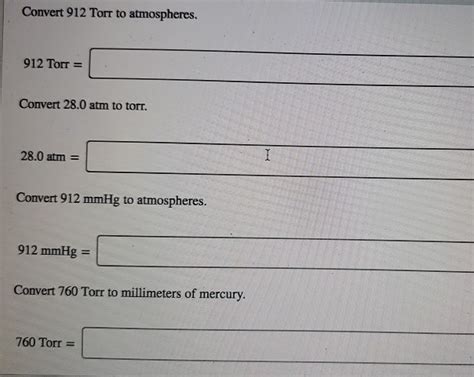
To illustrate the conversion process, consider the following example: If a pressure is given as 0.5 atm, to find its equivalent in torr, you would multiply 0.5 by 760, resulting in 380 torr. Conversely, if a pressure is 500 torr, to convert it to atm, you would divide 500 by 760, yielding approximately 0.658 atm.
Key Points
- The conversion factor between atm and torr is based on 1 atm = 760 torr.
- To convert atm to torr, multiply the pressure in atm by 760.
- To convert torr to atm, divide the pressure in torr by 760.
- Understanding and applying this conversion is crucial for accurate pressure measurements and calculations in scientific research and engineering applications.
- The atm to torr conversion is a fundamental skill that reflects the direct relationship between these units of pressure.
In conclusion, the conversion between atm and torr is a basic yet critical operation in scientific and technical contexts. By understanding and applying the conversion factor of 1 atm = 760 torr, professionals can ensure accuracy and consistency in their work, facilitating advancements in fields that rely on precise pressure measurements and calculations.
What is the standard conversion factor between atm and torr?
+The standard conversion factor is 1 atm = 760 torr.
How do you convert pressure from atm to torr?
+To convert pressure from atm to torr, multiply the pressure in atm by 760.
What is the significance of converting between atm and torr in scientific applications?
+The conversion between atm and torr is significant because it allows for accurate measurements and calculations in various scientific and engineering contexts, ensuring consistency and reliability across different applications.