The terms "assent" and "consent" are often used interchangeably in everyday language, but they have distinct meanings and implications, particularly in fields such as healthcare, law, and ethics. Understanding the difference between assent and consent is crucial for ensuring that individuals' rights and autonomy are respected. In this article, we will delve into the definitions, nuances, and applications of assent and consent, providing a comprehensive overview of these concepts.
Key Points
- Assent refers to the agreement or acceptance of a proposal or situation without necessarily understanding all the implications.
- Consent implies a more informed and voluntary agreement, where the individual has the capacity to make a decision and is aware of the potential consequences.
- The distinction between assent and consent is critical in healthcare, where informed consent is a cornerstone of ethical practice.
- Assent is often used in situations where an individual may not have the capacity to provide fully informed consent, such as in the case of minors or individuals with cognitive impairments.
- Consent can be withdrawn at any time, and it is essential to respect an individual's autonomy and decision-making capacity.
Definitions and Distinctions
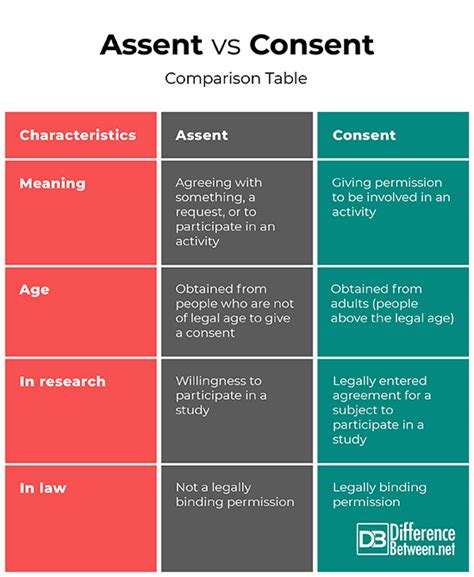
Assent is generally understood as the act of agreeing or accepting a proposal, situation, or condition without necessarily having a full understanding of its implications. It can be seen as a more superficial form of agreement, where an individual may not have considered all the potential consequences or may not have the capacity to make a fully informed decision. In contrast, consent implies a more profound and voluntary agreement, where the individual has the capacity to make a decision, is aware of the potential consequences, and is willing to accept the terms or conditions.
Capacity and Voluntariness
A critical aspect of consent is the concept of capacity, which refers to an individual’s ability to make informed decisions. Capacity involves having a sufficient understanding of the relevant information, being able to appreciate the potential consequences of a decision, and being able to communicate a choice. Voluntariness is another essential element of consent, which means that an individual’s decision must be free from coercion, manipulation, or undue influence. In situations where an individual may not have the capacity to provide informed consent, assent may be used as a way to involve them in the decision-making process, while also ensuring that their rights and interests are protected.
| Concept | Definition | Key Characteristics |
|---|---|---|
| Assent | Agreement or acceptance without full understanding | May lack capacity, not fully informed, superficial agreement |
| Consent | Informed and voluntary agreement | Requires capacity, informed, voluntary, and can be withdrawn |

Applications and Implications
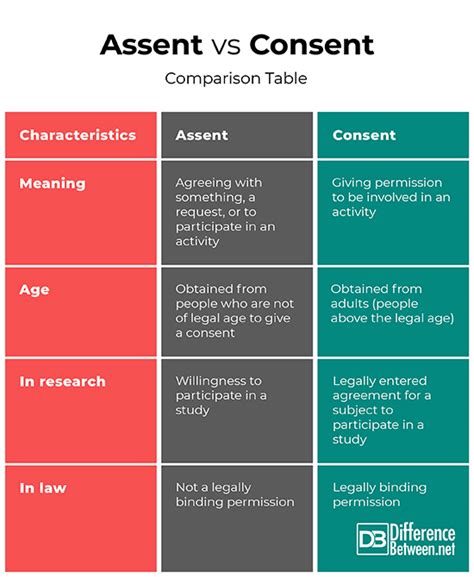
The distinction between assent and consent has significant implications in various fields, including healthcare, law, and research. In healthcare, informed consent is a fundamental principle of ethical practice, ensuring that patients are fully aware of the potential risks and benefits of a treatment or procedure. Assent, on the other hand, may be used in situations where patients may not have the capacity to provide informed consent, such as in the case of minors or individuals with cognitive impairments.
Healthcare and Research
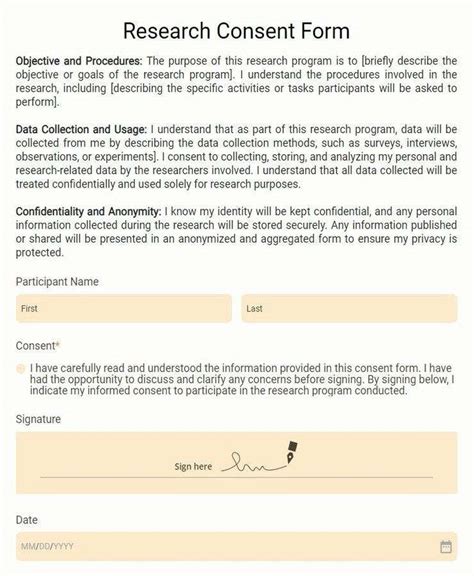
In research settings, obtaining informed consent from participants is crucial to ensure that they are aware of the potential risks and benefits of participating in a study. Assent may be used in situations where participants may not have the capacity to provide informed consent, such as in the case of children or individuals with limited cognitive abilities. However, it is essential to recognize that assent is not a substitute for informed consent and should only be used in situations where it is genuinely necessary.
The implications of assent and consent extend beyond healthcare and research, with significant consequences for individual autonomy, dignity, and human rights. Ensuring that individuals are fully informed and able to make voluntary decisions is essential for respecting their autonomy and promoting their well-being.
What is the primary difference between assent and consent?
+The primary difference between assent and consent lies in the level of understanding and capacity involved. Assent refers to agreement or acceptance without full understanding, while consent implies a more informed and voluntary agreement.
When is assent used instead of consent?
+Assent is often used in situations where an individual may not have the capacity to provide fully informed consent, such as in the case of minors or individuals with cognitive impairments.
Can consent be withdrawn?
+Yes, consent can be withdrawn at any time, and it is essential to respect an individual's autonomy and decision-making capacity.
In conclusion, understanding the distinction between assent and consent is crucial for ensuring that individuals’ rights and autonomy are respected. While assent and consent are related concepts, they have distinct meanings and implications, particularly in fields such as healthcare, law, and research. By recognizing the importance of informed consent and respecting individual autonomy, we can promote dignity, well-being, and human rights.