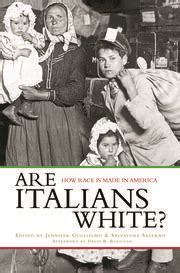
The question of whether Italians are considered white is a complex and multifaceted issue that has evolved over time and varies depending on the context. Historically, the concept of whiteness has been associated with racial and ethnic identity, often tied to skin color, ancestry, and cultural background. In the United States, for instance, the categorization of Italians as white has been a subject of debate, reflecting broader discussions on immigration, identity, and social hierarchy.
Historical Context: Italian Immigration and Racial Classification
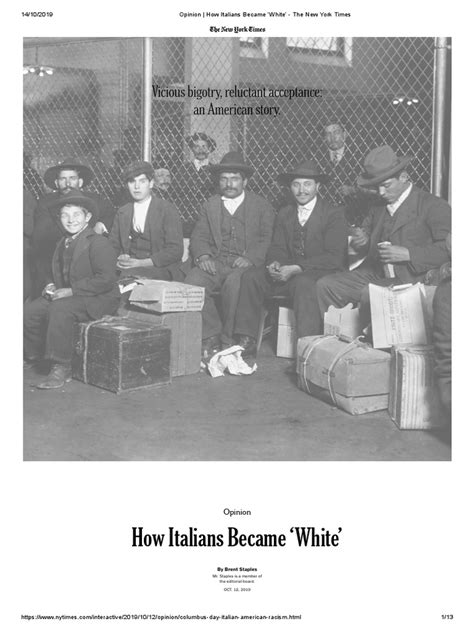
During the late 19th and early 20th centuries, millions of Italians immigrated to the United States, fleeing poverty and seeking economic opportunities. Upon arrival, they faced significant discrimination and were often viewed as inferior to Northern and Western Europeans. The racial classification of Italians during this period was complex; while they were considered Caucasian, they were not always seen as “white” in the same way as Anglo-Saxons or other Northern European groups. This distinction was partly due to the southern European origins of most Italian immigrants, which led to perceptions of them as less assimilable and more “foreign” than other European groups.
Racial Theories and Italian Identity
The early 20th century saw the rise of eugenics and racial theories that further complicated the racial classification of Italians. Some theorists argued that Southern Europeans, including Italians, were of a different racial stock than Northern Europeans, due to their supposed Mediterranean or “Latin” origins. These theories, though later discredited, influenced popular perceptions and contributed to the marginalization of Italian Americans. However, it’s crucial to note that such theories have been thoroughly debunked by modern genetics and anthropology, which emphasize the lack of a scientific basis for racial distinctions among human populations.
| Year | Event | Impact on Italian American Identity |
|---|---|---|
| 1890s-1920s | Mass Italian Immigration | Initial discrimination and questioning of "whiteness" |
| 1920s-1940s | Rise of Eugenics and Racial Theories | Perpetuation of stereotypes and racial hierarchies |
| 1940s-1960s | Post-WWII Assimilation | Gradual acceptance and assimilation into "white" American culture |

Modern Perspective: Italians in the Context of Whiteness

Today, Italians are widely considered to be part of the white demographic in the United States. This classification is reflected in census data, where individuals of Italian ancestry are categorized as white. The shift towards inclusive whiteness for Italian Americans and other Southern European groups has been attributed to several factors, including post-World War II assimilation policies, the decline of overt racial discrimination, and the increasing recognition of European ethnic diversity within the concept of whiteness.
Cultural Identity and the Complexity of Whiteness
Despite the broader societal recognition of Italians as white, the concept of whiteness itself remains complex and nuanced. Whiteness encompasses not just racial categorization but also cultural, economic, and social dimensions. For Italian Americans, their cultural identity is shaped by their ancestry, historical experiences, and ongoing interactions with American society. This complexity underscores the importance of understanding whiteness not as a fixed category but as a dynamic and multifaceted concept that evolves over time and varies across different contexts.
Key Points
- Historically, the racial classification of Italians in the United States has been complex and subject to change.
- The concept of whiteness has evolved over time, with Italians being gradually accepted as part of the white demographic.
- Cultural identity plays a significant role in shaping how Italians perceive themselves and are perceived by others in American society.
- The recognition of Italian Americans as white reflects broader societal changes, including the decline of eugenics and increased cultural diversity.
- Understanding whiteness requires acknowledging its complexity and the various dimensions it encompasses, beyond mere racial categorization.
In conclusion, the question of whether Italians are considered white is best answered by considering the historical, cultural, and social contexts in which this categorization has evolved. From initial discrimination and marginalization to eventual acceptance and assimilation, the story of Italian Americans reflects the dynamic nature of racial and ethnic identity in the United States. As society continues to grapple with issues of diversity, inclusion, and identity, understanding the complexities of whiteness and its evolution remains essential for fostering a more nuanced and informed discussion.
How have historical racial theories impacted the perception of Italians in the United States?
+Historical racial theories, such as eugenics, contributed to the initial perception of Italians as being of a different racial stock than Northern Europeans, leading to discrimination and marginalization. However, these theories have been widely discredited, and their impact has diminished over time.
What role has cultural identity played in the assimilation of Italian Americans into white American culture?
+Cultural identity has been crucial in the assimilation process, as Italian Americans have maintained strong ties to their heritage while also integrating into broader American society. This balance between preserving cultural roots and embracing new identities has facilitated their acceptance as part of the white demographic.
How does the concept of whiteness relate to Italian Americans today?
+Today, Italian Americans are widely recognized as part of the white demographic in the United States. However, the concept of whiteness remains complex, encompassing not just racial categorization but also cultural, economic, and social dimensions. Italian Americans’ experience reflects the dynamic and multifaceted nature of whiteness.