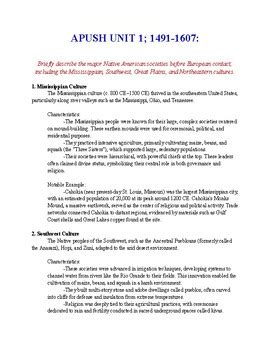
The APUSH Unit 1 study guide covers the period from 1491 to 1607, a time of significant transformation and exploration in the Americas. This era saw the arrival of European explorers, the establishment of the first successful English colonies, and the beginning of the complex and often fraught relationships between European settlers, Native Americans, and the land itself. To understand this period, it's essential to delve into the motivations behind European exploration, the impacts of colonization on indigenous populations, and the early development of colonial societies.
Key Points
- The pre-Columbian era saw diverse and complex Native American societies, each with their own cultures, agricultural practices, and trading networks.
- European exploration, led by figures like Christopher Columbus, was driven by a desire for wealth, religious conversion, and territorial expansion.
- The Columbian Exchange had a profound impact on the environment, economies, and populations of both the Old and New Worlds, introducing new crops, diseases, and animals.
- The Spanish established the first successful colonies in the Americas, with St. Augustine in present-day Florida being the oldest continuously occupied European settlement.
- English colonization efforts, including those at Roanoke and Jamestown, faced significant challenges but ultimately succeeded, laying the groundwork for British dominance in North America.
- The early colonial period saw the development of distinct regional identities and economies, influenced by geography, climate, and the presence of Native American populations.
Pre-Columbian Societies

Before the arrival of European explorers, the Americas were inhabited by a vast array of Native American societies, ranging from small, nomadic bands to complex, urban civilizations like the Aztecs and the Incas. These societies developed sophisticated agricultural systems, harnessed the power of rivers for transportation and irrigation, and created intricate networks of trade and cultural exchange. The diversity of Native American cultures is a testament to the creativity, adaptability, and resilience of these societies in the face of varying environmental conditions and historical challenges.
European Exploration and Motivations
The Age of Exploration was characterized by a surge in maritime travel, technological innovations in navigation, and an insatiable thirst for wealth, knowledge, and territorial expansion among European powers. The voyage of Christopher Columbus in 1492, sponsored by the Catholic Monarchs of Spain, marked the beginning of a new era in the history of the Americas. European explorers were driven by the promise of gold, the desire to spread Christianity, and the ambition to establish new trade routes and colonies. The concept of the “New World” ignited imaginations and fueled further exploration and colonization efforts.
| Explorer | Country of Origin | Year of Exploration | Notable Achievement |
|---|---|---|---|
| Christopher Columbus | Italy/Sponsored by Spain | 1492 | Landing in the Caribbean, opening the Americas to European exploration |
| Vasco Nunez de Balboa | Spain | 1513 | First European to see the Pacific Ocean from the New World |
| Hernando Cortes | Spain | 1519-1521 | Conquest of the Aztec Empire |
| John Cabot | Italy/Sponsored by England | 1497 | Claimed parts of North America for England |
Early Colonization Efforts

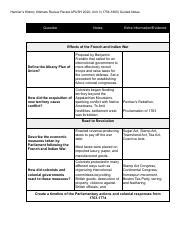
The establishment of the first successful English colonies, such as Jamestown in 1607, marked a significant turning point in the history of North America. These early colonies faced numerous challenges, including disease, malnutrition, and conflicts with Native American populations. The success of the English colonies was largely dependent on the development of sustainable economic models, such as tobacco farming in Virginia, and the ability to adapt to the New World environment.
Spanish Colonization
The Spanish were the first Europeans to establish successful colonies in the Americas, with the founding of St. Augustine in 1565. Spanish colonization efforts were marked by the quest for gold and silver, the spread of Christianity, and the imposition of Spanish culture on indigenous populations. The Spanish Empire in the Americas was characterized by a complex system of governance, a thriving economy based on mining and agriculture, and a rich cultural heritage that endures to this day.
The early colonial period in the Americas was a time of profound change and transformation, marked by the intersection of European, Native American, and African cultures. Understanding this period requires a nuanced approach, considering both the achievements and the challenges faced by early colonizers, as well as the profound impacts of colonization on indigenous populations and the environment.
What were the primary motivations behind European exploration of the Americas?
+European exploration was driven by a desire for wealth, the spread of Christianity, and the establishment of new trade routes and colonies. The promise of gold, the potential for new markets, and the ambition to expand territorial holdings were key factors.
How did the Columbian Exchange impact the environment and populations of the Americas and Europe?
+The Columbian Exchange introduced new crops, diseases, and animals to the Americas and Europe, leading to significant environmental and demographic changes. The exchange had a profound impact on the indigenous populations of the Americas, who were exposed to diseases like smallpox to which they had no immunity, and on European populations, who benefited from the introduction of new crops like maize and potatoes.
What were the challenges faced by early English colonies, and how did they ultimately succeed?
+Early English colonies faced challenges such as disease, malnutrition, and conflicts with Native American populations. The development of sustainable economic models, like tobacco farming, and the ability to adapt to the New World environment were crucial to their success. The establishment of a stable food supply, the development of effective governance structures, and the ability to negotiate and sometimes conflict with Native American populations were also key factors.
As we reflect on the early history of the Americas, it’s clear that this period laid the groundwork for the complex societies, economies, and cultures that would develop in the centuries to come. The stories of European explorers, Native American populations, and early colonizers are intertwined, each playing a significant role in the narrative of the Americas. Understanding this history, with all its challenges and achievements, provides a foundation for grasping the contemporary issues and opportunities that face the Americas today.